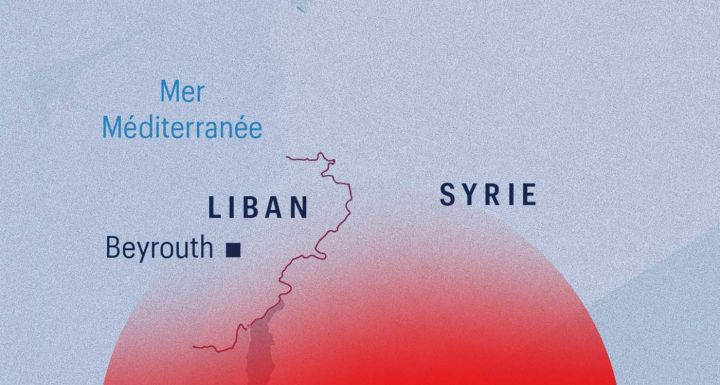
The conflict in the Middle East highlights the strategic importance of certain maritime passages, sometimes located on the other side of the globe. But this region is not the only one under surveillance. From Asia to the Americas to Europe, each continent depends on a few chokepoints.
While one of the main arteries of global trade is under tension, the Strait of Hormuz is not an isolated case. Other areas, if paralyzed, would cause comparable shocks. At sea, where about 80% of global trade flows, these points of passage are constantly monitored.
The Middle East remains a high-risk area for navigation, a situation further exacerbated by conflicts. While some shipowners used to avoid the region, the majority now bypass Africa through the Cape of Good Hope. Depending on the situation, the risk can be political, environmental, or logistical.
The Panama Canal facing the climate challenge A true engineering feat, the Panama Canal avoids a 13,000 km detour around Cape Horn. Launched in 1880, this project cost the lives of more than 22,000 workers, victims of diseases and landslides. Inaugurated in 1914, this 80 km passage now carries 5% of world maritime traffic, including over 14% of bulk cargo and 6% of container ships.
But the infrastructure is weakened by water scarcity. Located 26 meters above sea level, the canal depends on Lake Gatun, whose reserves are diminishing due to deforestation and climate anomalies. Each ship passage releases 197,000 cubic meters of water into the sea. In normal periods, rainfall compensates for these losses. In times of drought, the situation quickly deteriorates.
In October 2023, the region experienced its driest month. The number of allowed passages gradually decreased, down to 18 per day in February 2024, compared to around forty usually. To avoid waiting, some companies pay extra for berths, driving up prices. This pressure intensifies with Houthi rebel attacks on other critical routes in the Middle East.
The Suez Canal, a vital artery for Europe For Europeans, the Suez Canal is the most iconic route. It saves about 12 days of navigation by linking the Red Sea to the Mediterranean. Built between 1859 and 1869, it remains the longest lock-free canal in the world. Expanded over time, it now reaches a minimum width of 280 meters and a depth of 22.5 meters.
It handles approximately 12% of global traffic and 30% of container transport. It is also a key route for oil transportation to Europe, along with the Strait of Hormuz.
Located in an unstable region, the canal directly bears the brunt of tensions. After Houthi attacks in the Red Sea, traffic decreased by 70% in May 2025 compared to 2023. Most shipowners still opt for the Cape of Good Hope route. Recent conflicts have only worsened the situation.
While Suez is crucial for Europe, Asia depends on another strategic passage.
The Strait of Malacca, the pivot of Asian trade More extensive than other major passages, the Strait of Malacca connects the Indian Ocean to major Asian economies. It sees more than 25% of global trade, including 30% of oil, 25% of liquefied natural gas, and 20% of containers passing through.
Sparingly affected by conflicts and climate anomalies so far, it remains under intense pressure. Every year, about 90,000 ships navigate through it. The main bottleneck is a passage less than 3 km wide, through which most of China and Japan’s oil imports flow.
According to the International Chamber of Shipping (ICS), an interruption would paralyze East Asia in less than a week. To reduce this dependency, Beijing is seeking alternative routes. Another threat is the increasing size of ships. BIMCO warns of the risk of “grounding” as the depth is only 25 meters in some places.
Despite no major crisis, this strait illustrates a central reality: the security of maritime routes has become a sovereign issue in a global economy increasingly dependent on sea trade.