There is much talk about the aging of patients; not enough about the aging of caregiving work and caregivers themselves.
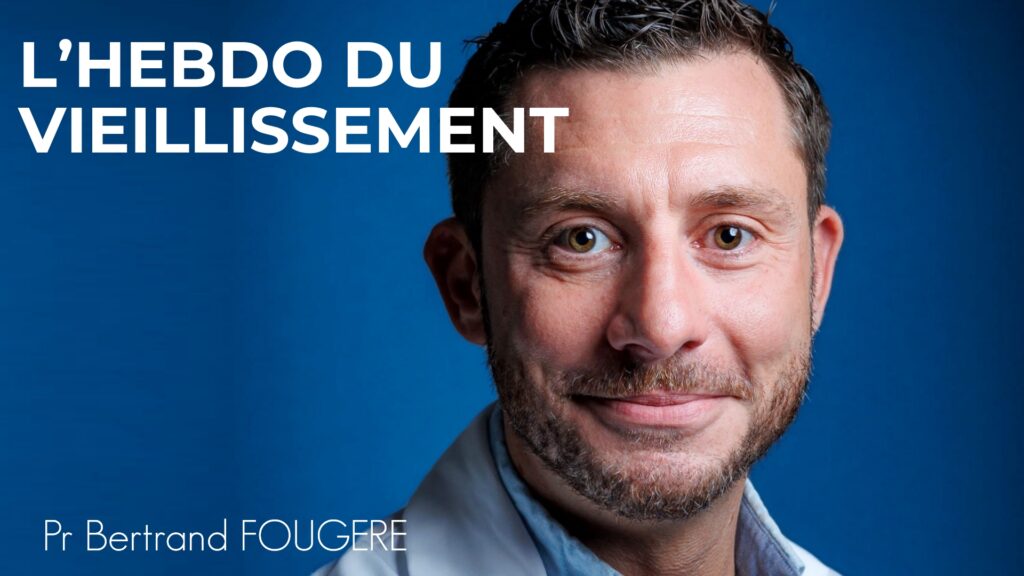
Weekly Aging with Professor Bertrand Fougère: “What if the health of caregivers finally became a policy of aging?”
Caregivers’ Health: How Population Aging is Already Transforming Professionals’ Work
In France, the aging population is already changing the daily lives of teams:
- more chronicity
- more comorbidities
- more cognitive disorders
- more coordination
- more complex hospital discharge
- more needs for follow-up care
Needs are increasing faster than available resources.
WHO estimates a global shortage of healthcare personnel at 14.7 million by 2023.
Do Healthcare Professionals Age Differently from the Rest of the Population?
Probably not biologically in the strict sense.
But often differently in terms of:
- functional
- psychological
- professional
Why?
- night shifts
- shift work
- lifting and carrying
- handling loads
- violence
- stress
- understaffing
- emotional burden
For example, night shifts desynchronize biological, social, and family rhythms. They are associated with sleep disorders, decreased alertness, accidents, as well as metabolic and cardiovascular risks.
The most striking thing is this paradox: those who care for others often take less care of themselves.
A study conducted by the Chair of Health, Sciences Po, shows that:
- 29% rate their mental health as poor or mediocre
- 76% of caregivers find their workload too high
- 61% report sleep disturbances
- 46% say they have fallen ill in the last three months
What Does This Lead Us to Do?
Health of caregivers cannot just be an HR issue. It is a matter of aging policy.
In my opinion, we need to address 5 key areas:
- make caregivers’ health an indicator of management
- invest more in ergonomics and handling aids
- structure real prevention paths mid-career and at the end of the career
- develop more sustainable late career pathways
- better manage geriatric follow-up, home care, and medical-social sector as an overloaded system also strains teams
The real question is simple: can we seriously build a society of successful aging without a strategy for caregivers’ well-being and aging?