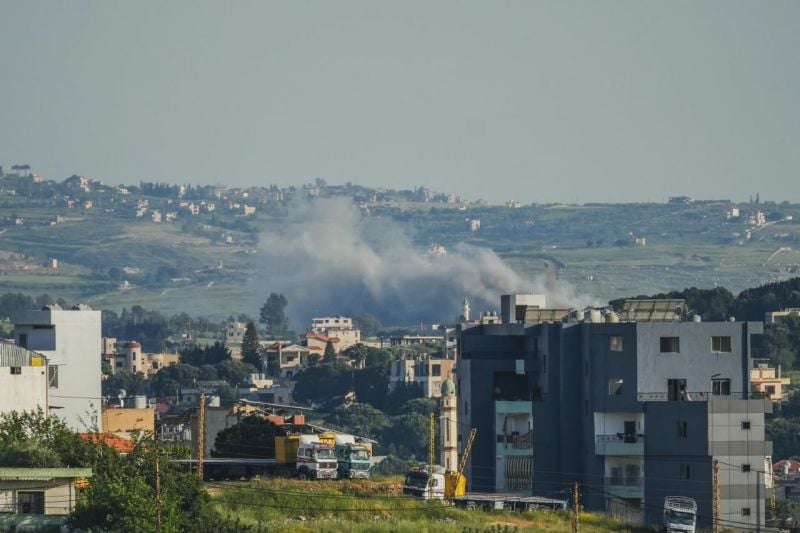
The Israeli army and its Ministry of Defense are stepping up efforts to counter the growing threat of FPV drones used by Hezbollah in southern Lebanon, following several deadly attacks on Israeli soldiers, according to Israeli media.
On Tuesday, the Israeli newspaper Yediot Ahronot reported that Israeli authorities were examining over 100 technological proposals to address what security officials describe as one of the “deadliest and most complex” challenges of the current conflict.
Pigyon
On Saturday, the Israeli public broadcaster KAN revealed one of these solutions, indicating that the army had recently deployed hundreds of smart sights called “Pigyon” (“Dagger” in Hebrew) near troops operating in southern Lebanon to enhance their ability to target FPV drones.
The system, known in English as the “SMASH Fire Control System” and developed by the Israeli company Smart Shooter, relies on AI-assisted targeting technology. According to its creators, it can lock and track aerial or ground targets, including small drones, and only fires when the chances of impact are maximum.
Detection & destruction
According to Yediot Ahronot, new “detection kits” are to be distributed to units operating in southern Lebanon to enable soldiers to spot drones a few seconds before impact, as military personnel often claim to only see them at the last moment.
Among the solutions being studied are electrified fences inspired by Ukrainian models, designed to sever fiber optic cables used by some drones, as well as weapons firing nets to neutralize drones in flight.
Israeli authorities are also testing fragmentary ammunition to widen the impact zone against these small devices, as well as several models of interceptor drones. According to Yediot Ahronot, six different systems are currently in an advanced experimental phase, some designed to directly hit enemy drones, while others use nets or proximity explosive charges.
Although no operational interception has been reported in the field yet, several trials have reportedly been successful at test sites. Israeli authorities hope to integrate these systems into frontline units’ equipment by the end of the year.