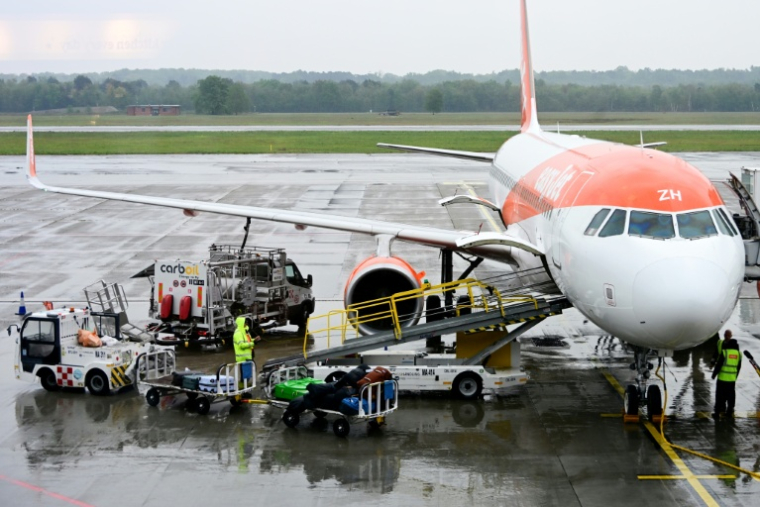
How many flights have been cancelled this summer? The European Union assures it is shielded from jet fuel shortages at this point, but is preparing for all scenarios and could resort to American fuel “Jet A” to cope.
The war in the Middle East and the closure of the Strait of Hormuz have caused a surge in aviation fuel prices and concerns about potential shortages this summer.
On Friday, the European Union Aviation Safety Agency (EASA) paved the way for the use of Jet A, a kerosene produced in the United States, but not currently distributed in Europe for technical reasons.
“Jet A is used daily for flights departing from and within the United States and Canada. The potential introduction of Jet A in Europe or other regions of the world would not pose a safety issue, provided that this introduction is properly managed,” the agency said, recommending not to mix fuels and to train teams well.
Parallel to this, the European Commission has detailed measures available to states to optimize the use of kerosene, in terms of aircraft refueling or allocation of air slots.
– What are the fuel stocks like in Europe?
Brussels continues to repeat: there is no kerosene shortage in Europe.
In France, the government is very reassuring. There is “no fear” of shortage in May and June and “probably little risk” afterwards, Economy Minister Roland Lescure stated on Wednesday.
Before the Middle East war, 20% of the kerosene consumed in Europe passed through the Strait of Hormuz.
With the price surge, a number of airlines, particularly low-cost ones, have announced flight cancellations.
“At this point, it’s more of an economic issue, a fuel cost issue, rather than availability,” aviation transport specialist Matteo Mirolo told AFP.
But if the crisis persists, Brussels is preparing for possible “supply problems. We are not there yet, but it can happen,” according to European Commissioner for Energy Dan Jorgensen.
Last week, the Commission announced the creation of a kerosene observatory to better monitor the situation.
Up to now, the EU did not have a detailed view of the reserves of the Twenty-Seven. European legislation requires strategic stocks of oil products amounting to 90 days of net imports and 61 days of domestic consumption, without distinguishing between gasoline, diesel, kerosene…
At a high level, a source at the Commission estimates that certain states, like Ireland, are more exposed due to refining capacity limitations, while others like Finland appear to be better prepared.
Incidentally, this official also expressed concern that some airlines are taking advantage of the crisis to cut unprofitable routes.
– What has the EU announced?
The Commission has outlined to states and airlines the existing rules to ensure optimal use of kerosene and the lowest possible price.
The European executive provides flexibility on “tankering,” when airlines fly with more fuel than necessary to avoid buying kerosene at an airport where it might be lacking.
Flexibilities are also provided on airport slots, which could prevent an airline from forfeiting a slot due to a potential fuel shortage and thus penalized in the allocation of subsequent slots.
On the sensitive topic of air passenger rights, Brussels indicated that airlines have the right not to compensate passengers (beyond ticket reimbursement) in cases of local fuel shortage, an “extraordinary circumstance.”
If the crisis continues, the EU envisions the Twenty-Seven coordinating to release emergency stocks and for a voluntary sharing of kerosene among them.
– Is American kerosene a solution?
American Jet A, different from Jet A-1 distributed in the rest of the world, is not currently used in Europe, except for flights returning from the United States.
Its standards are less stringent than European standards, especially in terms of withstanding very low temperatures during long-haul flights.
However, the EU is exploring this option, and some airlines want to use it more widely starting this summer.
The EASA has dismissed security risks per se. But it sets conditions, mentioning potential operational risks “if both fuels are used simultaneously.”
In the long term, Brussels also emphasizes the development of non-fossil origin aviation fuels (SAF).




/2026/05/08/69fdc3b18d8c9839728845.jpg "American writer and journalist Philip Caputo, a key witness of the Vietnam War, dies at 84")