
Donald Trump abruptly rejected Iran’s response to U.S. proposals to end the war on Sunday, once again highlighting the threat posed by Tehran, accusing them of targeting their Gulf neighbors.
“I just read the so-called ‘representatives’ of Iran’s response. I do not like it – IT IS TOTALLY UNACCEPTABLE!”, wrote the American president in capital letters in a brief message on his Truth Social network.
More than a month after the start of the truce between the two warring parties, negotiations seem more stalled than ever, with hopes of a resolution uncertain as neither side has publicly disclosed their proposals.
After days of anticipation, Iran announced on Sunday that it had responded to the American plan, but without detailing their response.
The Iranian state television reported that Tehran’s response, conveyed through the Pakistani mediator, was “focused on ending the war (…) on all fronts, especially in Lebanon, and ensuring maritime security.”
Reopening of the strait
According to the Wall Street Journal (WSJ), which cited sources close to the matter, Tehran’s proposal includes a gradual reopening of the Strait of Hormuz, which Iran has blocked since the start of hostilities on February 28, and a simultaneous lifting of the American naval blockade of Iranian ports.
As per the American daily, Tehran is also reportedly willing to “dilute” some of its enriched uranium and send the rest to a “third country.”
Washington and many countries suspect Tehran of seeking nuclear weapons through uranium enrichment, which Iran denies, claiming its right to civilian nuclear power.
“There are still nuclear materials – enriched uranium – that must be removed from Iran” and “enrichment sites to dismantle,” Israeli Prime Minister Benjamin Netanyahu asserted earlier on Sunday on the American network CBS.
“The war has achieved many things, but it’s not over,” he warned.
In an interview recorded earlier in the week and aired on Sunday, Donald Trump hinted that the U.S. military could stay for “two extra weeks and hit all identified targets to give a final touch” to the offensive.
Drones in the Gulf
In the Gulf, the Strait of Hormuz, through which a fifth of the world’s oil consumption typically passes, continues to be a point of contention between Washington and Tehran, with new attacks reported.
In Qatar, a tanker from Abu Dhabi was targeted by a drone in territorial waters before continuing its journey, according to the Defense Ministry.
The Iranian Fars news agency claimed that it “flew the U.S. flag and belonged to the United States,” without explicitly stating that Iran had targeted it.
Other countries were also reportedly hit by drones: Kuwait did not specify the origin, but Abu Dhabi directly accused Tehran.
Since the start of the war by Israel and the U.S., the Gulf monarchies, Washington’s allies, had been targeted in Iranian strikes.
These attacks come two days after the U.S. military targeted two Iranian tankers in the Gulf of Oman, a gateway to the strategic Strait of Hormuz.
“Our reservation is over,” cautioned Ebrahim Rezaei, spokesman for the Iranian parliament’s national security commission. “Any attack on our ships will trigger a strong and decisive Iranian response against the ships and bases of the United States.”
“We will never bow down to the enemy, and if there is talk of dialogue or negotiation, it does not mean surrender or retreat,” President Massoud Pezeshkian asserted.
The closure of the Strait of Hormuz has triggered a surge in oil prices and disrupted the global economy.
Paris and London in the crosshairs
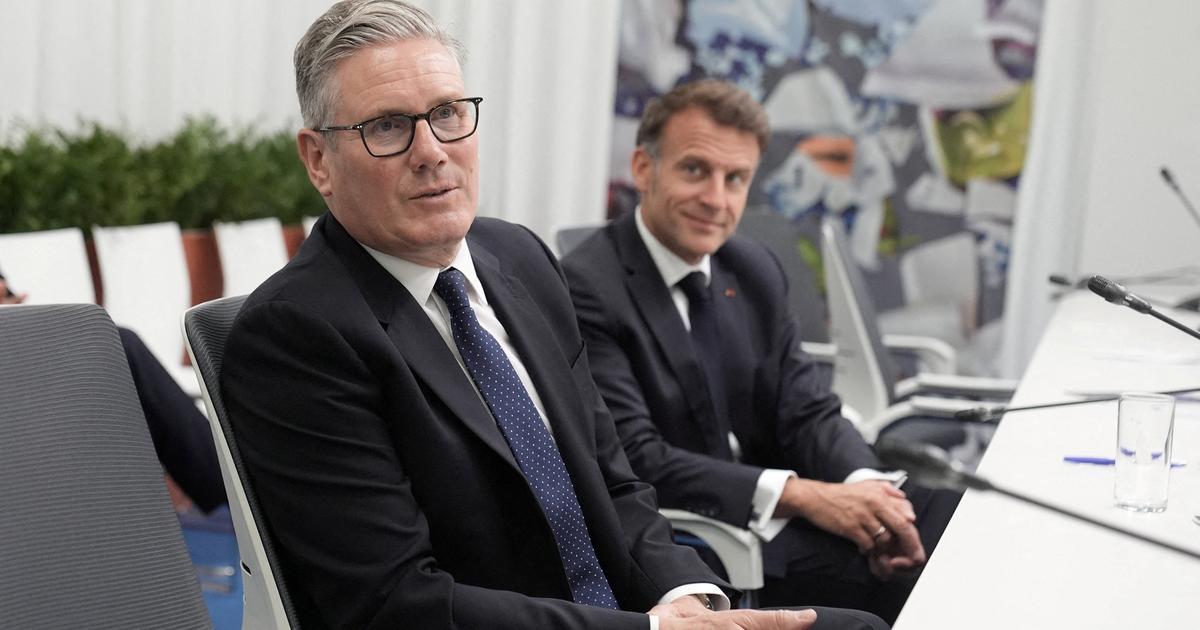
The UK and France are actively working on setting up an international coalition to secure the strait after a resolution to the conflict.
Any deployment will result in a “decisive and immediate response” by the Iranian military, warned Iranian Deputy Foreign Minister Kazem Gharibabadi, following the announcement by Paris and London of sending military assets to position themselves in the region.
France has “never considered” a military deployment to Hormuz, but rather a “coordinated security mission with Iran,” clarified President Emmanuel Macron.
On the other front of the conflict, in Lebanon, Israel and the pro-Iranian Hezbollah continue their mutual attacks despite a ceasefire in place since April 17.
Two Hezbollah-affiliated rescuers were killed and five others injured in Israeli strikes in southern Lebanon, according to the Health Ministry, which reported 2,846 deaths from Israeli operations since the start of the war on March 2.


/2026/05/10/6a00f5ea32939623907513.png "Ligue 1: PSG almost champion, Nice now play")
:fill(black)/2026/05/08/69fe00eadea66216469199.png "The little secrets of cinema sound designers")


