In an incident that goes beyond a modified photo, the focus is on what happens after an attack, when a military seeks to impose its narrative even before an independent investigation has established the facts. As per a foreign press association based in Jerusalem, the Israeli army disseminated a false image of a Lebanese journalist who was killed in late March in South Lebanon in order to discredit him after his death. The case of Ali Chouaib, a correspondent for Al-Manar killed with two other journalists in a strike on their vehicle, now raises a broader question: how far can military communication go when it produces, disseminates, and then corrects a manipulated image to justify a conducted strike?
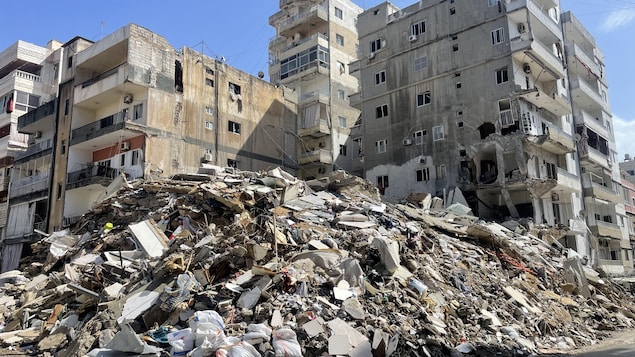
At the heart of the issue lies the precise events of March 28, where three Lebanese journalists were killed in southern Lebanon. Among them was Ali Chouaib, a correspondent for Al-Manar. In the hours following, the Israeli army claimed responsibility for the journalist’s elimination, alleging he was operating for Hezbollah under the cover of the press. To support this accusation, they circulated an image on social media split into two parts: one showing the journalist in his work attire with a press vest, and the other showing him in military uniform.
However, according to several media outlets and a professional association of foreign journalists, the second half of the image was not authentic; it had been altered. In the current digital age, this detail changes everything. An accusation can always be made, but when it is accompanied by a visual presented as evidence, and that visual turns out to be falsified, the issue goes beyond mere controversy. It directly impacts the credibility of military statements.
The case becomes even more sensitive as it involves a deceased individual. Post-strike, the image becomes a tool for subsequent justification, rather than documenting an immediate threat. It aims to convince the public, media, and allies that a man presented as a journalist was not really one or was involved in other activities. Therefore, the modified photo does not illuminate the strike; instead, it legitimizes it afterward.
This affair transcends a simple miscommunication error. A retouched image, disseminated by an official military account, does not play the same role as a rumor shared by an anonymous account. It immediately acquires institutional authority, circulates faster, imposes itself before verifications, and casts a lasting shadow, even after a subsequent correction is made.
In this context, the question is not just about the alteration of a visual but about why it was disseminated, at what moment, with what purpose, and why a military entity deemed it viable to use a falsified image to support such a grave accusation against a deceased journalist.
The incident has sparked calls for an impartial investigation into the March 28 strike, including from an international journalist defense organization and experts from the United Nations. These calls do not imply that the facts have been legally settled but highlight the gravity of the circumstances that demand more than self-justification by the involved parties.
/2026/04/16/69e13eef7d7ea924257031.jpg "War in the Middle East: Who is Asim Munir, Donald Trumps favorite marshal?")