Małgorzata Gemen: Good neighborhood or strategic partnership?
On May 6, 2026, marks the first anniversary of Friedrich Merz taking office as chancellor. Merz had shown his international ambitions even before his election in a speech at the “Körber Global Leaders’ Dialog 2025” (January 23, 2025). The future German head of government presented an ambitious and meticulously elaborated program of foreign policy and security, emphasizing the need to rebuild trust with Germany’s two most important neighbors: France and Poland. Concerning Poland, the primary goal was to end the “silence between Berlin and Warsaw” and to reestablish the bilateral relationship on a common basis, with respect, empathy, and the understanding that both countries share a history marred by heavy historical burdens. Merz also aimed to involve Poland more in European affairs as a key player. The speech also underlined the symbolic significance of the new location of the Polish embassy in Berlin, at the “political heart” of the German capital. Reflecting on the historical foundations of the bilateral relationship, he also recalled the 1991 German-Polish good neighborliness treaty and proposed evolving it into a German-Polish friendship treaty.
[…]
Hans Stark: The highs and lows of the Franco-German relationship
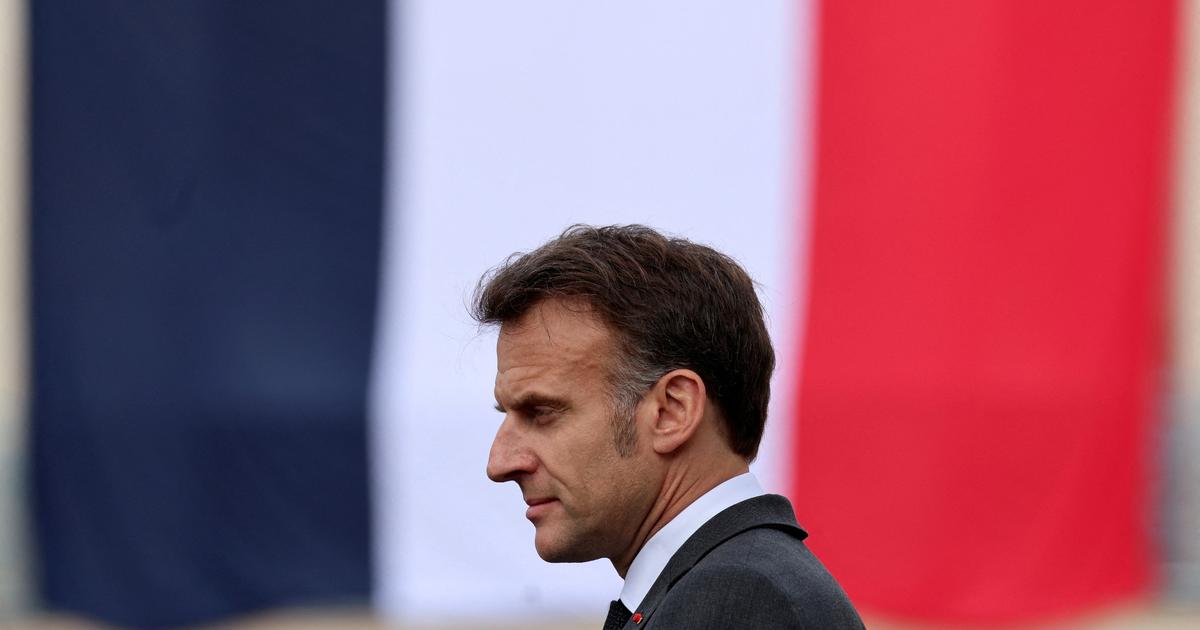
The beginnings were promising. When Friedrich Merz took office in spring 2025, he appeared to be following in the footsteps of Konrad Adenauer and Helmut Kohl. During his campaign, he delivered two speeches on German foreign policy – in December 2024 at the Federal Academy for Security Policy and in January 2025 at the Körber Foundation. These speeches clearly showed his commitment to strengthening the EU and consolidating the Franco-German tandem amid geopolitical tensions with China, Russia, and the United States. Emmanuel Macron welcomed these two speeches very favorably and shortly after Merz’s election, invited him to his summer residence at the Fort de Brégançon (August 2025). This was accompanied by numerous crisis meetings, particularly with Donald Trump, who, upon his return to the White House, seemed poised to hand Ukraine over to Russian interests. Macron and Merz jointly participated in these exchanges, acting in concert with the British Prime Minister within the E3 format, displaying remarkable cohesion and thus avoiding the worst.
The highlight of this cooperation was the opening of a Franco-German dialogue on nuclear deterrence. For decades, Berlin had rejected any exchanges of this nature. Today, with the guarantee provided by Article 5 of the NATO treaty becoming increasingly uncertain, Germany has opened up to the discussion. However, Emmanuel Macron did not propose a “nuclear guarantee” in the strict sense to Berlin. This does not mean replacing the existing “nuclear sharing” mechanism within NATO. The French president does not have the political majority to support such a development.
Given its current capabilities and in exchange for increased conventional efforts by its partners, France could consider deploying nuclear resources on the eastern flank of NATO, within a framework of collective defense. Since Friedrich Merz has given new impetus to the “Zeitenwende,” Germany appears particularly well-positioned to accompany this evolution. While it may evoke hostility from Moscow, it remains realistic and aligns with Berlin’s strategic interests. France is also facing tighter budget constraints and cannot dedicate 5% of its GDP to defense, unlike Germany, limiting its room for maneuver.
…
Hans Stark is a professor of German civilization at Sorbonne University. He is an advisor on Franco-German relations at Ifri.
Małgorzata Gemen is a lawyer and heads the Berlin office of the Polish Institute of International Affairs (PISM).
Â
– This article is available on the dokdoc.eu website.