
“Fuel stocks are guaranteed until at least July,” said government member Christopher Gygäs at the beginning of April. In reality, the margin is even more comfortable because New Caledonia has strategic stocks preserved in the tanks of the three companies that supply the territory (Mobil IPC, Total Energies, and the Petroleum Services Company).
The use of these reserves can only be ordered by the state. In the event of a major crisis, it can issue a decree to mobilize the stocks and prioritize their distribution. The local government, in turn, decides on the priority sectors with the support of DIMENC.
In practice, the list of these priority sectors is however well defined and includes four levels: – First level: emergency and health services (law enforcement, firefighters, doctors, nurses, etc.) – Second level: vital functions such as drinking water, sanitation, and telecommunications. – Third level: essential links for maintaining the food supply chain. – Fourth level: essential links for maintaining territorial continuity (maritime shuttles, domestic air transport, etc.).
To decide on the mobilization – or not – of strategic stocks, several criteria are closely monitored by the authorities: – A possible disruption of the logistics chain, through a natural disaster or a delay in tanker deliveries, for example. – The occurrence of a social or political crisis leading to a prolonged deadlock in deposits. – A global scarcity with impossible access to the resource.
Regarding the minimum level of stocks, it is defined by the decree of May 25, 2021, related to the constitution of strategic oil stocks in several overseas territories including New Caledonia. It specifies that the minimum level to be respected is calculated “each year during the month of February” and is established proportionally to the quantities sold by the different companies during the last civil year.
According to this decree, specialized companies in New Caledonia are required to keep in reserve 13% of the consumption for gasoline, 11% for diesel, and 9% for kerosene in a civil year. As of May 11, 2026, the strategic stocks in New Caledonia were approximately 45 days for gasoline (11,071 m3), 36 days for diesel (18,074 m3), and 32 days for kerosene (2,829 m3), which more or less corresponds to the levels indicated by the decree.
Until now, strategic stocks have never had to be mobilized in New Caledonia, and supposedly, the war in the Middle East should not change the situation. The government seeks to reassure on this issue. “For the moment, there is no problem,” says Christopher Gygäs. “In the short and medium term, there are no risks of fuel shortage in New Caledonia over the next three months. A daily dialogue is established with the oil operators, the government, and the ministries to closely monitor the situation,” confirms the High Commissioner.
Is the scenario of a shortage absolutely excluded? “The hypothesis is not null,” thinks René Féry, general manager of the Petroleum Services Company. “We cannot guarantee with 100% certainty that there will be no shortage, especially with the packages of sanctions applied to Russia, our fuels must be accompanied by certificates attesting that they do not contain any molecules of Russian oil,” concludes the manager.

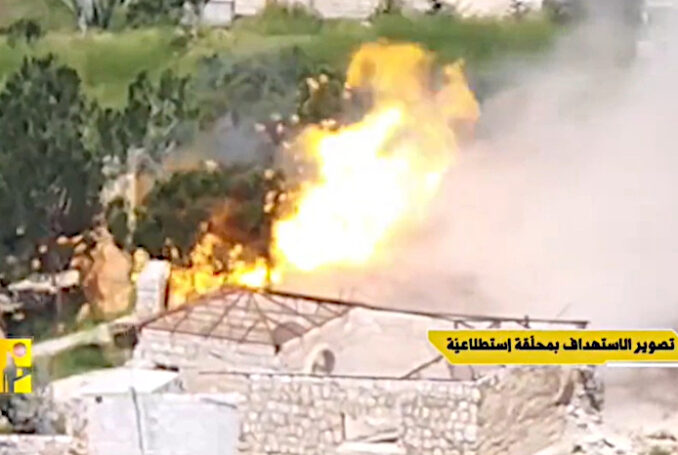
/2026/05/13/6a04da5720b34213529980.jpg "War in the Middle East: Israeli strikes kill 12 in Lebanon, health ministry says")



:quality(80)/outremer%2F2026%2F05%2F12%2F6a0291539cfe5499488284.jpg&description=Middle+East+War%3A+What+strategic+fuel+stocks+does+New+Caledonia+have%3F)