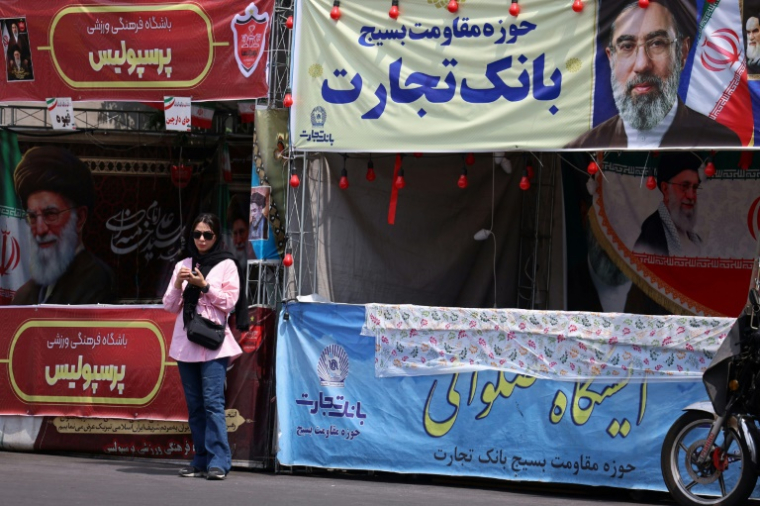
On Tuesday, March 17th, the conflict entered its 18th day with no signs of de-escalation. Explosions were reported in Tehran, Dubai, and Doha. A tanker was hit by an unidentified projectile at the anchor in the Gulf of Oman, at the entrance to the Strait of Hormuz – without casualties. However, the Fujairah oil zone on the Emirati coast was struck again by drones, leading the national company Adnoc to suspend its loadings. More significantly, Iranian officials close to power explicitly called for maintaining pressure on the strait. For procurement departments, this context is not just a backdrop: it is the operational condition in which their contracts, suppliers, and logistics corridors function – or fail to function.
While energy buyers negotiate replacement LNG contracts and balance between term covers and spot contracts, another silent shock spreads in industrial procurement departments. It does not appear on the TTF or Brent. It is called war risk insurance premium, emergency freight surcharge, and force majeure clause. This impact is felt in purchasing categories such as petrochemicals, fertilizers, aluminum, electronic components, and plastics. Suppliers from Asia or the Middle East supply Europe through this 40-kilometer strait.
What the crisis reveals is not just a temporary issue. It is a structural blind spot in the construction of the total cost of acquisition.
What Contracts Do Not Anticipate:
Since March 2, 2026, CMA CGM applied an Emergency Conflict Surcharge of $2,000 to $4,000 per container depending on the equipment type. Hapag-Lloyd imposed a War Risk Surcharge of $1,500 per EVP. MSC declared an “End of Voyage” for all goods bound for the Gulf, unloading cargoes at the first available port without contractual obligation to proceed further. The key question posed to industrial buyers is not about the amount but about who pays.
In most international purchasing contracts, Incoterms conditions determine the transfer of risk and costs. However, war surcharges are not customs duties or taxes – they rarely fall under standard price revision clauses, which typically index on raw materials or production indices. The result: a company that negotiated a firm purchase price in January 2026 for deliveries in the second quarter faces suppliers hitting unforeseen surcharges or shipowners invoking force majeure, leaving the purchasing budget to absorb the shock without contractual safety nets.
The Limitation of Supplier Country Mapping:
The crisis in Hormuz highlights a well-known limitation of supplier risk mapping tools: they often consider the country of origin rather than the logistics corridor. A supplier based in India, South Korea, or Malaysia can have a direct impact via Hormuz if their products transit through the Persian Gulf to Europe. Sectors most exposed are specialty chemicals, nitrogen fertilizers, primary aluminum, electronic components, whose shipments to Europe previously passed through Jebel Ali, partially affected by drone incidents.
Three Contractual and Methodological Challenges to Address:
The first challenge lies in auditing current price revision clauses in international supply contracts to explicitly include indices like the Baltic Dry Index, GRI surcharges by shipowners, and war risk insurance costs for exposed categories. This is not only a legal matter but a question of procurement budget predictability.
The second challenge is revising supplier selection criteria by considering logistics resilience as a scoring parameter, akin to quality or timeliness. For strategic categories, geographic dual sourcing – including at least one source outside of tension zones – is no longer a comfort option but a condition for business continuity.
The third challenge is the most structural. The Hormuz crisis necessitates rebuilding the Total Cost of Ownership (TCO) with a geopolitical component: transport insurance costs in risky areas, emergency surcharge probabilities, rerouting surcharges, and immobilization costs due to extended delays. This modeling effort is not a response to the current crisis – it is a necessity to avoid being blindsided by the next one. Since 2020, three major logistical shocks have hit global supply chains: Covid, the Red Sea, and Hormuz. Exceptions have become the norm.
The Hormuz crisis is not solely an issue for energy buyers. It reveals an entire profession that built its performance on logistics corridors without fully considering the actual cost. The time to correct this blind spot is now.