
Asian rice reaches its historical thermal peak in the last 200 years
For over half of humanity, rice is more than just food: it is the basis of daily nutrition. Half of the world’s population gets 20% of its calories from this cereal, and over a billion people depend on its cultivation for their livelihood. A vast number of people rely on a single plant.
The good news is that rice has benefited from centuries of adaptations. The bad news is that these adaptations have a limit, and we are reaching it.
A study published in the journal Communications Earth & Environment combined 9,000 years of archaeological data with modern agricultural observations and climate projections. The worrying conclusion: Asian rice has never thrived where the average annual temperature exceeds 28°C or where hot season peaks exceed 33°C. Thresholds that have remained stable throughout its history but are now under threat.
The temperature limit that rice cannot cross
A team of researchers from the University of Florida traced the expansion of rice through 803 archaeological sites in Asia. Verdict: in nearly nine millennia, humanity managed to cultivate rice in colder climates—especially during the sudden cooling about 4,200 years ago, which favored the emergence of resistant varieties allowing its extension to Korea and Japan—but it has never been able to adapt to extreme heat.
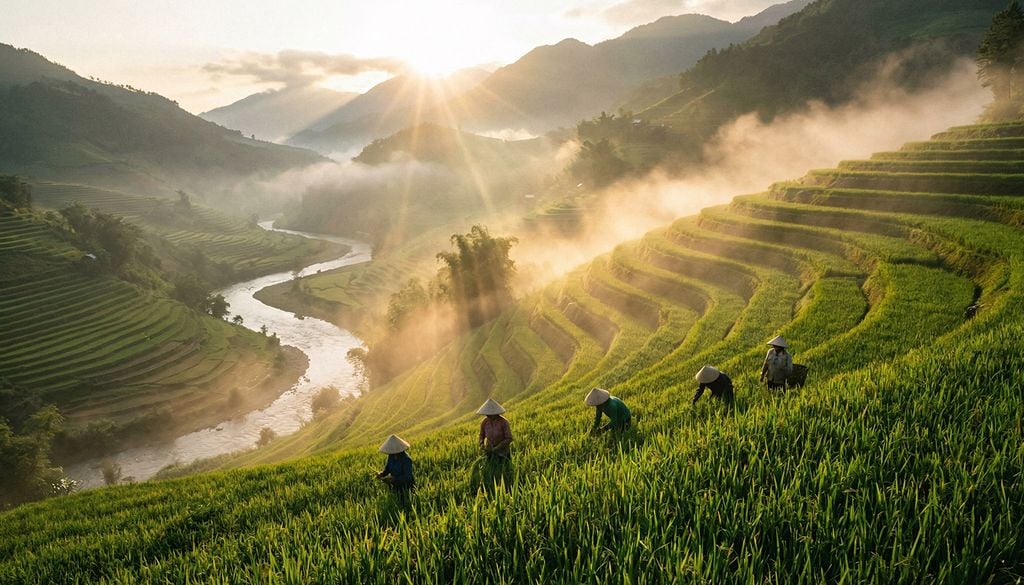
As lead researcher Nicolas Gauthier explains, at extremely high temperatures, “we reach a point where the plant physically ceases to function.” Unlike cold, which can be bypassed by adjusting growth rhythms, excessive heat simply paralyzes the plant’s biological mechanism.
And the upcoming heatwave is of a whole different magnitude. The study warns that in the next 50 years, climate warming will progress 5,000 times faster than any temperature variation to which rice has had to adapt throughout its evolutionary history.
By 2070, almost the entire rice-growing southern area—from India to Malaysia—will have an average annual temperature exceeding 28°C. Projections estimate that areas surpassing these thresholds could multiply by ten to thirty in the main Asian producing countries by the end of the century.
An unevenly distributed problem
India, currently the world’s top rice producer with over 150 million tonnes per year, faces a real risk. Paradoxically, those who depend most on rice for their subsistence will also have the least access to newly genetically adapted varieties that science could develop. The most affected regions in the south—Indonesia, Malaysia, and Bangladesh—are not leading the global agricultural innovation.
Science offers some solutions: genetic improvement, adjusting planting schedules, and shifting crops to higher latitudes.
But Nicolas Gauthier is categorical: even if a large-scale famine can be avoided, the transition will be abrupt and unequal. Rice cultivation could disappear from Southeast Asia and move elsewhere, without solving the problem for those who can no longer cultivate it.
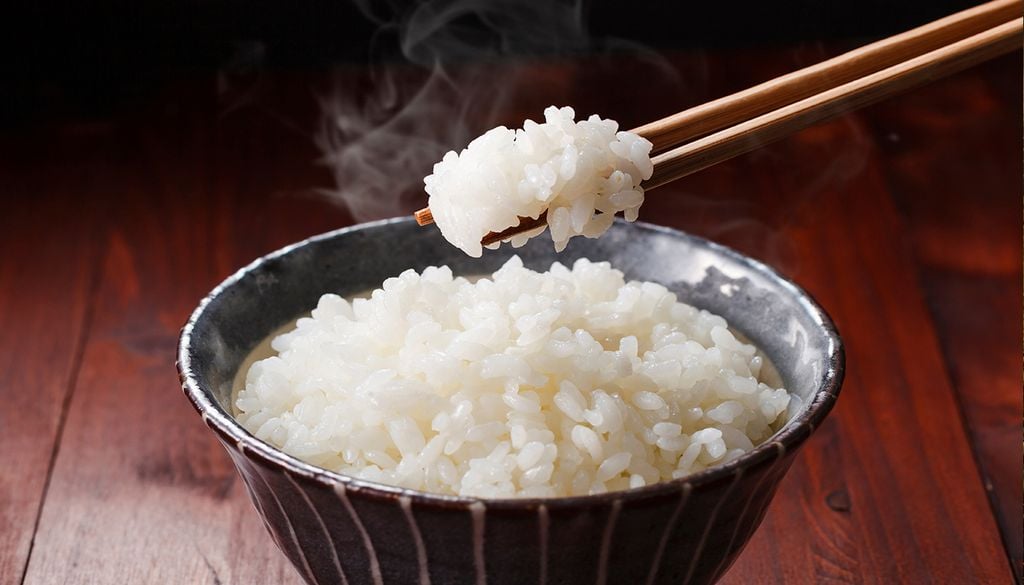
Rice has survived ice ages, droughts, and the collapse of great civilizations. This time, the speed of change is the issue. Climate disruptions work in a cascade: what affects one crop today can disrupt entire supply chains tomorrow, drive up prices, and destabilize populations not covered in the news.
Each tenth of a degree not avoided today is a debt someone will pay tomorrow, likely with an empty plate.
Article Reference:
Gauthier, N., Alam, O., Purugganan, M.D. et al. Projected warming will exceed the long-term thermal limits of rice cultivation. Commun Earth Environ 7, 84 (2026).




/2026/05/05/69f98bfe24804888246640.jpg "Why have the United Arab Emirates been targeted by Iran since the beginning of the war?")
