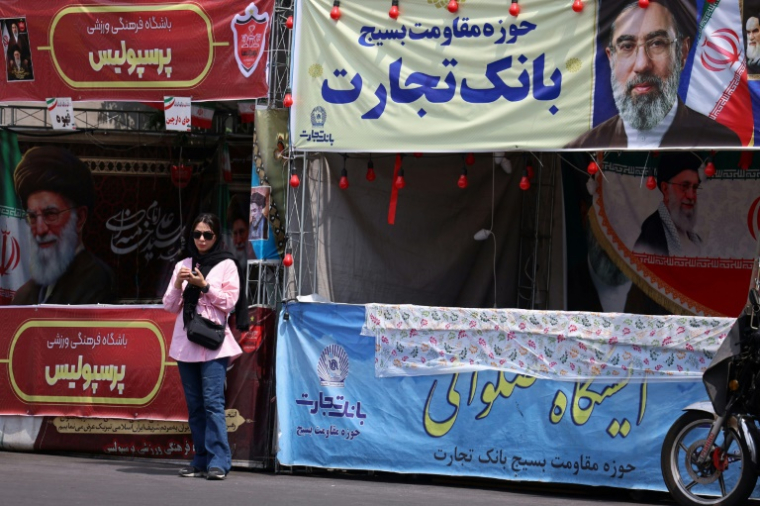
On February 28, 2026, American-Israeli strikes killed Ayatollah Khamenei, Supreme Leader of the Islamic Republic for 37 years. Thousands of Iranians celebrated in the streets of Tehran. But what does this collapse really mean – and for whom? The Islamic Republic was born in 1979 from a revolution that was not inevitable. It was patiently built on an ideology blending political Shiism with Sunni Islamism from the Muslim Brotherhood and European counter-revolution. It eliminated its temporary allies – communists, liberals, feminists – and expanded its influence through a network of regional proxies. Today, this edifice is collapsing. But the issue is not just military: it is the future of political Islam, in Iran and throughout the Muslim world.
Stephanie Roza describes the ambivalent regime that emerged in Iran at the beginning of the 20th century: “There is neither political equality nor political rights, […] but at the same time, the civil law remains in force for all civil rights. Furthermore, Reza Shah, the first of the Pahlavi dynasty, led a modernization, particularly in the economic and technological fields, […] forcibly and seeks to limit the power of the clergy. […] It is therefore a contradictory modernity, an authoritarian modernity. It is this authoritarianism that will crystallize opposition and give ammunition to the clergy who dream only of overturning the progressive dimension brought by the Pahlavi monarchy.”
She emphasizes the idea that their anti-modern nature above all brings Islamism and fascism together: “Islamism is not necessarily the child of fascism in the sense that it is primarily the child of modernity. That is to say, it is the arrival of modernity in the Muslim world that provokes this anti-modern reaction that is Islamism. What we wanted to say is that in essence, Islamism is of the same political family as fascism in the sense that fascism is also a reaction to democracy, to gender equality, to minority rights. It is a […] response to what has been happening since 1789.”
Fascism and Islamism: Roza continues her analysis of the two ideologies: “Hassan al-Banna, the founder of the Muslim Brotherhood, draws heavily on European fascism for the organizational structure of the Muslim Brotherhood: the worship of the leader, youth organizations, and a modern way of militancy that is not limited to preaching but intervenes in trade unions, professional circles, and the organization of society. […] A key element of the discourse of the Muslim Brotherhood is anti-Semitism, and this anti-Semitism is both derived from traditional anti-Judaism found in Islam and Christianity and a legacy of European anti-Semitism. Anti-Semitism is anti-modern in the sense that Jews are blamed for all the evils of modernity.”
Amirpasha Tavakkoli and Stephanie Roza address the episode of Mossadegh and the 1953 coup: “Following Mossadegh’s failure, a significant portion of Iranian intellectuals despaired of Western modernity, meaning that they believed it was no longer possible to modernize Iran through Western-style parliamentary democracy, etc. They therefore embarked on a movement they called ‘coming back to oneself,’ which is actually a return to Iran’s religious identity, the idea that authenticity and autonomy are from that side.”
Iranian power reorganized: Laurence Louar points out that Iran’s strikes on its Gulf neighbors, particularly Oman, a historical ally, mark a major shift and demonstrate a “disorganization,” a decentralization of Iranian power. According to her, the recent video message from Masoud Pezeshkian, the Iranian president, apologizing to the Gulf monarchies, is proof “on one hand, that the institutional leadership of Iran in recent years has constantly tried to maintain a dialogue with the Gulf monarchies and have their support,” and on the other hand, that the president does not decide anything on the ground.
Louar concludes: “The drama of the Islamic Republic is that it has failed to impose its ideology outside of Shiite communities and Shiite Islamist movements. […] It has always been a very pan-Islamic discourse, meaning addressing all Muslims, but its success has been limited to the Shiites, who are a minority. In this regard, the long-standing alliance with Palestinian movements, particularly Hamas, is an exception to this confinement in the ‘Shiite ghetto’ [O. Roy], so what will happen to the Islamic Republic does not mark the end of political Islam, far from it.”