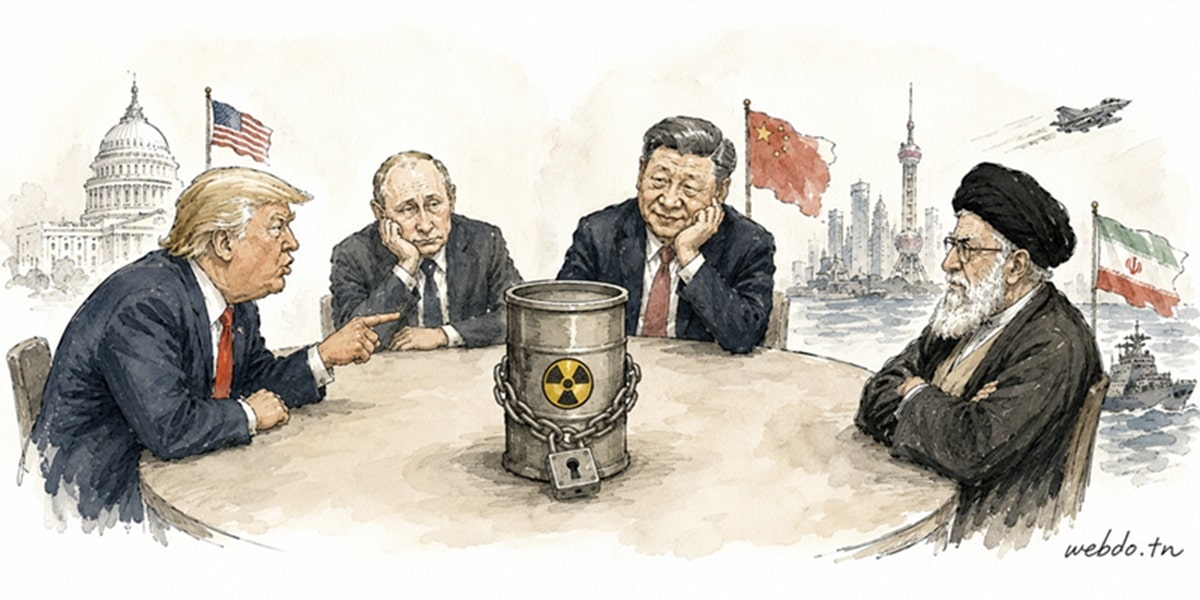
Four years after the outbreak of the Russo-Ukrainian conflict, Europe had not finished healing its energy wounds when it fell victim to a new shock: the closure of the Strait of Hormuz, through which pass nearly a quarter of the world’s maritime oil flows and a fifth of liquefied natural gas flows. This prolonged crisis is already weighing on the price of fuel, heating, and more broadly on the purchasing power of European households. Inevitably, a question resurfaces: what tools do the State and the Central Bank have to face inflation? The answer depends on its nature; failing to identify the causes correctly risks applying the wrong remedy.
Inflation is defined as a general rise in prices, in other words, as a loss of value of currency in terms of goods and services. However, this definition hides a crucial distinction between imported inflation and internal inflation. The former results from an external shock, such as rising prices of energy or raw materials. It comes with a national impoverishment: the energy bill increases, the cost must be shared among households, companies, and the State. Internal inflation, on the other hand, arises from imbalances in the domestic market: an excess of demand, escalating wage negotiations, a price-wage loop that triggers. The decisive question is therefore the duration of the shock. If it persists, it risks being self-sustaining; price increases will fuel wage demands and imported inflation will turn into internal inflation, much harder to extinguish.
It would be simplistic to believe that this phenomenon strikes uniformly or that the most modest are always the most affected. Certainly, imported inflation mainly impacts low-income households, which allocate a higher proportion of their budget to energy and food. But internal inflation produces more ambiguous redistributive effects: by eroding the real value of debts, it favors debtors at the expense of creditors and savers. Moreover, an analysis based solely on price indices is misleading: the minimum wage and many social benefits are indexed to inflation, partially protecting low incomes. INSEE studies have shown that two years after an inflationary shock, it is the wealthiest households that have lost more real purchasing power. Generally, the heterogeneity of situations is often stronger within income brackets than between them. Geographic location, age, dependence on individual transport matter as much as income.
The nature of the shock determines the choice of remedies. Faced with internal inflation, a monetary tightening is justified: raising rates slows down demand and anchors expectations. Faced with an external supply shock, however, this policy proves not only useless but counterproductive: it does not reduce global prices and can worsen the situation by encouraging the investment that supply precisely needs. What the Central Bank can do, however, is maintain its inflation target, to prevent the external shock from triggering a vicious price-wage circle.
Similarly, a restrictive fiscal policy only makes sense in the face of an excess of domestic demand. Constricting it in the face of a supply shock inflicts a recession to combat inflation that does not come from demand. The State can cushion the shock for the most vulnerable through several instruments. The tariff shield has the advantage of not fueling inflation, but it is very costly as it benefits everyone indiscriminately. Targeted transfers (energy vouchers, business assistance) are less expensive but potentially partially contribute to inflation.
The Hormuz shock shows that it is difficult to combat geopolitically induced inflation with instruments designed for domestic imbalances. What public policies can do is cushion the shock for the most vulnerable and maintain anchored inflation expectations. But the State cannot prevent collective impoverishment, a consequence of our structural dependence on fossil fuels. The real answer to imported inflation is neither monetary nor fiscal: it is energy sovereignty. And it plays out over the long term.
Céline Antonin, researcher at OFCE and the Collège de France