Taiwan could be facing an invasion from China. After Donald Trump’s visit to China last week, authorities in Taipei have made multiple statements reaffirming itself as “a democratic, sovereign, and independent nation, not subordinated to the People’s Republic of China.”
“The future of Taiwan cannot be decided by foreign forces, nor be held hostage by fear, division, or short-term interests,” reiterated Taiwanese President Lai Ching-te on Wednesday, May 20.
These worrisome reactions come after statements made by US President Donald Trump. Washington is obligated to provide defensive weapons to Taiwan under the Taiwan Relations Act, a law enacted by the US Congress in 1979.
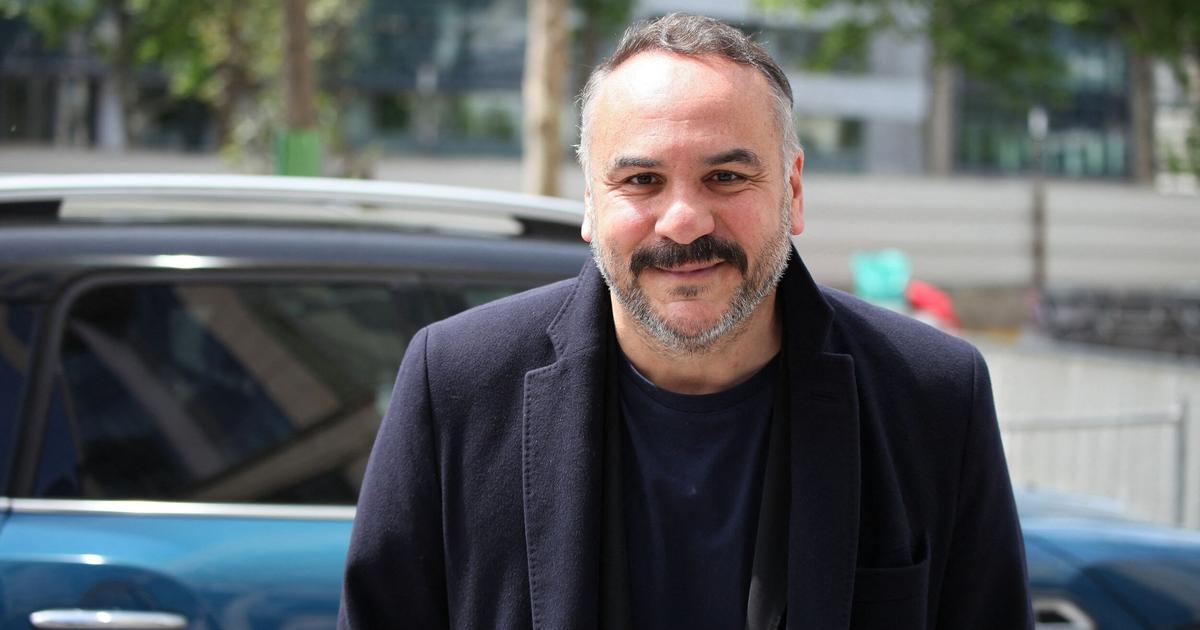
“And ‘Taiwan is heavily dependent on the American arms industry,'” emphasizes Marc Julienne, director of the Asia Center at Ifri, to Le Parisien.
A possible use of arms?
The status quo between Taiwan and China appears to be preserved for now. “It is the status quo that we seek to defend, there is no so-called issue of Taiwan’s independence,” Lai Ching-te recently reminded.
“If there were an official declaration of independence from Taiwan, China would likely attack,” explains Marc Julienne. The ruling party – the Democratic Progressive Party – is seen as pro-independence by China, but in reality, they are “very supportive of the status quo, like the vast majority of Taiwanese. That is, no unification, no independence. We remain as we are.”
However, an armed invasion is not completely ruled out.
Marc Julienne points out that, for the Chinese government, “Taiwan remains an extremely high priority in its ambition to complete the unification of China.” Furthermore, “the Chinese military has been training for years to maneuver in the strait and around Taiwan, with large-scale military exercises, this should not be taken lightly.”
A “slow strangulation of Taiwan”?
A peaceful unification could involve “the development of commercial relations, customs measures, investments… A gradual way to intertwine the two territories,” envisions Marc Julienne. However, this method faces resistance from the Taiwanese people. The specialist recalls that from 2008 to 2016, the Kuomintang, a Taiwanese party favorable to China, established ties with Beijing. “There was an initiation of economic integration, but the population ended up taking to the streets because they did not want to be unified with China.”
In the meantime, Beijing is trying to weaken the rule. During Donald Trump’s visit, Xi Jinping tried to strain the relations between Washington and Taipei, portraying the Taiwanese government in power as independentists creating instability. “China is seeking to ‘unravel the weak diplomatic network’ of Taiwan,” explains Marc Julienne: currently, only twelve countries recognize it as a state. Despite their financial support, the US is not among them.
However, it seems unlikely that Donald Trump will halt arms deliveries to Taiwan, “it would send an extremely negative signal to American allies in the region, such as Japan, Korea, the Philippines,” notes Marc Julienne.
Read the full article on Le Parisien’s website.

/2026/05/21/6a0f31b0de209298707302.jpg "French Cup: semi")


/2026/05/21/6a0ec36dcd74d723096553.jpg "Strong pressures, climate of economic uncertainty… French activity records its sharpest decline in five and a half years against the background of war in the Middle East")