The revolution in weaponry caused by AI and drones
More than the tremendous progress made in all types of missiles in terms of range, power, and accuracy, it is AI and drones that are causing the fundamental revolution in armaments.
The era of drones emerged in conflicts between Azerbaijan (supported by Israel and Turkey) and Armenia in 2023, followed by the war in Ukraine where they completely changed the battlefield from 2023 onwards (the first year saw a relatively classic combat between armored mechanized forces) and finally the clashes against Iran in 2025 and 2026.
The recent integration of AI is creating regions of coordinated machines that will operate relatively autonomously in the future, tracking, identifying, and neutralizing opposing forces if they have not undergone their own technological revolution.
Recent developments have rendered a large part of conventional arsenals obsolete and disrupted the strategies and tactics that have been in place since World War II.
For military strategists, it is a matter of rethinking everything and especially trying to imagine where this evolution will lead because it is only just beginning, and what we know today is just a transition period.
Undoubtedly, this will pose many problems for armament programs that span decades.
Lessons from the past are troubling. Massive investments in military projects that have proven to be failures have highlighted numerous inefficiencies, such as in the case of the two British aircraft carriers – assuming their potential usefulness in a high-intensity conflict of those two floating targets – while adversaries like Iran and China are using affordable yet innovative technologies to challenge Western supremacy.
Beijing has developed the technique of “drone swarms.” Innovations include micro-drones integrated with AI for use by infantry, such as models that conduct reconnaissance or bombing missions autonomously.
The Jiutian SS-UAV system allows coordinated swarm attacks, surpassing many competitors in terms of quantity and intelligence.
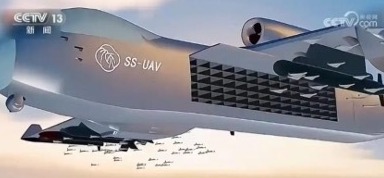
In the field of electronic warfare, China tested swarms of 1,000 to 2,000 drones to generate electromagnetic interference, simulating disruptions of systems like Starlink above strategic areas.
Iran has “democratized” aerial warfare with low-cost drones like the Shahed-136, which have disrupted Ukrainian efforts supported by NATO. Deployed by Russia to target infrastructure, these drones, costing around $20,000 each, enable mass production that overwhelms enemy defenses.
The United States responded by capturing some of these devices and copying them to develop their own low-cost “Low-cost Uncrewed (Unmanned) Combat Attack System (LUCAS),” now operational in the Middle East.
Some research avenues
Following the withdrawal of battle tanks to secondary roles like mobile artillery in Ukraine, infantry has reshaped its tactical schemes, with mechanized combat being replaced by light units creating uncertain and evolving frontlines.
For example, President Zelinsky declared on April 13 that a Russian position had been conquered solely by ground and aerial drones. It is likely that this announcement is somewhat exaggerated, with operators well-present – albeit in the background – and only three Russian soldiers reportedly surrendering. However, humans were needed to disarm and send them back.
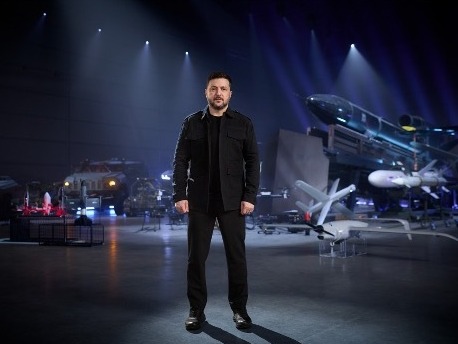
According to General Oleksandr Syrskyi, the Ukrainian Chief of Staff who spoke on April 9, Ukrainian drones carried out over 11,000 combat missions in March 2026 and hit over 150,000 targets, which is staggering.
As ground forces rethink their strategies, the same holds true for aviation and navy.
Some HALE drones now carry various weapons with much greater ranges than current fighters, operating at significantly higher altitudes.
There are also models with hybrid propulsion, and with the arrival of new batteries currently in development, these drones could remain airborne for several days.
Low Earth Orbit (LEO) satellites are revolutionizing the field by providing real-time missile guidance and advanced ISR (Intelligence, Surveillance, and Reconnaissance) capabilities.
Extremely expensive 6th generation fighters risk becoming obsolete before even entering service.
On the other hand, 6th generation drones could pose a major threat to piloted aircraft.
Combat helicopters with extremely limited roles seem destined for obsolescence.
At sea, with only two MQ-4C Triton drones, Americans can monitor all maritime traffic in the Atlantic within 48 hours, conducting specific ship searches using AIS, photos, or registration numbers, a capability that may degrade based on weather conditions.
Other major nations are also making efforts in this direction. Consequently, it is foreseeable that large ships will be limited in the future to acting as long-range missile launch platforms from protected areas far from engagement zones, like nuclear submarines. Detectable, they can be precisely targeted by ballistic and cruise missiles, underwater drones, with the most publicized being the Russian versatile oceanic system 2M39 Poseidon.
All these offensive weapons can be guided in real-time during their trajectory and have ranges of thousands of kilometers.
The rapidly developing electronic warfare allows the jamming or saturation of many surveillance systems.
The challenge for the military and engineers tasked with developing future armaments is that they will not be the ones to implement them. It is therefore very difficult for them to foresee the future, and engaging in programs that must span decades is a very risky endeavor.