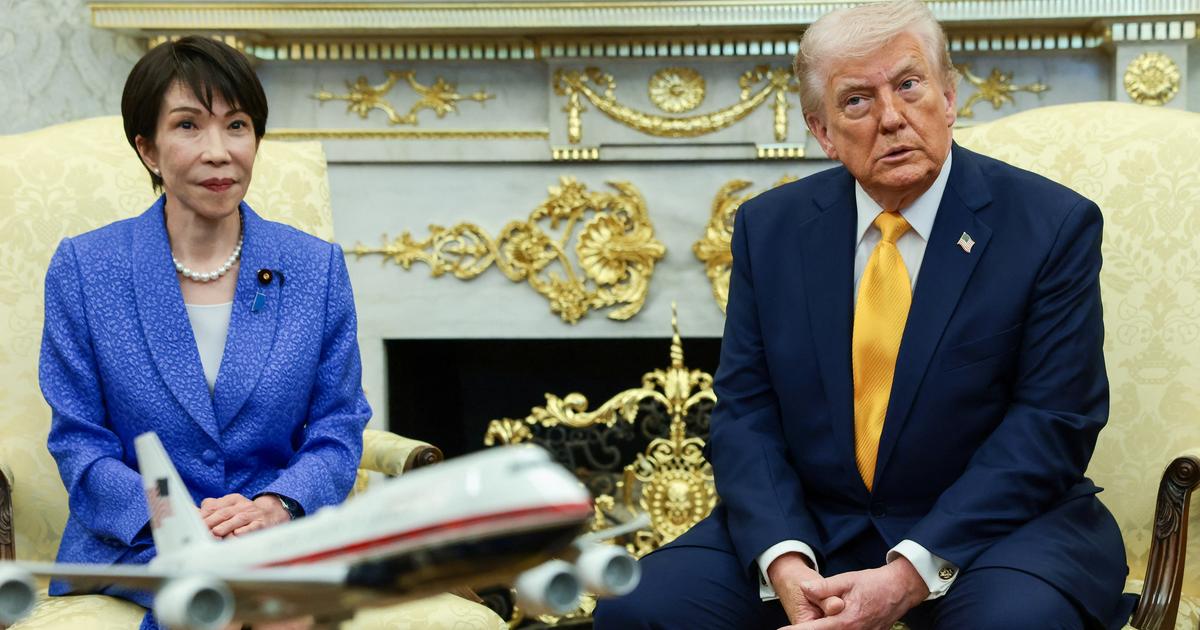
The relationship between Donald Trump and Benjamin Netanyahu, they admitted, is in good shape. They have been fighting hand in hand since the start of the war they began on February 28 against Iran, and maintain a close, “extraordinary” relationship, according to the American president. The Israeli Prime Minister has made no fewer than six trips to Washington since the billionaire’s return to power in early 2025, one of them a few days before the start of the conflict.
However, as the strikes on Iran continue and the fighting has now lasted for three weeks, the objectives of the two men seem to be diverging, especially regarding the choice of targets. The Israeli strikes on the Iranian gas site of South Pars on Wednesday, March 18, displeased Donald Trump, and differences are also emerging regarding when each side can claim victory.
Washington and Tel Aviv emphasize a shared goal: to permanently undermine Iranian military capabilities, halt the nuclear program, and weaken the mullahs’ regime as much as possible. The two historical allies have clearly divided tasks: Israel focuses on the Iranian leadership, having killed Ayatollah Ali Khamenei on the first day of the war and many other high-ranking officials since, while the United States targets military installations.
“The operations carried out clearly show that the Israeli government has been focusing on neutralizing Iranian leaders,” while the goals of the American president “are to destroy Iran’s capacity to launch ballistic missiles, its ballistic missile production capacity, as well as its navy and mining capabilities,” explained Tulsi Gabbard, chief of American intelligence services, at a parliamentary hearing on Thursday.
But the conflict took a new turn when Israel attacked the Iranian part of the South Pars offshore gas field on Wednesday, the largest known gas reserve in the world. Donald Trump expressed his disagreement on Thursday about a strike that the spokesperson for the Qatari Ministry of Foreign Affairs described as a “dangerous and irresponsible step.” “Targeting energy infrastructure poses a threat to global energy security,” regretted Trump in a post on X. Iran responded by launching a broad retaliation against the energy resources of neighboring countries, considered by the Islamic Republic as allies of the United States, causing confusion in financial markets and raising the specter of a gas war in the region.
Asked about the repercussions of this attack, the American president did not hide his discontent about his Israeli ally. “I told him not to do that, and he won’t do it again,” he affirmed at the White House, adding: “We act independently, but we get along very well. It’s coordinated. But sometimes he does something, and if I don’t like it… then we stop doing it.”
However, the Wall Street Journal claims that Donald Trump had been warned of this strike and had approved it. He nevertheless stated the opposite on his Truth Social network, emphasizing that the United States knew “nothing” about this attack. Coming to Qatar’s defense, the American president also stated: “Israel will no longer carry out any attacks on the South Pars gas field, of pivotal importance, unless Iran makes the reckless decision to attack an innocent target, namely Qatar.”
Donald Trump maintains close relations with the Arab Gulf monarchies, which serve as bases for American troops and are therefore targeted by Iran. “When everything goes marvelously, everyone is happy… If things start to go very wrong—and we know very well that Trump is not sentimental—then accusations will fly,” anticipates Yossi Mekelberg of the Chatham House think tank in London, interviewed by AFP.
“The biggest miscalculation of the American administration has certainly been to get involved in this war,” wrote Badr Albusaidi, Oman’s Minister of Foreign Affairs, in The Economist, considering that “this is not the United States’ war, and there is no plausible scenario in which Israel and the United States would both get what they expect.” On Thursday evening, Benjamin Netanyahu denied having dragged his historical ally into the conflict, telling journalists: “Does anyone really think we can tell President Trump what to do?”
The differences between the two countries “may intensify over time,” anticipates Dan Shapiro, former US ambassador to Israel under Barack Obama, interviewed by CNN. Thus, if Donald Trump had, at the beginning of the war, “expressed hope for a quick overthrow of the Iranian regime, he is now less focused on this point.” However, the elimination of the mullahs remains Israel’s absolute priority, as the regime is a direct threat to the Jewish state. Benjamin Netanyahu wants to crush it, just like the Lebanese Hezbollah.
But this Israeli resolve carries the risk for the United States of “facing the fallout of a chaotic scenario after the regime falls, potentially a civil war in Iran, instability that could spread and affect neighboring countries, as well as migratory flows that could destabilize Europe and Gulf allies,” predicts Dan Shapiro. Aiming at all costs for a transition to a new regime in Iran also means prolonging the war “for several more weeks, or even longer,” which will be “very costly for the United States, both in human lives and financial resources,” emphasizes the former diplomat.
The Pentagon is requesting an additional $200 billion in funding from Congress, as revealed by the Washington Post on Thursday. This is a titanic amount as it represents “one-fifth of the annual defense budget, and more than the $188 billion in military aid unlocked for Ukraine by the Biden administration, over three years,” as pointed out by Les Echos. In the absence of clear explanations about the military objectives of the White House, some officials, mainly Democrats, may try to block this funding request. And some Republicans may be tempted to support this initiative.
Moreover, several senior American officials are skeptical about the very purpose of this war. Joe Kent, appointed by Donald Trump to lead the National Counterterrorism Center and who abruptly announced his resignation on Tuesday, criticizing an unjustified intervention. “Iran posed no imminent threat,” he wrote in his letter published on X.
This unexpected resignation highlights divisions within the Republican sphere and the inner circle of the American president. Editorialist Tucker Carlson, a long-time staunch supporter of Donald Trump, for example, strongly criticizes the war against Iran and praised the resignation of the senior American counterterrorism official, as reported by the New York Times.
From the perspective of American public opinion, the conflict appears unpopular, including among a part of Donald Trump’s voter base. According to a recent Reuters poll, 59% of Americans disapprove of this conflict, and 55% of those surveyed oppose the deployment of any ground troops, regardless of the scale of operations. The conflict has led to an increase in gasoline prices for consumers and turbulence in the markets just months before the mid-term elections in November.
According to Brian Katulis of the Middle East Institute in Washington, interviewed by AFP, “it is not inconceivable that Donald Trump may consider that the cost of this war is becoming too high and hindering his domestic policy.” But it is necessary for him to “chart an honorable way out.”