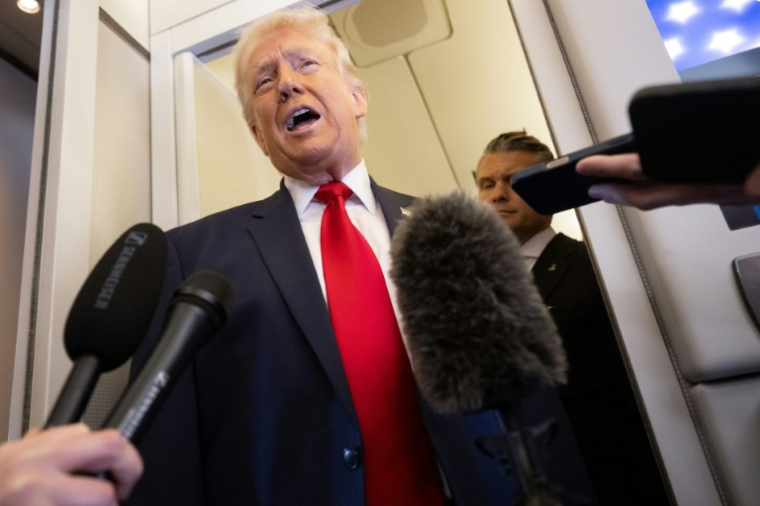
The White House denied, on Tuesday, March 10, any escort operation of ships by the U.S. Navy in the Strait of Hormuz, a crucial maritime passage for global energy supply.
“I can confirm that the U.S. Navy has not escorted any tanker or any ship at the moment,” said spokesperson Karoline Leavitt during a press conference.
A few minutes earlier, U.S. Energy Secretary Chris Wright had posted a message on X stating that a first tanker had been escorted by the U.S. Navy through the strait, before deleting it. Tehran quickly denied this information.
Oil prices had plummeted after this announcement. Under normal circumstances, nearly a fifth of the global production of oil and liquefied natural gas passes through the Strait of Hormuz, which has been closed by the Iranian regime since March 1.
“It is absolutely crucial for maritime transport to resume in the strait,” said Amin Nasser, the CEO of the Saudi oil giant Aramco.
In the face of escalating tensions, Iran issued multiple warnings. Defying Washington’s call not to “hold the global economy hostage,” Ali Mohammad Naini, spokesperson for the Revolutionary Guards, warned that Iranian armed forces “will not allow the export of a single liter of oil from the region to the enemy camp.”
In Europe, concerns are growing about possible energy repercussions. The European Commission has recommended that countries capable of doing so reduce energy taxes to limit price increases.
The International Energy Agency has convened an extraordinary meeting to assess the need to tap into strategic oil reserves to avoid a price surge, but no immediate decision has been announced.
In Washington, no moderation measures are currently being considered. On the contrary, Defense Secretary Pete Hegseth warned that Tuesday would be “the most intense day of strikes,” heightening tension around the strategic passage.
/2026/03/10/068-aa-10032026-2688941-69b0a0ac0f2a1754860452.jpg "The United States threatens Iran with intense strikes, new Israeli bombings in Lebanon… What it means")