
A passerby in front of an anti-American mural on the wall of the former American embassy in Tehran on April 11, 2026 (AFP / ATTA KENARE)
Donald Trump announced on Sunday an American blockade of the Strait of Hormuz, accusing Iran of refusing to give up its nuclear ambitions after the failure of direct talks aimed at ending the war in the Middle East.
While assuring that the discussions in Islamabad, lasting over 20 hours, were “successful” and “most points had been agreed upon,” the U.S. president reiterated his readiness to strike Iranian energy infrastructure, indicating that Tehran had refused to compromise on the nuclear issue.
“We are overwhelmed by despair and helplessness. We are tired of this uncertainty,” reacted Nahid, a 60-year-old homemaker from Tehran, affected by six weeks of Israeli-American bombings.
“There didn’t seem to be anyone really willing to negotiate,” commented 38-year-old teacher Laura Kaufman from Tel Aviv.
It is by accusing Iran of seeking to acquire nuclear weapons – which Tehran denies – that the United States justified the offensive launched with Israel on February 28, triggering a war that has resulted in thousands of deaths, especially in Iran and Lebanon, and disrupting the global economy.
“Act of War” –
The United States will begin a “process to BLOCK all ships attempting to enter or exit the Strait of Hormuz,” strategically important for global trade and oil supply, the American president wrote in his first response to the announcement of the failure of the negotiations.
Without detailing the specifics of such an operation, while the passage has been blocked by Iran since the start of the war, he stated on Fox News that the UK “and a few other countries” would send mine sweepers.
Iran “will not succumb to any threats,” responded Parliament President, Mohammad Bagher Ghalibaf, who led the Iranian delegation in Islamabad.
The Revolutionary Guards have threatened to trap their enemies in a “deadly vortex,” claiming to have “fully under control” the traffic in the strait, where Tehran has established passage rights.
According to the Iranian news agency Fars, two oil tankers flying the Pakistani flag heading there turned back on Sunday, while hundreds of commercial ships remain blocked.
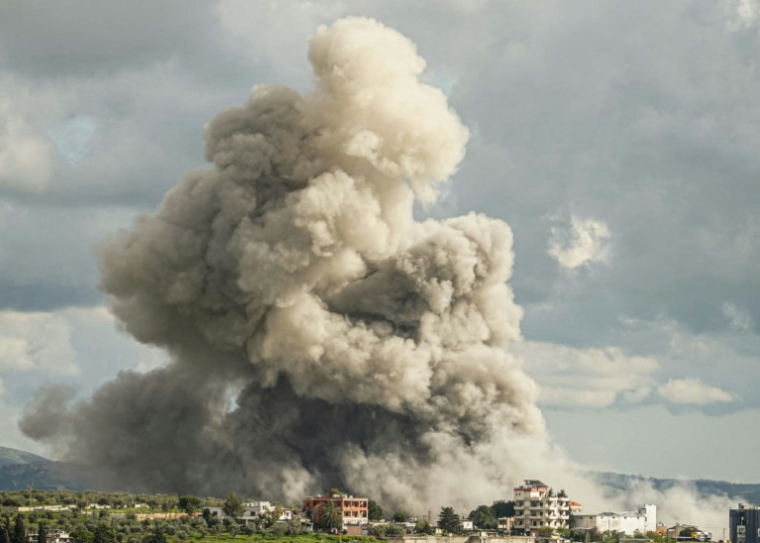
Smoke rising after an Israeli strike on Nabatiyeh, southern Lebanon, on April 12, 2026 (AFP / Abbas Fakih)
An American blockade “is an act of war, and suggests that Washington is becoming increasingly disillusioned with diplomacy,” analyzed Nicole Grajewski, a professor at the Center for International Studies in Paris.
“Mistrust” –
Following the announcement of the deadlock in the talks, Pakistan called for respect for the ceasefire agreed between Tehran and Washington on Wednesday.
Neither party has commented on the fate of the ceasefire set to expire on April 22.
Oman, a mediator between the two countries before the war, urged them to make “painful concessions” for a negotiated settlement.
As the delegations left Pakistan, they did not rule out continuing negotiations.
“We are leaving here with a very simple proposal, an approach that constitutes our final and best offer,” said Vice President JD Vance before leaving Islamabad. “We will see if the Iranians accept it.”
On their end, Tehran blamed the failure of the negotiations on American attempts to “dictate their terms,” with the Foreign Ministry spokesman, Esmaeil Baqaei, mentioning “an atmosphere of suspicion and mistrust.”
For him, “it was obvious” that an agreement could not be reached “in a single session.”
Lebanon Front –
On the second main front of the war, Lebanon, talks are planned for Tuesday between Lebanese and American representatives in Washington, after Israel’s approval under American pressure.
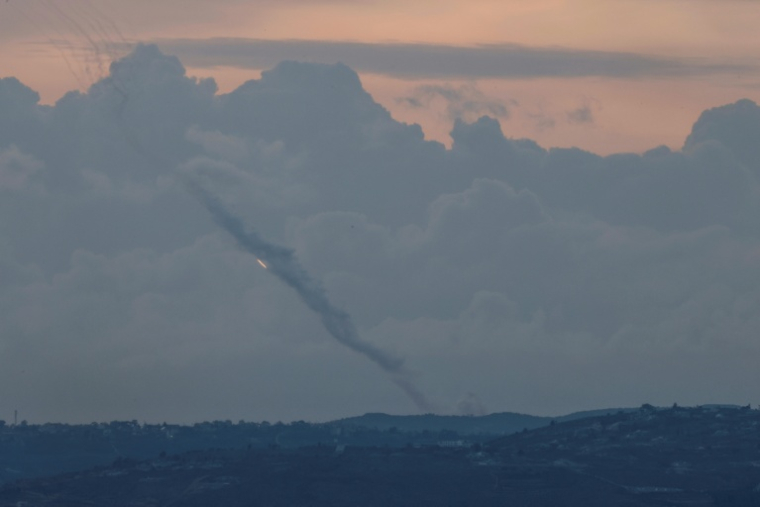
Rockets fired towards Israel from southern Lebanon on April 11, 2026 (AFP / Jalaa MAREY)
Lebanese authorities have reported over 2,000 deaths since the country was plunged into war on March 2 by the pro-Iranian Hezbollah, who rejected any direct negotiation.
Following the ceasefire, Israel argued that Lebanon, where it fights the Shiite movement, was not included in the agreement.
During his first visit to southern Lebanon since the start of hostilities, Israeli Prime Minister Benjamin Netanyahu stated that the army, after advancing into Lebanese territory to establish a so-called “security zone,” had “countered the threat of invasion.”
His Lebanese counterpart, Nawaf Salam, assured that Beirut was working to achieve a complete withdrawal of Israel.

/2026/04/12/69db98825b071697638115.jpg "REPORTAGE: Are we going to wage war all our lives?: after the failure of negotiations between Washington and Tehran")


