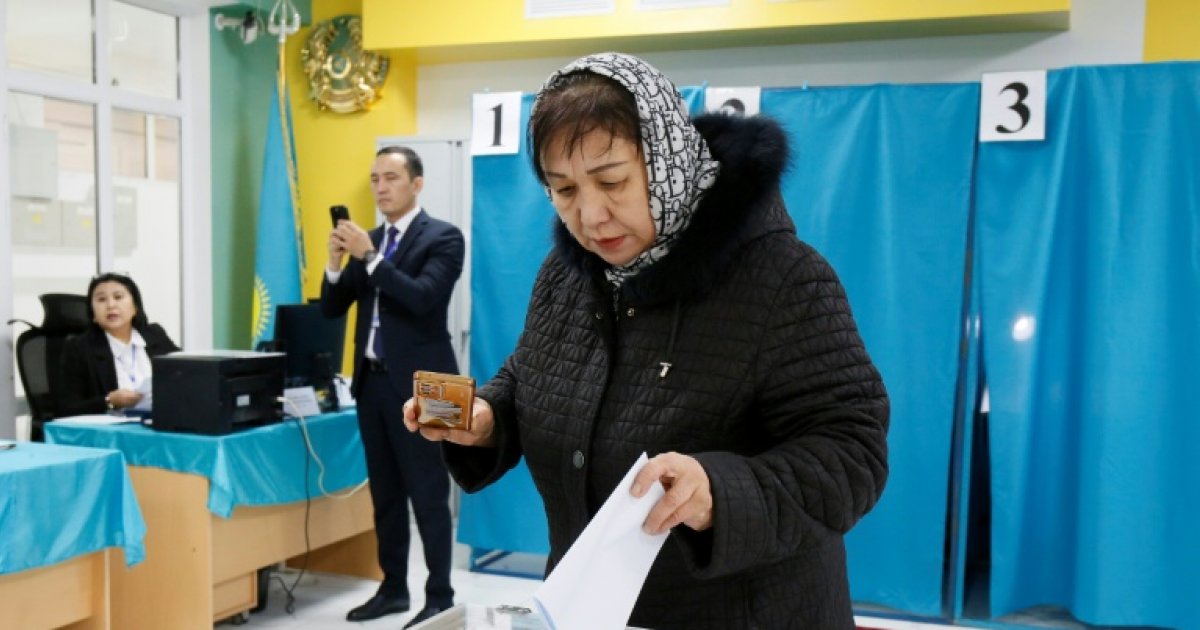
The prospect of the upcoming presidential election in 2027 is worrying Perrine, a 26-year-old lawyer. “The violence of the debates and certain proposals, along with the increasing number of candidates, I start to wonder if I will vote,” fears this resident of Nantes. The upcoming municipal election does not excite her any more.
If she were to abstain, she, who has always participated in all elections since reaching the voting age, would join the group of French citizens who stay away from the polls. On average, voter abstention ranges between 30% and 50% in various elections, reaching a peak of 66% in the first round of the 2021 regional and departmental elections.
This phenomenon is largely explained by inadequate registration, affecting about 20% of the electorate. Practical or administrative barriers that limit participation from the outset. But it is also conceivable that out of political weariness, abstaining becomes a credible option. According to the Cevipof barometer, nearly 8 out of 10 French citizens declare that they no longer have confidence in politics.
Legal affairs, dissolution, motions of censure, polarization… The reasons for this democratic fatigue are numerous, and they can lead even faithful voters like Perrine to consider abstention. This goes against the narrative that voting is a civic duty.
A Civic Duty
Firstly, the Catholic Church, in its catechism and social doctrine, calls upon individuals to take part in the social and political life of the country by participating in elections. “Abstaining is a failing,” noted the Conference of French Bishops during the second round of the 2022 presidential election in this regard.
More broadly, the idea that voting is an unconditional imperative is strong in Western democracies. However, Pierre-Etienne Vandamme, a researcher in political theory at the Catholic University of Louvain, nuances this stance. “There are legitimate cases in which abstaining, such as when elections are democratic charades serving an authoritarian regime, is acceptable,” he advances. “Participation is a moral imperative conditioned by political openness and respect for pluralism.”
Therefore, it is necessary to question whether these fundamental democratic rules are being respected. In France, they are. Abstaining out of activism may not be very opportune. However, the issue of the weight of a ballot in the electoral mass can be more troubling. “Among the disillusioned citizens we encounter, the idea that their voice does not count and that the election is already decided often arises,” notes Clara Michielini, co-president of the “A voté” NGO, which works against abstention.
This sentiment is reinforced by increasingly numerous and premature surveys. Every vote counts, especially in a municipal election. “A voté” thus recommends researching the margin of votes in previous municipal elections – often just a few thousand votes, even in large cities – to better understand the real weight that each vote carries.
Fewer Default Votes
But for some voters, the origin of abstention lies elsewhere. Thus, the refusal to vote for the candidate they dislike the least, especially in the second round, is gaining ground. This includes left-leaning voters hesitating to support Emmanuel Macron against Marine Le Pen in 2022, or citizens lost in 2024 during the legislative elections, in the duels between La France insoumise and the Rassemblement national.
For these individuals, the psychological cost of voting against their convictions is too heavy to bear. While understandable, this approach overlooks the altruistic dimension of voting. “It is necessary to think about shifting focus, to question the consequences of abstaining on others, on those we want to help,” says Pierre-Etienne Vandamme. “The political offer always presents an option that is closer to one’s own values than the others.”
The collective aspect of voting also reminds us that when one citizen abstains, another with divergent ideas makes their voice heard. This may convince Perrine to go to the polls this month and in 2027. The question that remains is which name to put in the ballot box.