An international Summit in Paris, followed by a Nuclear Policy Council in Normandy: as the price of hydrocarbons soars, the president is expected to set a course towards closing the cycle and energy independence. The war in Ukraine in 2022 had forced Emmanuel Macron to change course on nuclear power. The president, who had previously planned to close half of the reactors despite warnings of heavy gas dependencies, now promised to relaunch nuclear power in turbulent times.
Since then, several projects have been set in motion including extending the reactor fleet, building six new EPR2 reactors, and supporting small modular reactors (SMRs). Four years later, amidst a new war in the Middle East putting pressure on the Strait of Hormuz and our economy, the stakes are high. The executive hopes the cards will be dealt over the coming year.
Construction Site Visit
To present his strategy, Emmanuel Macron carefully chose the setting. This new nuclear policy council—the fifth since the relaunch in 2022—will not take place at the Élysée Palace, but in Penly (Seine-Maritime), where the largest industrial project in France in thirty years is set to begin—the construction of the first pair of EPR2 reactors. The excavators have already begun work. Sebastien Lecornu and a group of ministers will pose in front of the first 1,000 workers of a project that will truly commence in 2029, if all goes well.
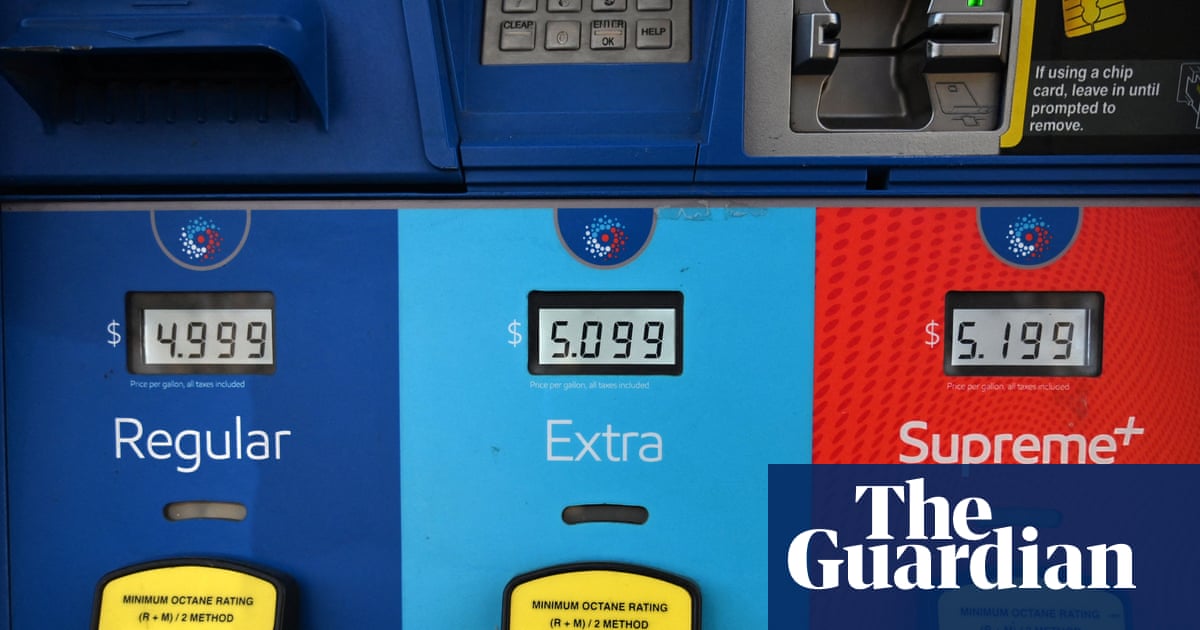
Two days earlier, on March 10, President Emmanuel Macron hosted the second international nuclear summit in Paris where about sixty countries and financial organizations reaffirmed their commitment to reviving civilian nuclear power and unveiled their plans. This carefully orchestrated sequence comes as the war in Iran once again drives up the price of hydrocarbons, highlighting the need for Europe, with scarce resources, to strengthen its independence.
EPR2, Year Zero
The budget for the first three pairs of EPR2 reactors, set at €72.8 billion (2020 value) was finalized in December. The Interministerial Delegation for New Nuclear (DINN) has conducted a detailed audit in recent months, to be presented to the president. The goal is to ensure that by the end of the year, everything aligns for the executive to make a final investment decision—the much-awaited DIF that will mark the real start of the projects and orders.
The possibility of building four additional pairs will also be discussed, but this decision depends on France’s ability to finally accelerate its electrification. “There is no rush at this stage, as the program for the first six pairs has not been officially launched, and we already have ample capacity to meet a sharp increase in electricity demand,” one participant revealed.
According to our information, this NPC will mainly address another major, albeit less visible, topic: the closure of the fuel cycle.
Towards Fourth-Generation Reactors
In spring 2025, during the previous NPC, the executive tasked the sector with developing a comprehensive, operational roadmap to close the fuel cycle by 2100. In recent months, CEA, EDF, Framatome, and Orano have set up working groups to develop this roadmap through dedicated teams and regular meetings. “It’s the first time we’ve worked together so smoothly and efficiently,” a source familiar with the matter noted.
“Closing the cycle” involves ultimately achieving complete sovereignty by eliminating the need for natural uranium supply and running future French nuclear reactors on their own waste: plutonium and accumulated depleted uranium stocks over decades. Today, the cycle is partially closed—used fuel is reprocessed in La Hague, with a fraction recycled as MOX and the rest stored. However, completely closing the cycle requires fourth-generation reactors—fast neutron reactors capable of producing more fissile material than they consume.
“Not the Return of Astrid”
The Astrid project, a sodium-cooled fast reactor demonstrator abandoned in 2019, addressed only a part of the issue. The roadmap to be presented this Thursday is expected to be much more ambitious, covering all three dimensions with a timeline of industrial validations and the construction of a demonstrator—decisions that are yet to be made.
Scenarios envision a hybrid park in the second half of the century: 25% third-generation EPR2s, 75% fourth-generation reactors. At this proportion, the cycle closes. “There are no identified scientific barriers. The physics have been known since Phénix and SuperPhénix. What remains to be built is the industrial feasibility and the political will to finance a program over several decades that will not conclude during any current term,” explained another source involved in the discussions.
2100: the date set for the policies the executive is preparing to implement. A long-term project.