With only one direct neighbor, who has always been considered an ally, two oceans, and the Arctic, Canada has built itself with no fear for its territorial security.
But climate change and melting ice that make northern lands more accessible and coveted, as well as rising tensions with the American neighbor, have changed the game.
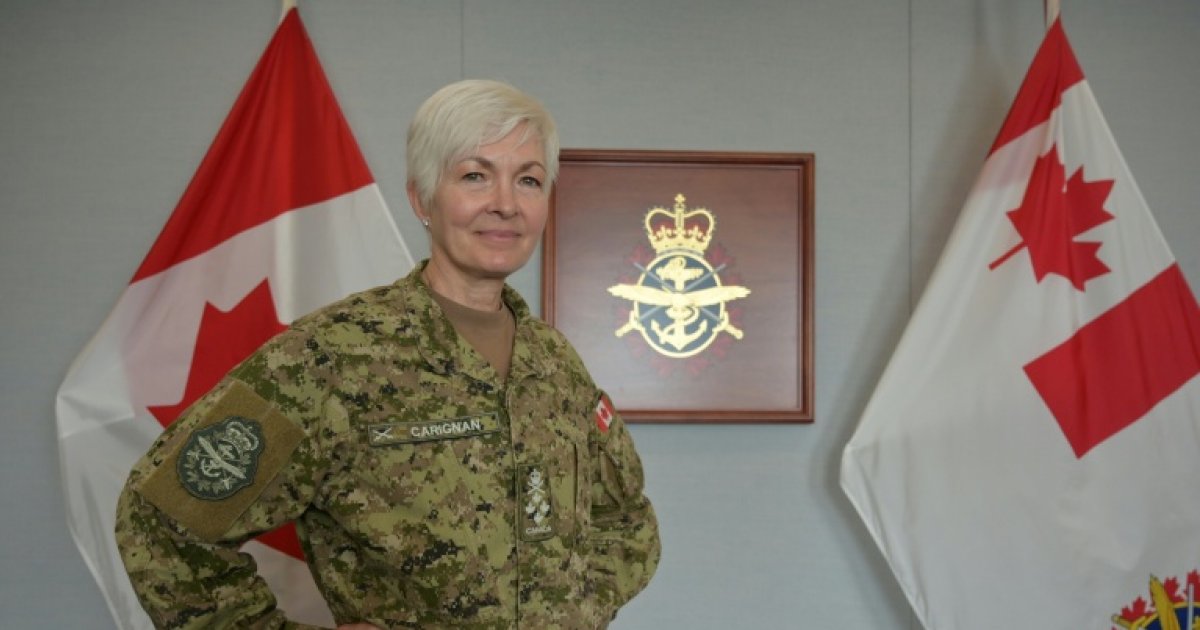
In this context, the Canadian Armed Forces are forced to “transform” profoundly, explained Jennie Carignan in an interview with AFP in Ottawa.
Arriving as Chief of the Canadian Armed Forces in July 2024, she is the first woman to hold this position in a G7 country.
Referring to climate change that makes the Arctic and therefore northern Canada more accessible, she believes it is crucial for the country to “position itself differently” today, to “ensure that we have control and take responsibility for defending this territory.”
“There is a modernization of our infrastructure, the positioning of equipment and material (…) and more and more military exercises and operations in the north.”
Heating up three to four times faster than the planet, the Arctic attracts growing interests, with melting sea ice allowing increased access to resources (hydrocarbons, minerals, fish) and the opening of new maritime routes.
More broadly, with a global environment that has “changed tremendously in recent years,” the Canadian Armed Forces are forced to modernize.
An evolution that marks a break with the past three decades, dominated by targeted expeditionary missions, such as in Afghanistan. Now, Canadian forces must prepare for “larger-scale conflicts,” requiring equipment and structures suitable for conventional operations between armies, the general believes.
At the same time, Ottawa seeks to balance its supply chains to break away from American dependence, thus creating a defense investment agency to strengthen its national industrial base.
This transformation is part of increased budget efforts. Jennie Carignan is pleased that military spending has reached 2% of GDP this year, meeting NATO’s target. But she believes that “sustained and stable investments over the next 10-15 years” are necessary to implement these transformation and modernization efforts.
Jennie Carignan, who hopes that her example can serve as a “model” for other women, notes that recruitment efforts are currently paying off in Canada, with a recent influx of candidates.
With its new defense industrial strategy, the country plans to inject $500 billion into defense over the next ten years.