The Tehrik-i-Taliban Pakistan (TTP) at the heart of the conflict
The escalation of terrorist attacks by the Tehrik-i-Taliban Pakistan (TTP) – a movement opposed to the Islamabad government – on Pakistani territory is undoubtedly the primary factor explaining the aggravation of tensions between Islamabad and the Taliban regime. The TTP is a terrorist group that brings together Pakistani Pashtuns from the tribal areas historically close to the Afghan Taliban. In addition to ethnic ties, their proximity to the Afghan Taliban is both ideological and evident in their strict interpretation of Islam (Deobandi school), with nonetheless greater openness to international jihadism embodied by Al-Qaeda and the Islamic State. The TTP’s goal is to establish an Islamic emirate in Pakistan modeled on the Afghan Taliban regime.
The TTP carried out numerous deadly attacks in Pakistan, especially between 2008 and 2011, and in 2014. However, the group eventually lost ground due to the Pakistani military’s counterterrorism operations and U.S. drone strikes campaigns, which eliminated its three successive leaders (Baitullah Mehsud in 2009, Hakimullah Mehsud in 2013, and Mullah Fazlullah in 2018). During the second half of the 2010s, many TTP members retreated to Afghanistan, where they found refuge among the Taliban and even fought alongside them against NATO forces.
Regional environment of Pakistan and Afghanistan
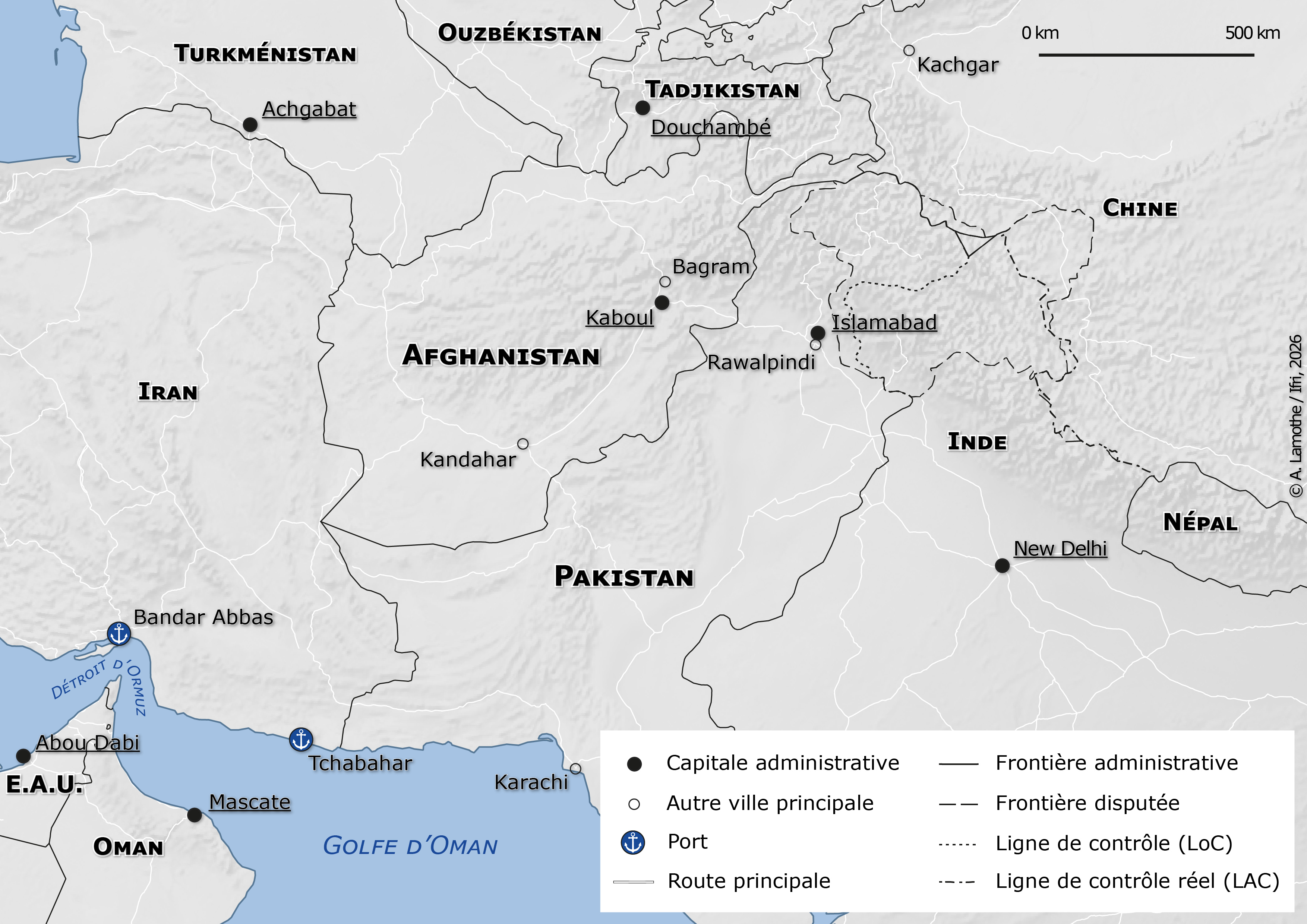
In the months following the Taliban’s return to power in Afghanistan, the TTP resumed its attacks on Pakistan. Several hundred TTP fighters were released from Afghan prisons in early 2021 and returned to bolster the group, which also gained organizational coherence under its new leader, Noor Wali Mehsud. Pakistan, in turn, initially relied on its historical affinity with the Taliban and asked for their help in managing the TTP’s resurgence. In 2022, Prime Minister Imran Khan’s government began negotiations with the TTP, mediated by Afghanistan. However, these negotiations failed by the end of 2022, leading Islamabad to turn against the Taliban regime, accusing it of sheltering the group and even facilitating its cross-border incursions. By 2025, more than 660 Pakistani military and paramilitary personnel, as well as 580 civilians, were killed in attacks mostly attributed to the TTP.
Pakistani pressure on Kabul
Lacking cooperation, Pakistan now aims to compel Kabul to combat the TTP on its territory and is increasing pressure tactics to achieve this. Islamabad targeted Afghan refugees in Pakistan, estimated at over 4 million, deporting nearly a million of them to Afghanistan. It also closed the border, cutting off Afghanistan’s main transit routes to the outside world. These measures led to a rise in violence along the border, including heavy artillery exchanges and an escalation to the aerial domain, with the Pakistani Air Force striking TTP training camps and Taliban army units starting in February 2026. On February 27, 2026, the Pakistani Defense Minister declared “an open war with Afghanistan.”
Despite this, Afghan Taliban do not turn against TTP fighters; they view them as blood and arms brothers and see them as a useful leverage in their asymmetric relationship with Pakistan. Additionally, they fear that targeting TTP members may drive them towards the Islamic State in Khorasan (IS-K), their major rival. The Taliban have historically opposed IS-K’s global ambitions, which they fiercely fought against. Historically, defections of TTP fighters led to the formation of IS-K in 2014-2015 in eastern Afghanistan. These various factors suggest that the Taliban are unlikely to yield much to Pakistani pressures, and bilateral tensions will likely persist with deadly consequences.
Mediation and opportunism of major regional players
Following Pakistani airstrikes in October 2025, Qatar and Turkey urged Pakistan and the Taliban to negotiate a ceasefire, which was quickly violated. Saudi Arabia joined the efforts, but negotiations collapsed in late November 2025. After the peak of violence in February-March 2026, the three states managed to secure a five-day truce between Kabul and Islamabad for the end of Ramadan celebrations. China has also discreetly attempted mediation since 2025, without much success. China may continue its efforts as it fears destabilization of the “Af-Pak” region, which borders its Xinjiang region historically vulnerable to jihadist ideologies, and dreads Afghanistan becoming a rear base for terrorist groups hostile to China.
India, on the other hand, is not engaged in mediation. Its relationship with Pakistan hit rock bottom after a four-day armed conflict in May 2025. Despite having negative views of the Taliban historically, the Indian government surprisingly reached out to establish closer ties with them to regain influence in Afghanistan. This shift was evident when India hosted a significant Taliban delegation led by the Afghan Foreign Minister, Amir Muttaqi, in October 2025, announcing the reopening of its embassy in Kabul and an increase in financial and humanitarian aid. The prospect of closer ties between India and Afghanistan deeply worries Pakistan, as it would sandwich the country between two neighboring unresolved border conflicts. From the Pakistani authorities’ perspective, any Indian influence in Afghanistan points to a strategy of encirclement that must be fought against.
As for the Trump administration, it generally supported Pakistan’s military campaign against Afghanistan under the banner of the “right to self-defense.” This support stemmed from the rapprochement between Washington and Islamabad since May 2025, upsetting New Delhi. With the relative approval of the Trump administration, Pakistan felt free to intensify its strikes against Afghanistan starting in February 2026.
War in the Middle East: Increasing risks for Afghanistan and Pakistan
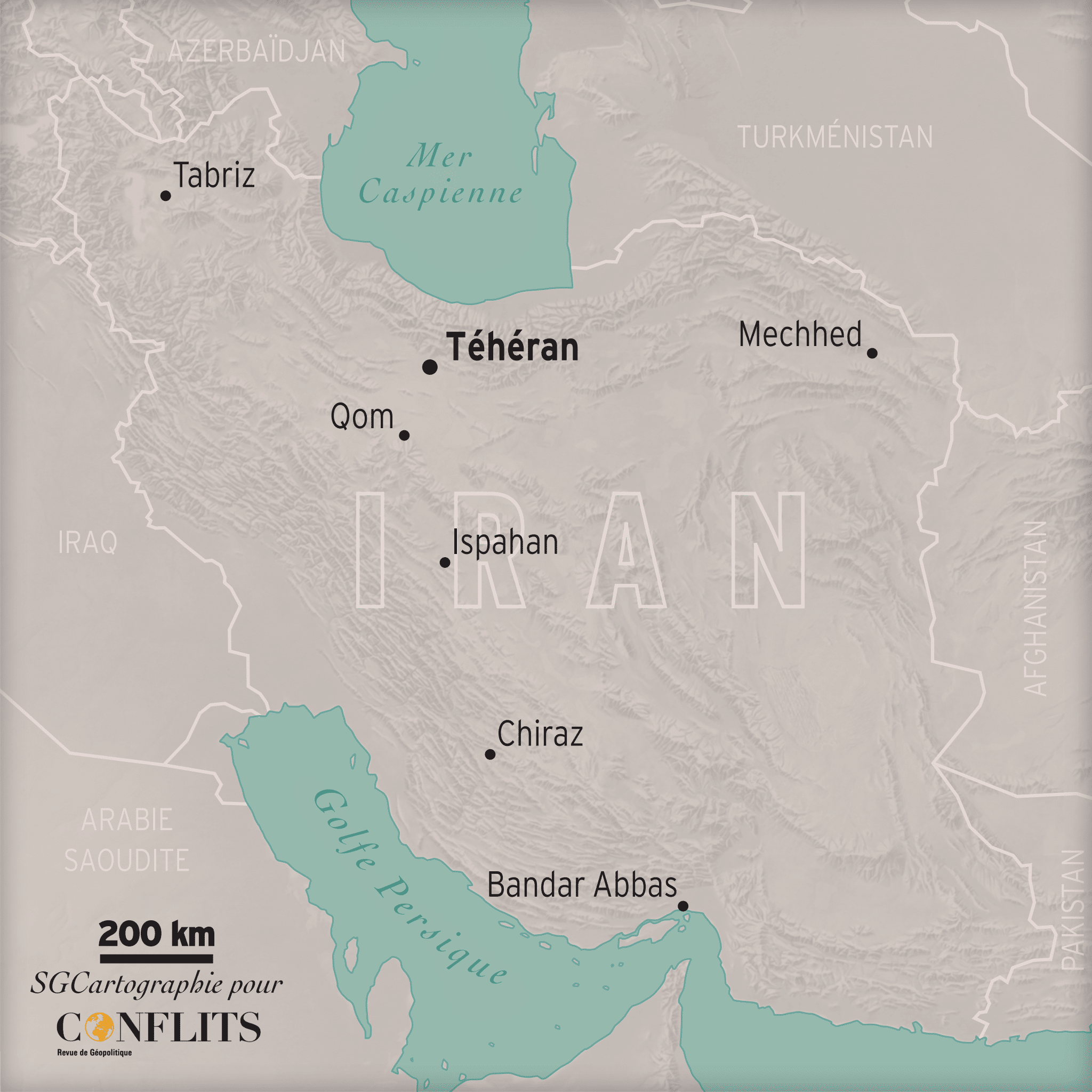
The war in the Middle East poses several challenges for Pakistan and Afghanistan. For Pakistan, it disrupts hydrocarbon supplies and exacerbates economic difficulties. For Afghanistan, the impact is predominantly humanitarian. To cope with the closure of the Pakistani border, Kabul turned to Iran, its top trading partner in 2025. However, access to the Bandar Abbas and Chabahar ports has become so precarious that Afghanistan struggles to make its most essential imports. Moreover, the war has repatriated thousands of Afghan refugees in Iran, further worsening food security in the country.
At this stage, prolonged destabilization in Iran could further weaken the security situation in the country’s border areas with Afghanistan and Pakistan, potentially facilitating activities of multiple insurgent and terrorist groups. Additionally, this instability could ripple through Pakistan’s significant Shiite minority (15% of the population) and create tensions within the Sunni majority. Furthermore, Pakistan may come under pressure to intervene in the war under the strategic mutual defense agreement it signed with Saudi Arabia in September 2025. However, Islamabad is wary of being dragged into a conflict that would strain its relationship with Iran. Therefore, Pakistan strategically offered to facilitate negotiations between Iran and the United States. If confirmed as a mediator, Pakistan could maintain functional ties with Tehran and Riyadh, confirm its strategic utility for the United States, and gain leverage in its own war against Afghanistan.

/t:r(unknown)/fit-in/1100x2000/filters:format(webp)/medias/AeWr17FGuu/image/Dossier_de_presse_compressed_page_00011774950803250-format16by9.jpg "Spring of Freedoms 2026: culture as an act of resistance in Belleville!")