Carla Simón, a young Catalan director, transposes her story into a very inventive film. In the maritime setting of Vigo, she follows Marina’s quest, equally focused on her family’s past and her future, possibly in cinema. Stunning images, characters full of Spanish history, a rich and incredibly appealing film.
By Bernard Cassat.
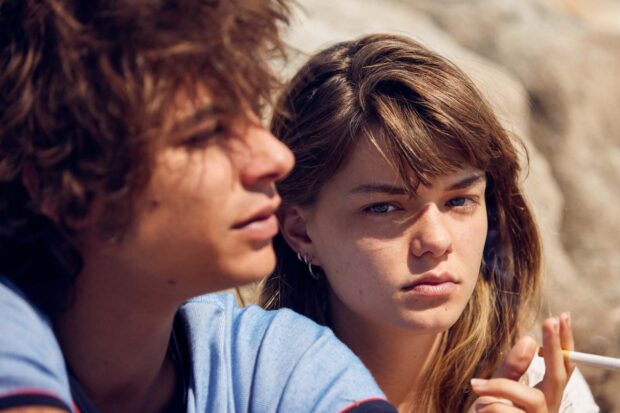
For a student scholarship application, Marina goes to Galicia, to Vigo, to ask her grandparents, whom she has not yet met, to sign a paper. She thus discovers a whole family branch, that of her father who died when she was young. Uncles, aunts, cousins, she encounters the past. And by filming it, she builds her future.
This family is very wealthy. The grandfather owned a shipbuilding company. And immediately, the film takes us on a beautiful sailboat, that of an uncle with several grown children. Carla Simón does not provide explanatory gloves. It’s up to the viewer to reconstruct the puzzle that makes up this extended family. Through images, the director also shows Marina’s desire to make films. Some sequences are the ones she shot with a small camera.
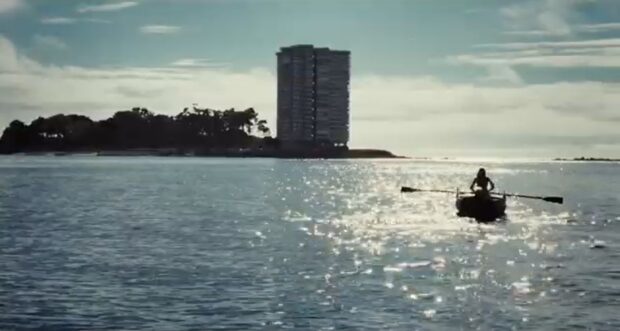
Marina identifies places she has heard of, buildings where her young parents lived. She even asks neighbors for testimonies, fifteen years later. And some speak.
But in the family, Marina has to coax the truth out so that they really tell her. She senses inconsistencies, things left unsaid. By digging through belongings, she finds objects, including a music box and a journal of her mother.
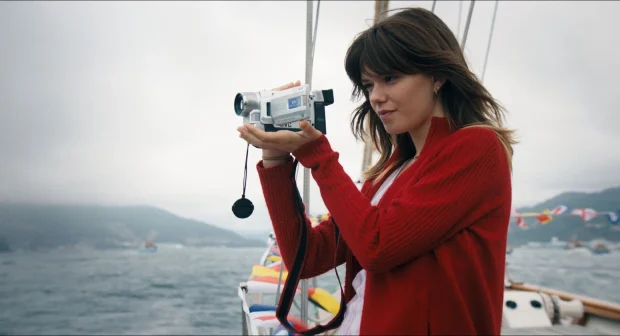
From solid reference points, Marina reinvents the lives of her parents. And even creates images, she who is so interested in cinema. Carla Simón does not seek a cinema of reality. And that’s the strength of her film. In sequences that seem very realistic, she introduces images from elsewhere. Sometimes conversations that Marina hears become images, sometimes pure invention. But their treatments indicate the difference, often subtly. Super 8 enlarged, digital film quickly but with elegance, the status of each image becomes the narrative thread.
After the movida, hard drugs
Because Marina’s discoveries about her parents’ lives are quite unusual. They belong to the generation following the “movida,” this liberation on all fronts that Almodóvar glorified. It was their era. Strong drugs then wreaked havoc. Marina discovers all of this. She imagines their life in a kind of film that she creates for herself, with herself in the role of her mother and her handsome cousin in that of the father. A life of wealthy maritime hippies, trips to South America. The drug use but also love. With a tragic ending. Because in reality, she learns that her father did not die when she thought, but that he was hidden by his own parents for two or three years. Because he had AIDS, and the shame was too much for those wealthy Francoist individuals. Also, the grandfather tries to buy Marina to prevent her from signing the paper she requested. But Marina will see it through to the end.
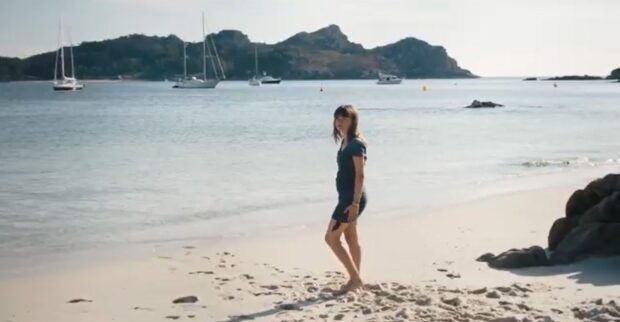
The lived experience of this story is obviously felt. Carla Simón, like Marina, tells her life. But, more importantly, she brilliantly constructs a way to tell it, with mastery of all the stages of a film. As original as the screenplay is, her choice not to confront the issue head-on but to follow the poetic vision of this aspiring filmmaker is interesting, as is the filming of the sequences. Many of them on or under the sea, the Atlantic of Vigo with its reefs in front, traverses the maritime garden of the parents like children. And the editing at times becomes captivating, leading the viewer to ask certain questions. For her third and highly notable film at Cannes 2025, Carla Simón emerges as a great filmmaker.
Carla Simón at the Les Carmes Cinema

Presenting her film that closed the Recidive festival in a premiere, Carla Simón confirmed the inspiration she found in her life. She lived a similar and tragic adventure to that of her character Marina. She explained in great detail the technical challenges of her film, the differences in images, the choice of a non-actress for the role of a young girl. She spoke of the history of Spain inscribed in the characters, especially the grandparents. And all the unspoken things that divide families. Furthermore, she spoke about her title Romería, a religious pilgrimage and a pagan celebration at the same time.
With her daughter next to her in a stroller, she truly brought into the room the constant mix between reality and films. There was a lot of emotion in this exchange as in her film!
More information differently:
“More powerful than me”: a film too tame to explain a crazy disease