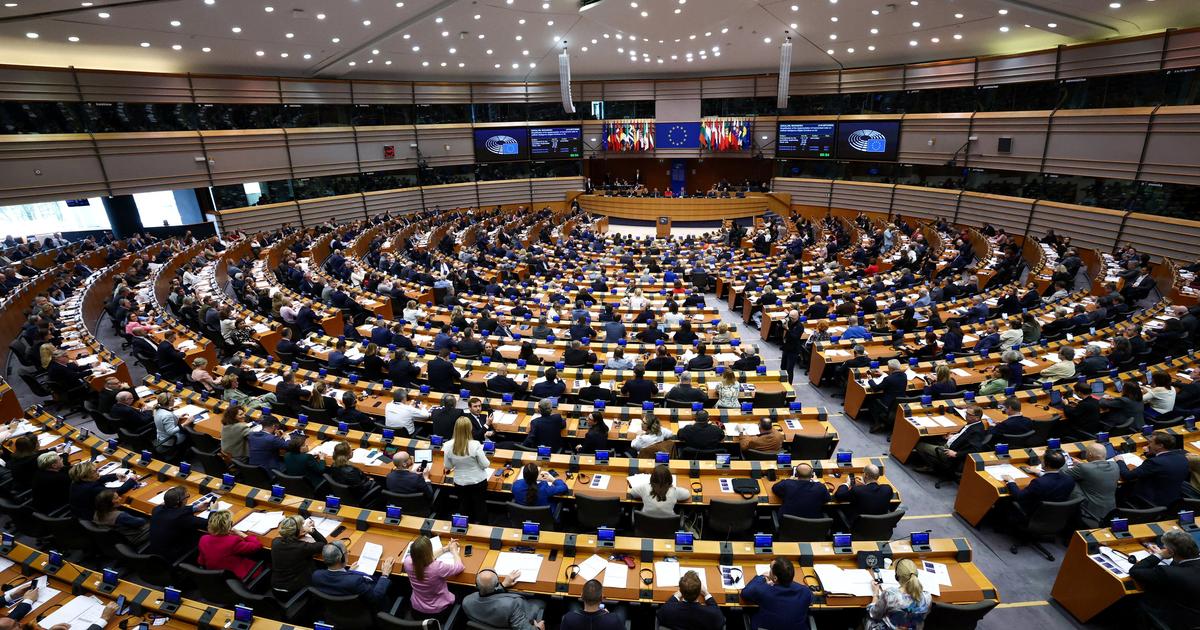
In a delicate balancing act, the European Union has embarked on a frenzy of free-trade agreements to reduce its dependence on China and the United States, while trying to maintain the compromise on customs duties negotiated last year with Donald Trump. After months of hesitation and deadlock, Euro MPs on Thursday gave the green light to the implementation of this major trade agreement concluded last summer between Brussels and Washington. The MPs approved the elimination of customs duties applied in the EU on most American imports, in exchange for capping the duties imposed by Trump on European products at 15%.
However, they attached multiple safeguards, suspensive conditions, and even an extinction clause (set for March 2028) to denounce the imbalance of this agreement and to show their extreme distrust towards the American president, who uses customs duties as a diplomatic weapon.
Despite the efforts of the European Parliament to balance relations with the United States, French MPs from the centrist Renew group announced that they would vote against the text. The deal, negotiated through difficulties by European Commission President Ursula von der Leyen, had been viewed in Europe as a capitulation to the American president.
In terms of legal uncertainty, the examination of the agreement by the Parliament was delayed due to threats of annexation of Greenland by the United States, and later due to a decision by the U.S. Supreme Court invalidating Trump’s customs duties. This created substantial legal uncertainty, prompting Washington to implement temporary taxes until a new tariff regime was established in July.
The European Commissioner for Trade, Maros Sefcovic, hailed the agreement as a crucial step for Europe and the United States, while the U.S. ambassador to the EU praised it as a good decision for citizens on both sides of the Atlantic. As the Europeans manage their relationship with the U.S., they also make efforts to reduce their dependence on both the U.S. and China.
The EU has been diversifying its free trade agreements, such as with Indonesia, Mercosur, and recently with Australia, in the past months. This strategy of commercial diversification was not initiated because of Trump, but he significantly accelerated it by causing disruption in the international economic and trade system.
In the face of Trump’s coercive measures, forging new alliances becomes a defensive move for the EU. These agreements are seen as strategic tools in the international arena. It is seen as a realization of the Canadian Prime Minister Mark Carney’s call for middle powers to unite against the dominant hegemonic powers on the global stage.