The president of the United States, Donald Trump, claims that negotiations are underway with Iran to end the war and has even put forward a fifteen-point plan. However, Iranian officials deny the existence of talks. Who is telling the truth? It’s hard to tell for sure, especially as the war in the Middle East entered its 26th day on Wednesday, following Israeli-American attacks on Iran. On one hand, President Donald Trump insists that Washington and Tehran are “currently” negotiating to try to end the conflict. On the other hand, several senior Iranian officials deny this. Here is what we know.
What does Donald Trump say? Repeatedly, including as recently as Tuesday, President Donald Trump has stated that negotiations are currently taking place with Iran to end the war. “What I said yesterday (Monday) was exactly right,” declared the American head of state on Tuesday, specifying that his envoy Steve Witkoff, son-in-law Jared Kushner, Vice President JD Vance, and Secretary of State Marco Rubio are involved.
When asked by the press about the possibility of an agreement to end the war, Donald Trump responded: “I think we will end it. I cannot tell you for certain.” But according to him, Iranian leaders “want to reach an agreement.”
“They did something yesterday (Monday) that was actually great. They gave us a gift and the gift arrived today (Tuesday). And it was a very big gift, the equivalent of a lot of money,” he added. Asked if this “gift” was related to the nuclear issue, the American president replied: “No, it was not related to nuclear. It was related to oil and gas.”
“And it was a very nice thing they did, it showed me that we are dealing with the right people,” he emphasized. When asked if the Iranian “gift” was related to maritime navigation in the Strait of Hormuz, Donald Trump confirmed this. “Yes, it was related to traffic and the strait,” he confirmed. Iran then indicated that “non-hostile ships” could once again use the strategic Strait of Hormuz.
What is the United States’ plan? In this context, several media outlets, including the New York Times and Israeli television channel Channel 12, report that the Trump administration has proposed a fifteen-point peace plan to Iran through Pakistan, which maintains good relations with both parties. This plan was reportedly transmitted to Tehran via Pakistani mediators, according to two senior officials in Islamabad who spoke to AFP on Wednesday afternoon.
According to three unidentified sources cited by Channel 12, the United States is proposing a one-month ceasefire, giving Iranian authorities time to consider their demands.
According to the same source, among the fifteen points, five concern the Iranian nuclear program, others require the abandonment of support for Iran’s allies in the region, such as the Lebanese Hezbollah or Palestinian Hamas, and one point emphasizes that the Strait of Hormuz remains open to maritime navigation. In return, Iran would receive a lifting of international sanctions against it and support for its civilian nuclear program.
“Iran denies any negotiations”… but On the other side, Iran emphatically denies negotiating with Washington. The spokesman for the Iranian army, who already stated that the United States “was negotiating with themselves.” “As we have always said… nobody like us will deal with you. Neither now nor ever,” declared Ebrahim Zolfaqari on Iranian state television.
“We clearly stated yesterday (Tuesday) that there are no talks or negotiations between Iran and the United States,” said Iranian Foreign Ministry spokesperson Esmail Baghei on India Today this Wednesday morning. “We had a catastrophic experience, it must be said, with American diplomacy. We were attacked twice within nine months, while we were in the middle of negotiating to resolve the nuclear issue. This is therefore a diplomatic betrayal,” he added.
“We have also heard about such details in the media, but based on my information – and contrary to what Trump claims – no negotiation, direct or indirect, has taken place between the two countries so far,” also asserted Iranian Ambassador to Pakistan Reza Amiri.
Later, Iranian state television, citing an unidentified official, finally stated that the regime had rejected the peace plan proposed by the United States. “Iran has reacted negatively to the American proposal,” indicated Press TV, a public English-language channel aimed at a foreign audience. “The war will end when Iran decides to end it, not when Trump decides,” they added.
According to the Wall Street Journal, citing sources close to the matter, Iran is setting several weighty conditions for resuming negotiations. These include the closure of all American bases in the Gulf, redress for attacks against Iran, passage rights for ships passing through the Strait of Hormuz, lifting sanctions on Iran, or ending strikes against Hezbollah in Lebanon.
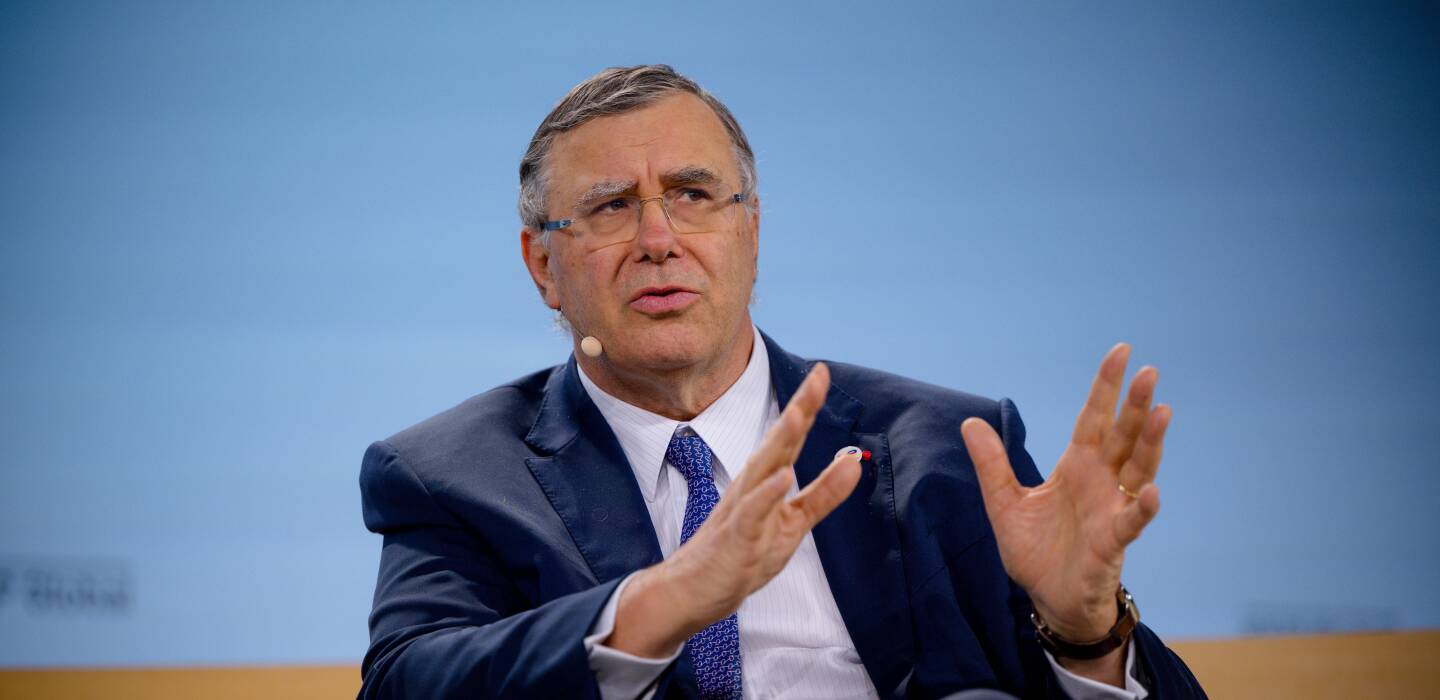
/2026/03/24/000-a4fn2cl-69c24b17ae68a748848844.jpg "War in the Middle East: What do we know about the negotiations between the United States and Iran mentioned by Donald Trump?")