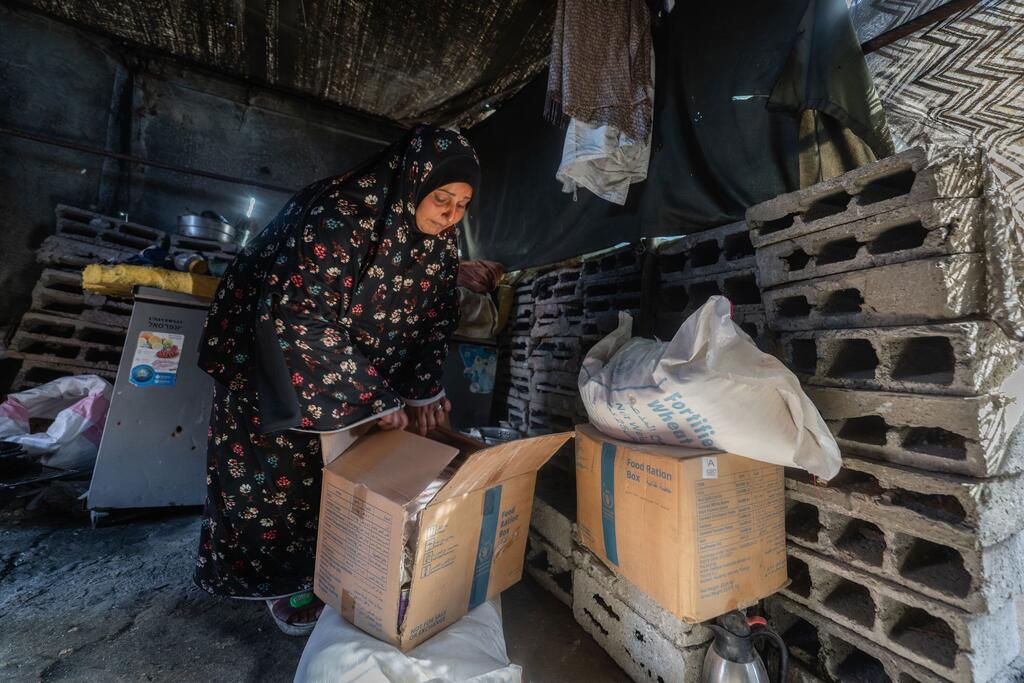
Barham Salih wasted no time to get to the ground. Just a few days after taking office on January 1, he had already left the conference rooms at his Geneva headquarters for the dust of refugee camps in Kenya and Chad, showcasing how he intends to lead an agency put to the test by crises multiplying faster than the system devised to respond to them.
“The responsibility, in every sense of the term, is immense,” he admitted in a recent interview, his voice slightly marked by the magnitude of the task.
For Mr. Salih, now in his sixties, this role is far from abstract. The new United Nations High Commissioner for Refugees knows displacement not as a statistic, but as a lived experience.
“Behind every statistic, there is a life,” he was quoted as saying.
Born in Iraqi Kurdistan in 1960, he became a refugee himself in adolescence and spent years in exile, part of a generation marked by repression and war under Saddam Hussein’s regime. He studied in the UK, pursued a political career, then returned to his country to become the eighth president of Iraq in 2018 – a journey that shapes his perspective on the millions of people still trapped in uncertainty today.
“I know, and I fully understand, that this far exceeds the means and capabilities of the UNHCR today,” he acknowledged.
The strategy is based on a shift that the humanitarian system has struggled to realize for a long time: moving from emergency aid to economic inclusion. According to him, refugees should be able to work and contribute to host societies, rather than remain dependent on assistance.
“This is not an acceptable situation,” he asserted. “It is a violation of the fundamental right to dignity.”
One of the persistent paradoxes of the refugee crisis is that it largely falls on countries least equipped to handle it. From Colombia to Uganda, from Chad to Bangladesh, these countries host the vast majority of displaced persons, often with insufficient international support.
“I am deeply touched by the generosity of many of these countries and communities,” he said.
But generosity has its limits. Without sustainable investments and inclusion, the system risks freezing into a permanent crisis, with a global underclass of displaced persons kept aside rather than integrated.
Barham Salih emphasized resilience as a guiding message, especially to young refugees growing up in uncertainty.
“To the youth, I say that we will work to help you exercise your capacity to act,” he explained, highlighting not only protection but also prospects.
“Being a refugee should be a temporary situation, not a permanent suffering,” he emphasized.
At the end of his initial visits, what struck him was not only the magnitude but also the persistence of the crisis.
“Once again,” he said, reiterating the idea guiding his mission, “being a refugee should be a temporary situation, not a permanent suffering.”
For millions of people living in camps like Kakuma, this distinction has blurred.