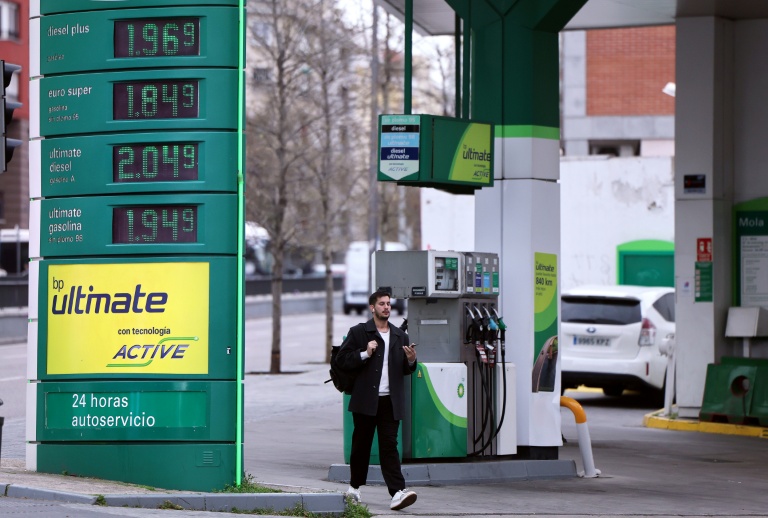
In other words, is the market permanently incorporating a geopolitical risk premium into price formation? Since the 1990s, the functioning of the oil market has been based on an implicit assumption: geopolitical shocks are transient. Whether it is tensions in the Middle East, regional conflicts, or temporary disruptions in flows, these episodes have consistently led to temporary price increases that are quickly absorbed. The war in Iraq in 2003, the Arab Spring in 2011, or the attacks on Saudi facilities in 2019 have triggered price increases of around 10 to 20%, swiftly erased. The market has learned to absorb the risk.
This absorption capacity rests on three pillars: the logistical flexibility of flows, the mobilization of excess capacities – estimated today at between 3 and 4 million barrels per day, mainly in Saudi Arabia – and, as a last resort, the use of strategic stocks. OECD countries still hold about 1 billion barrels of public and commercial stocks, which can be mobilized in case of a shock. Together, these mechanisms have anchored a price regime in which the geopolitical premium exists, but does not persist.
Hormuz, main vulnerability point
But this regime is now being weakened. The Middle East alone holds more than 48% of the world’s proven reserves, about 30% of production, and most of the excess capacity. Moreover, nearly 20 million barrels per day pass through the Strait of Hormuz, representing almost one-fifth of global consumption. This triptych – resources, flexibility, circulation – makes the region the heart of the global energy system. But it also makes it the main vulnerability point.
Therefore, the question is no longer just about the occurrence of a shock, but about its perceived probability and repetition. Each episode of tension no longer completely disappears from the market’s memory. It leaves a trace, accumulating. It is precisely this mechanism that could mark a change in regime.
Long memory
Historically, true price shifts do not come from isolated shocks but from their inability to be forgotten. In 1973 and 1979, it was not just the physical disruption that transformed the market, but the lasting revision of expectations. The oil price then integrated a persistent risk premium, reflecting a world that had become structurally more uncertain.
Today, a similar scenario – although perhaps less extreme – is becoming plausible.
If current tensions were to persist, the market, even after the current crisis, could gradually integrate a sustainable geopolitical premium of around 5 to 15 dollars per barrel. This may not necessarily result in extreme price levels, but in a raise of the implicit floor of oil. The price would no longer be determined solely by marginal costs – often estimated between 50 and 70 dollars for a significant portion of global production – but by a permanent uncertainty.
This shift would have several implications. Firstly, a structurally higher volatility, fueled by constant adjustments in expectations. Secondly, a revaluation of energy assets, in a context where supply security becomes central again. Lastly, a change in investment decisions, with actors now incorporating a geopolitical risk that is no longer transitory but enduring.
Ultimately, the oil market could be entering a new phase: one where the price reflects not only the physical scarcity of the barrel, but the fragility of its delivery.
Because in a system where risk no longer disappears, it always ends up being reflected in prices.