BEYROUTH, Lebanon – “Humanity”, “volunteerism”, “unity”, “impartiality”… Like a halo, these meaningful words appear around a cross, painted blood red on a white wall. We stand at the entrance of a temporary branch of the Lebanese Red Cross, located a stone’s throw away from the southern suburbs of Beirut, a stronghold of Hezbollah bombarded relentlessly by Israel for more than two weeks.
Samir Rahal, a 28-year-old volunteer, points to the partially collapsed false ceiling. “It’s the impact of a strike,” he explains. “The bombed buildings are very close to us. Every day, we hear the bombings.”
Samir and about a dozen other rescuers stationed at this temporary branch bordering the southern suburbs of the capital are on the front lines of the war. They are the ones called on to intervene in the most high-risk areas to help the wounded or evacuate the dead after a bombing.
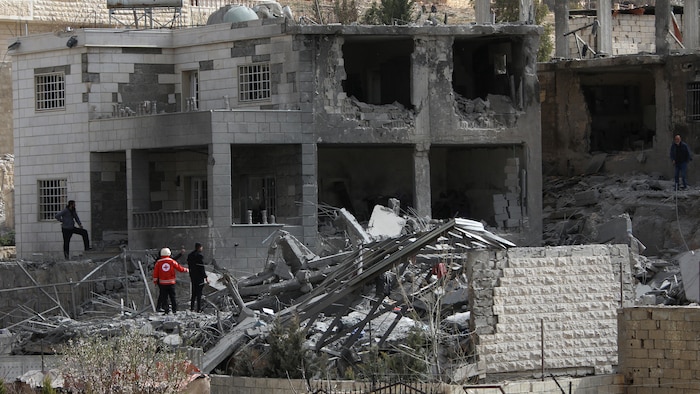
Israel has intensified its strikes against Lebanon since Hezbollah launched attacks on its territory on March 2 in response to the Israeli-American war against Iran, its sponsor.
This new Israeli military offensive, the second in less than two years, has already claimed over 900 lives and left 2,000 injured. Among them, 38 rescuers, according to the Lebanese Ministry of Health.
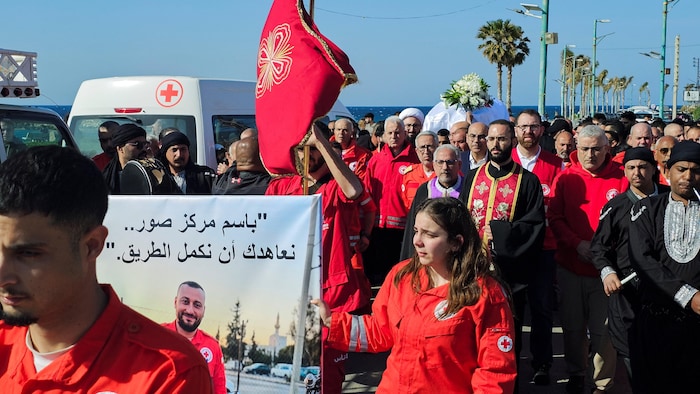
For Samir, Youssef’s death only heightens his fears.
“It’s dangerous, of course. We always live in danger. The risk of a strike is always present, we are never completely safe,” he says.
To avoid being caught in the crossfire, he and his colleagues must wait long minutes before being able to intervene after a bombing, with Israel frequently carrying out repeated strikes against the same target.
“We wait for the green light from the command center before leaving [on a mission], because, in most cases, there is more than one explosion,” he explains.
“Sometimes there are two or three, so we have to wait, to have a bit more security, until the bombing stops,” he adds.
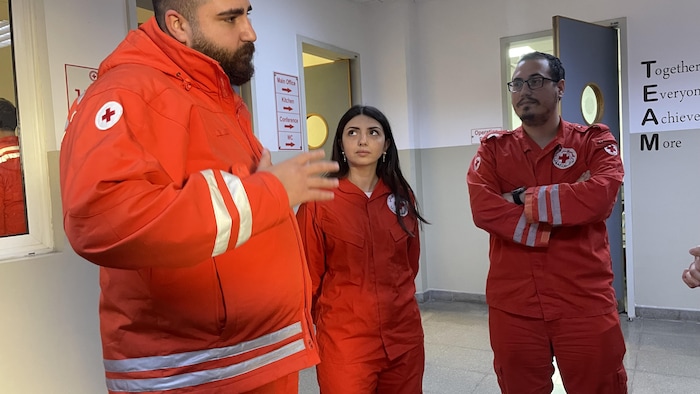
Samir is interrupted by the arrival of a group of paramedics. They return from a rescue mission in an area near the airport, hit by an Israeli strike. Result: one dead and nine injured.
Georges Kettaneh, the Secretary-General of the Lebanese Red Cross, is also concerned. He wants to ensure the protection of his approximately 5,000 rescuers spread throughout the Lebanese territory.
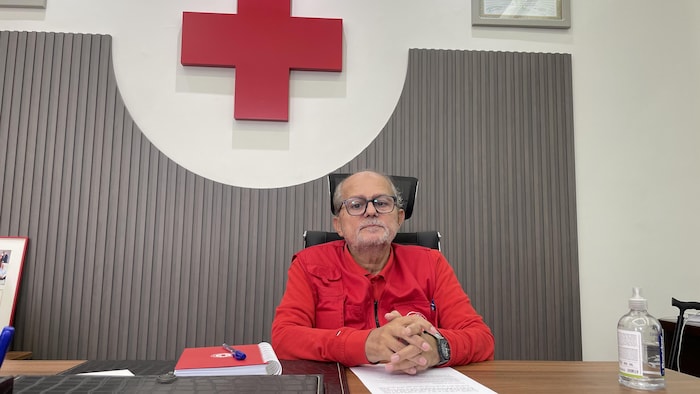
“It’s becoming more difficult now in terms of respect for international humanitarian law,” Mr. Kettaneh says. “It has become more risky.”
“I’m afraid. I’m afraid of losing protection. […] I ask to protect civilians, the wounded, and the Lebanese Red Cross,” he adds.
Before sending its rescuers to a bombed area, the Red Cross contacts local authorities, the Lebanese army, and UN peacekeepers who, in turn, notify the Israelis. “We inform them of our mission, the license plate number of the ambulance that will move, the route we will take, and the number of rescuers there,” explains Mr. Kettaneh.
Nothing is left to chance to avoid becoming the target of possible Israeli strikes.
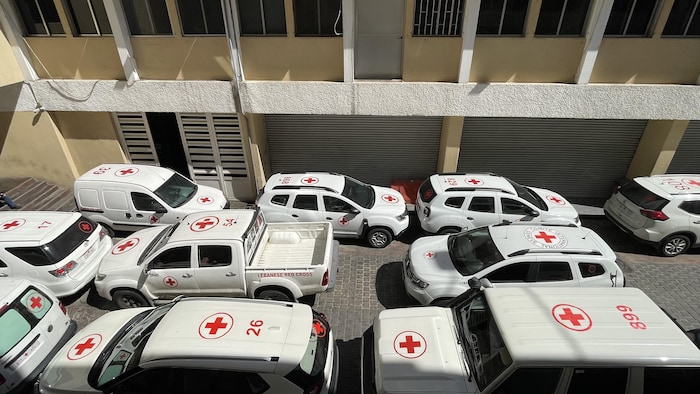
But all these precautions are still deemed insufficient. “There is a risk. There are no guarantees,” he laments.
“I can tell you: normally, we respond directly, but it’s risky. Now, we have to wait a few minutes to see if there will be another attack […] because [otherwise], instead of saving the victims, we will need someone to save us,” he says.
In addition to evacuating war wounded, the Red Cross continues to provide primary health care, psychological support, and blood supply to hospitals and those in need.
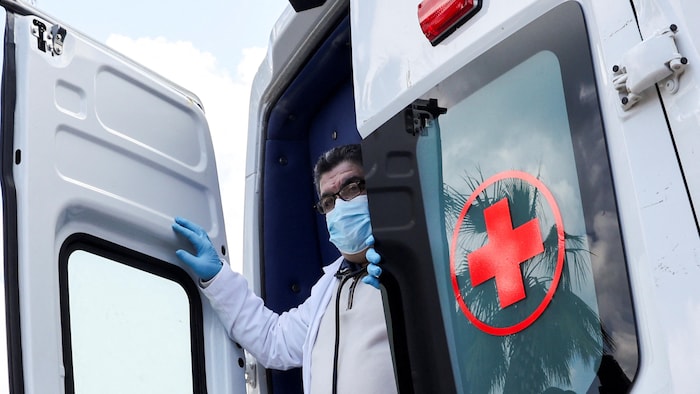
And the Red Cross is present “throughout the Lebanese territory,” without exception, insists Mr. Kettaneh, despite evacuation orders issued by the Israeli army in several regions, including the southern suburbs of Beirut and much of southern Lebanon.
“We will not leave these regions,” declares the head of the Red Cross. “We are staying on site to give hope to the community.”
“Our goal is to save lives and preserve the dignity of anyone who needs us,” he adds.
For him, the only difference that matters is the blood group to which you belong. “The human order is O+, A+, B-, AB. Regardless of nationality or religion, it’s the same for us,” he concludes.