According to an annual report presented on Monday by the United Nations Secretary-General’s Special Representative for Children and Armed Conflict, Vanessa Frazier, children continue to be killed or mutilated “at an alarming rate” in several theaters of war, including the Democratic Republic of the Congo, Haiti, the occupied Palestinian territories, and Sudan.
These acts of violence are not limited to isolated incidents. They take different forms depending on the conflicts but always have devastating consequences for children.
In Afghanistan, Gaza, Myanmar, Syria, and Ukraine, explosive devices have had a “devastating and lasting” impact on the youngest. In certain contexts, such as in the Palestinian enclave and Sudan, some children have also died of starvation, the report highlights, covering the period from December 2024 to December 2025.
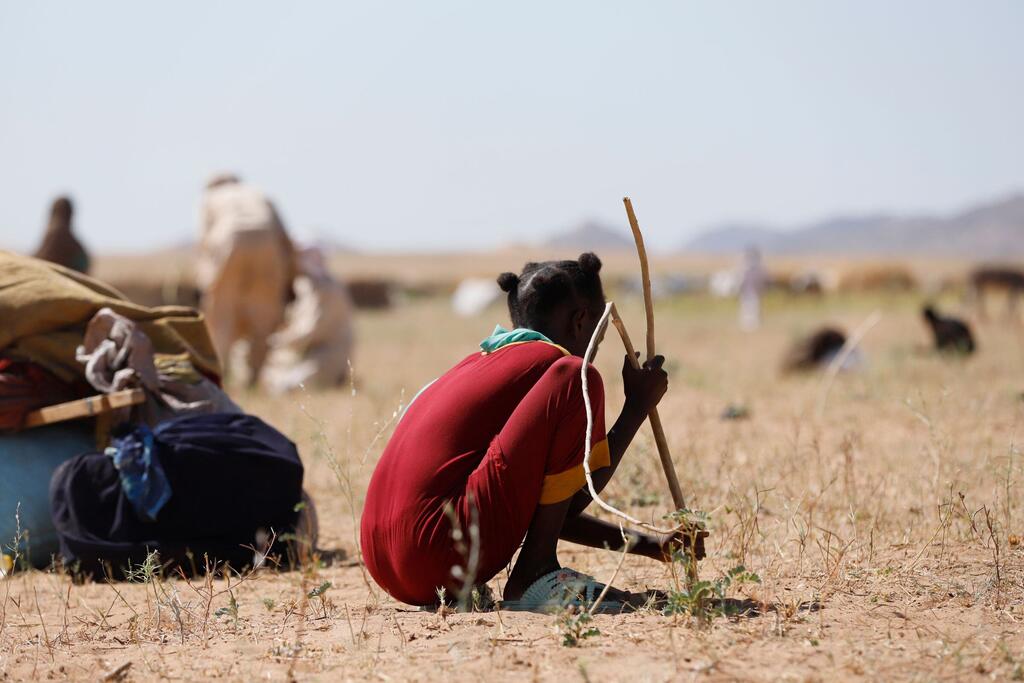
A girl digs holes to create a shelter for her family in a displaced persons camp in Tawila where hundreds from Al Fasher have fled to safety.
Rising Violations
Speaking before the Human Rights Council, Vanessa Frazier warned that the observed dynamics in recent years show no signs of reversal. Serious violations against children continue at a “shocking” level.
The UN official specifically mentioned “the killings and mutilations of children, the abduction of children, the denial of humanitarian access, and the recruitment and use of children” as violations that are “particularly alarming.”
“Based on the analysis of the data available to us today, it appears that the killings and mutilations of children, as well as the abductions of children, have increased,” she said, adding that “rapes and other forms of sexual violence remain chronically underreported.”
The available data for 2024 already reveals the extent of the phenomenon. The UN verified 41,370 severe violations against 22,495 children, representing a 25% increase compared to the previous year.
Murders and mutilations top the list of recorded violations, followed by the denial of humanitarian access, the recruitment and use of children by armed forces or groups, and then abductions.
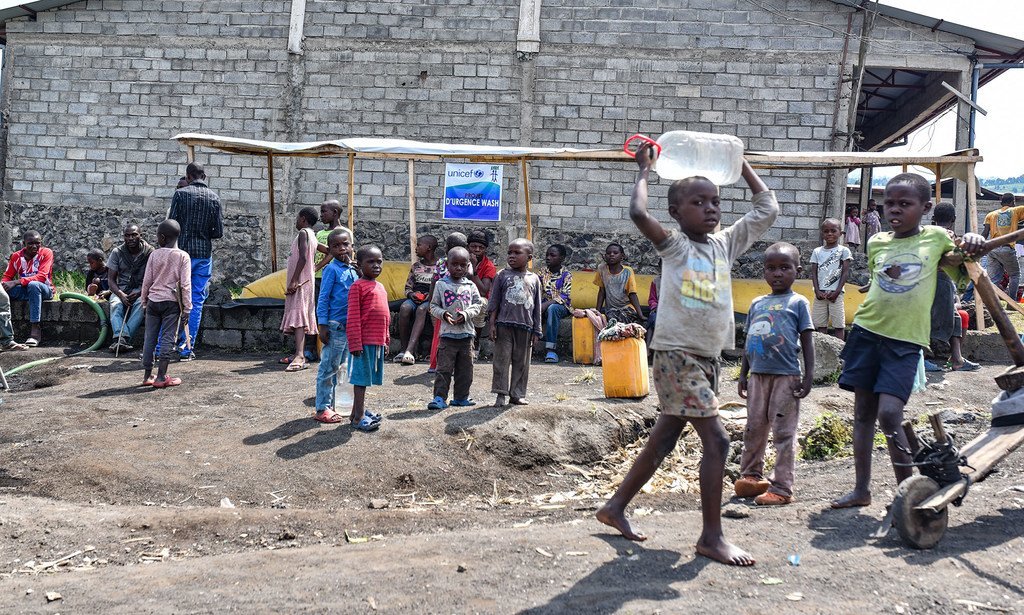
Displaced children in North Kivu, Democratic Republic of the Congo.
Progress Despite Everything
Amidst this dark scenario, some advancements exist nonetheless. In several conflicts, thousands of children have been able to be released from armed forces or groups.
In Afghanistan, the Central African Republic, the Democratic Republic of the Congo, Iraq, Sudan, and Syria, the UN is engaging in discussions with conflict parties to secure the release of children associated with armed groups.
At the same time, training programs and technical assistance have been implemented to help national security forces prevent these violations and implement protocols for transferring children to protective structures. Such initiatives are notably taking place in Haiti, Mali, Burkina Faso, Mozambique, the Central African Republic, Nigeria, and the Lake Chad Basin.
The Shadow of Budget Cuts
However, these achievements remain fragile. According to the UN, the reduction of humanitarian funding and the decline in peace operations now limit the organization’s capacities to monitor, verify, and prevent violations against children.
“The global decrease in humanitarian funding and the reduction of UN peace operations have a direct impact on the implementation of the program related to children and armed conflicts, with devastating consequences for children,” warned Vanessa Frazier.
As the world marks the thirtieth anniversary of the UN mandate on children and armed conflicts this year, the official believes that the urgency remains unabated. Despite the existence of tools to protect minors, their implementation still depends on “political will, adequate resources, and sustainable commitment.”