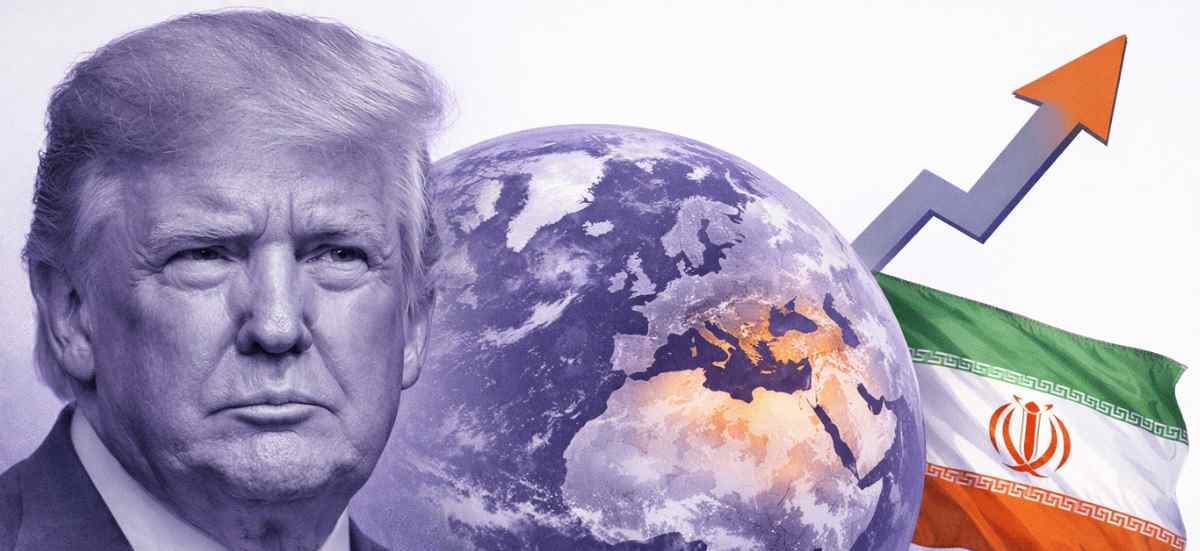
Iran demands to repatriate over $100 billion in frozen assets
If the precise details of a ceasefire agreement between Iran and the United States – or even a long-term deal – remain uncertain, Tehran is expected to prioritize the return of its frozen Iranian assets abroad.
Available information on ongoing negotiations, as well as past incidents where Tehran conditioned its approval on the release of funds held outside the country, suggest that this demand will be part of a broader request for Washington to lift all primary and secondary sanctions imposed on Iran.
The exact value of Iran’s frozen assets remains unknown, but several estimates place it at over $100 billion (€86.5 billion).
In the past, the Tehran regime opened currency accounts with major international banks to build reserves to support the value of the country’s official currency, the rial.
Successive rounds of sanctions depleted these funds, resulting in a sharp decline in the rial at times and hindering Iranian businesses that imported goods and services from foreign suppliers, paying in euros, yen, or other currencies.
Access to currencies is so crucial that during a congressional hearing in February, Treasury Secretary Scott Bessent went as far as acknowledging that the United States deliberately caused a dollar shortage in Iran to fuel protests.
“We engineered a shortage of dollars in the country… which peaked in December when one of Iran’s largest banks collapsed: there was a run on their branches, the central bank had to print money, the Iranian currency collapsed, inflation soared, and as a result, we saw Iranians hit the streets”, said Bessent.
Prior to the outbreak of war, Iran was already in a state of economic turmoil, with the Iranian Statistical Center reporting annual inflation at 68.1% in February – its highest level since World War II – while the Central Bank of Iran reported a slightly lower rate of 62.2%.
This explains why the issue of frozen assets is at the core of current negotiations.
The United States has long used sanctions to hinder Iran’s access to foreign exchange reserves, but the country has on several occasions partially gained access to some of its frozen assets.
After reaching an interim nuclear agreement in 2014 with the United States, the UK, China, France, Germany, and Russia, Iran was allowed to repatriate $4.2 billion (€3.6 billion) in oil revenue held abroad.
In 2015, these countries finalized the Joint Comprehensive Plan of Action (JCPOA), where Iran agreed to significantly reduce its nuclear program, allow foreign inspectors to visit its nuclear sites, in return for regaining access to over $100 billion (€86.5 billion) in frozen assets.
However, in 2018, during his first term, President Donald Trump withdrew from the JCPOA and reinstated extensive US sanctions, effectively re-freezing Iranian assets abroad.
Trump now faces reconsidering his stance on this issue as US officials are set to resume discussions with Iran on Friday in Islamabad.
Countries holding Iranian assets
According to various reports over the years, significant Iranian reserves are believed to be held in South Korea and Japan, two historic clients of Iranian oil.
As per the US Financial Crimes Enforcement Network (FinCEN), oil buyers stationed in Singapore and the UAE have conducted transfers “potentially linked to sanctioned Iranian oil” to entities possibly controlled by Iran, including other oil companies based in the UAE and likely shell companies domiciled in Hong Kong.
The Central Bank of Iran is also said to have accounts in several other countries, including China, Germany, India, and Turkey.
Amid the ongoing war, following Iranian strikes on Gulf states, Trump expressed surprise that Iran targeted countries that manage its foreign wealth, stating: “It’s strange, you know? The UAE, they’re kind of Iran’s banker. They’re sort of its banker.”
Depending on the country holding them, it is still challenging to determine if these assets are partially, fully, or not at all frozen, as each state displays a varying level of coordination with Washington on the issue of sanctions against Iran.
Since the reimplementation of US secondary sanctions in 2018, Iranian diplomacy has mainly focused on bilateral negotiations with these countries to secure the release of these funds.
The most recent significant transfer dates back to September 2023, when approximately $6 billion (€5.1 billion) of Iranian oil revenues, blocked since 2019 in South Korean banks, were transferred to restricted accounts in Qatar under a US waiver linked to a prisoner exchange.
Iran could only access these funds conditionally for humanitarian purchases like food and medicine, under tight US supervision.
These funds were once again blocked after Hamas attacks on October 7, 2023, due to Iran’s financial support for the terrorist organization.
An enduring issue since the revolution
Following the overthrow of the pro-Western regime of Shah Mohammad Reza Pahlavi in 1979 and the hostage-taking of American nationals during the Iran hostage crisis, President Jimmy Carter froze Iranian assets that were previously freely negotiable.
During this over 400-day crisis, 66 Americans, including diplomats and civilian personnel, were held hostage in the US embassy – an episode generally seen as permanently damaging the already slim chances of a close relationship between Tehran’s new regime and Washington.
Under Executive Order 12170 signed in November 1979, Carter froze around $12 billion (€10.3 billion) of Iranian government deposits, gold, and other assets held in American banks and their foreign subsidiaries, as per the US Treasury Department’s Office of Foreign Assets Control.
These assets were partially unfrozen in January 1981 as part of the Algiers Accords, ending the hostage crisis.
Iran repaid about $3.7 billion (€3.1 billion) in loans from American banks; an additional $1.4 billion (€1.19 billion) was placed in escrow in The Hague to settle ongoing commercial disputes, and around $2.9 billion (€2.48 billion) was directly returned to Tehran.
A US-Iran Claims Tribunal established by these accords still resides in The Hague today.
Iranian assets still largely out of reach
Decades of additional sanctions in response to Iran’s nuclear program, ballistic missile development, and listing as a state sponsor of terrorism have significantly expanded the total volume of frozen assets compared to the initial freeze.
Previously, discussions of potential fund releases were often met with Western criticism, fearing the money would be used for nuclear proliferation and arms purchases.
As negotiating delegations head to Islamabad on Friday, the issue of Iranian assets will be one of the main topics of discussion.
It remains to be seen whether the US will agree to unlock funds, to what extent, from which countries, and under what conditions.