Key points of the world economic news of April 9, 2026
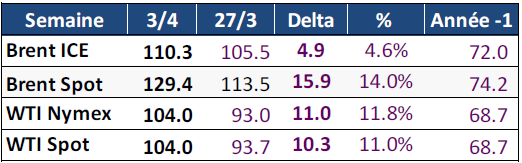
1. Oil prices have sharply dropped amid increasing hopes of an easing of restrictions in the Strait of Hormuz: On April 8, Brent lost $14.52 (13.29%) to close at $94.75 per barrel. WTI, on the other hand, declined by $18.54 (16.41%) to $94.41 per barrel.
2. The United States rejects the exemption request for tariffs on aluminum made by car manufacturers: This request followed two fires at Novelis, the largest aluminum rolling mill in the United States, which had led to supply shortages. To address this, car manufacturers had to import aluminum from Europe and South Korea and pay a 50% tariff imposed by President Donald Trump. However, U.S. authorities believe that the car manufacturers did not present their request firmly enough.
3. Japan: Record number of bankruptcies in 12 years: The number of bankruptcies in Japan reached 10,505 during the 2025 fiscal year, a level not seen in 12 years. This upward trend continues for the fourth consecutive year and mainly affects small and micro-enterprises. The main causes are said to be labor shortages, rising wage costs, and inflation due to the weakness of the yen.