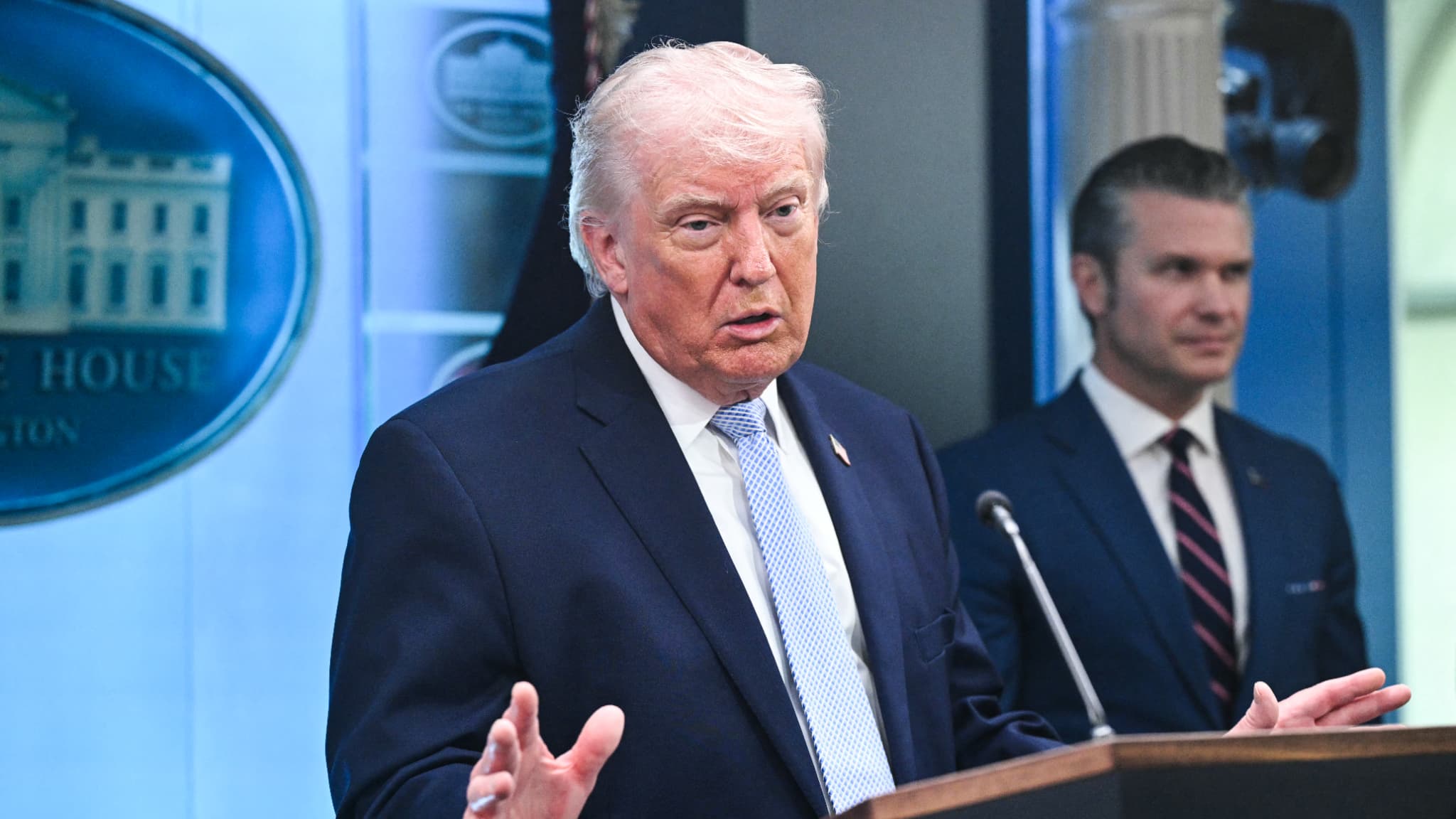
In a first attempt at a ceasefire, just before the expiration of an ultimatum from the American president threatening to destroy the Islamic Republic of Iran, Tehran and Washington agreed to a “reciprocal” ceasefire agreement, declared Donald Trump on Truth Social on Tuesday, April 7, including the “complete, immediate, and secure reopening of the Strait of Hormuz.”
This announcement was confirmed by the Iranian Minister of Foreign Affairs, Abbas Araghchi, on Twitter: “if the attacks on Iran cease, the Strait of Hormuz can reopen for a period of two weeks.” The stakes are high, as the closure of the Strait of Hormuz, through which 21% of the world’s oil consumption passed before the start of the war, led to an increase in fuel prices and impacted global trade. After this agreement, oil prices dropped by more than 15%, falling below $100 (85 euros) per barrel, reported by Franceinfo.
Statement on behalf of the Supreme National Security Council of the Islamic Republic of Iran: pic.twitter.com/cEtBNCLnWT
— Seyed Abbas Araghchi (@araghchi) April 7, 2026
Talks in Pakistan
According to the Islamic Republic of Iran, talks will be held with Washington starting Friday in Islamabad, Pakistan, a mediator for several weeks. But the end of the war still seems far off, as Iran “will only accept the cessation of hostilities once the negotiations have succeeded,” added Abbas Araghchi. Tehran has proposed a ten-point plan for a peace agreement. It includes continuing its Iranian uranium enrichment program and lifting all sanctions, according to Iranian media. The American president confirmed that this proposal was “a viable basis for negotiation.”
Shehbaz Sharif, the Pakistani Prime Minister, also emphasized that the United States and Iran, along with their allies, had agreed to a ceasefire “everywhere, including in Lebanon and elsewhere.” But Israel did not share this view, stating that Lebanon was not included and that they only supported the decision to suspend airstrikes on Iran.