By Ioan Voicu, former ambassador of Romania to Thailand
This brief chronicle aims to familiarize Gavroche readers with the article published by the Secretariat of the Economic and Social Commission for Asia and the Pacific (ESCAP) on April 1, 2026, entitled “Present conflict in the Middle East: Risks and opportunities for South Asia”.
Although the original source is a technical document, its content deserves to be widely disseminated among a larger audience. The article offers an in-depth analysis of the consequences of the current conflict in the Middle East on the economies of South Asia. It is an interpretive doctrinal understanding developed by ESCAP experts and does not constitute an official position engaging member states.
Geopolitical tensions to energy shocks
The article highlights the intensification of geopolitical tensions in the Middle East, especially the conflict involving the Islamic Republic of Iran. These tensions exert strong pressure on global systems, particularly in terms of peace, trade, and energy markets.
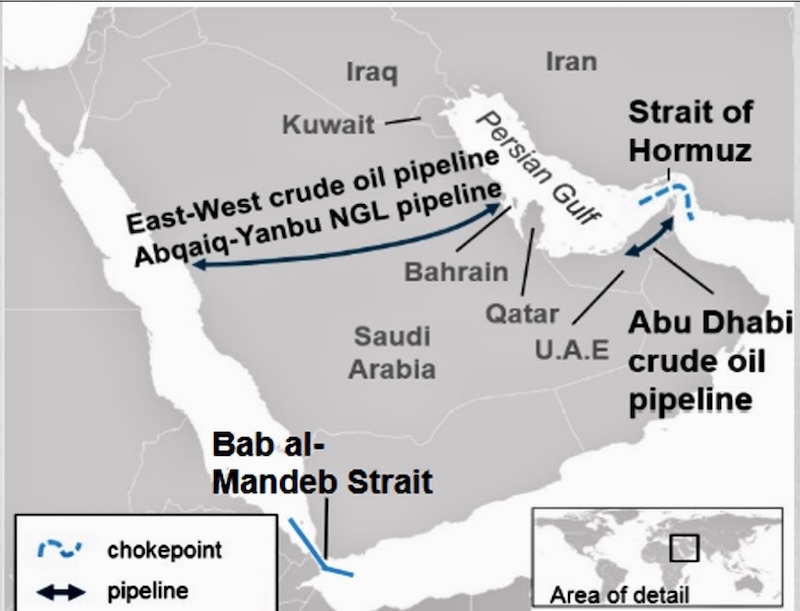
The Middle East remains a crucial region for global oil and gas supply. Any disruption there has cascading effects globally. The significant rise in the price of Brent crude oil, which exceeded $100 per barrel and reached around $120 in early March 2026, perfectly illustrates this volatility. It is explained in part by fears of a possible disruption of the Strait of Hormuz, through which approximately one-fifth of global oil trade passes.
Particular vulnerability of South Asia
Countries dependent on energy imports, especially developing economies, are the most exposed. Rising energy prices increase transport costs, exacerbate inflation pressures, and weaken macroeconomic balances.
South Asian countries are among the most vulnerable due to their heavy reliance on fossil fuels imported from the Middle East. Pakistan and Bangladesh import a significant portion of their liquefied natural gas from Qatar and the United Arab Emirates, while India sources nearly half of its crude oil imports from this region, with a substantial portion passing through the Strait of Hormuz.
Past episodes of oil price volatility have already triggered economic crises in the region, such as in Sri Lanka. The current spikes pose similar risks: deterioration of the balance of payments, weakening national currencies, increased inflation, and significant budgetary pressures. These impacts affect all sectors: transportation, industry, agriculture, and services. Energy dependence emerges as a factor of systemic vulnerability that can impede development.
A crisis that can also become an opportunity
The article does not limit itself to alarmist observations. It considers this crisis as an opportunity for structural transformation. It underscores the urgency of reducing dependency on imported fossil fuels and enhancing long-term energy security.
In this perspective, the transition to renewable energy is presented as a “triple dividend strategy”:
- Strengthen energy security by reducing import dependence and limiting exposure to international market volatility. South Asia has significant potential in solar, hydro, and wind energy.
- Support economic growth through job creation, attracting private capital, and developing local industries in solar technologies, energy storage, and electrical grid modernization.
- Improve public health and protect the environment by reducing air pollution, a major issue in many cities in the region, while facilitating compliance with climate commitments.
Real but insufficient progress
Some advances have already been made: several countries have invested in solar energy, improved energy efficiency, and adopted renewable-friendly policies. Regional cooperation is also intensifying, particularly through cross-border electricity exchanges between India, Nepal, Bhutan, and Bangladesh.
However, these efforts are uneven and insufficient. Major obstacles persist in terms of financing, infrastructure, and regulation. Electrical grids are not always adapted to the massive integration of renewable energies, and investment risks continue to hinder the private sector.
Conclusion
The authors emphasize the need to strengthen regional cooperation: developing electrical interconnections, sharing technical knowledge, and harmonizing regulatory frameworks. They highlight ESCAP’s role as a neutral platform for political dialogue, capacity building, and technical assistance.
Ultimately, in an internationally uncertain context, energy security can no longer rely solely on fossil fuels. For South Asian countries, transitioning to green energies represents both a strategic necessity and a genuine opportunity for sustainable development.
This analysis thus highlights a dual reality: the seriousness of risks related to current geopolitical tensions and the transformation potential they offer vulnerable economies.
Ioan Voicu
Every week, receive our Gavroche Weekly newsletter. Sign up by clicking [here].