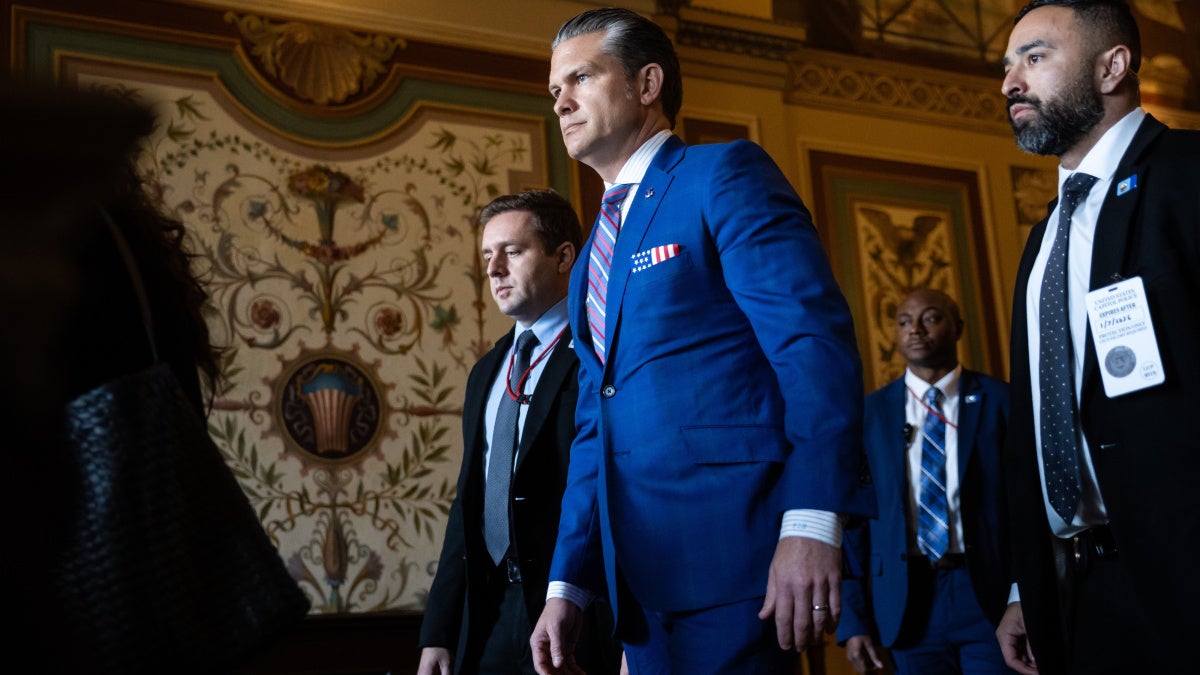
The conservative majority Supreme Court on Wednesday debated a question at the heart of American identity: birthright citizenship, challenged by Donald Trump, in the exceptional presence of the President of the United States.
The nine judges, six conservatives and three progressives, will rule on the government’s appeal against lower court decisions, all of which have concluded the unconstitutionality of a decree signed by Donald Trump upon his return to the White House.
This decree, the most contested of his second term, reverses birthright citizenship for children of undocumented immigrants in order to eliminate what the US administration sees as an immigration incentive.
Donald Trump, emphasizing the importance he attaches to this issue, personally attended the Supreme Court debates, a first for a sitting president according to US media.
He did not stay until the end of the two-hour debate, leaving after just over an hour, following the arguments and questions posed by the judges to the government’s legal counsel, John Sauer.
The principle of birthright citizenship, stating that every child born in the United States is automatically a US citizen, is enshrined in the 14th Amendment to the Constitution, adopted in 1868 after the Civil War to guarantee the rights of freed slaves and their descendants.
Applied for over 150 years, this principle was sanctified in 1898 by a Supreme Court ruling recognizing that Wong Kim Ark, the son of Chinese immigrants born in California, was indeed a US citizen by birth.
But Donald Trump’s decree prohibits the federal government from issuing passports, citizenship certificates, or other documents to children born in the US whose mother is residing illegally or temporarily, and whose father is not a US citizen or lawful permanent resident – a holder of the “green card.”
The 14th Amendment “does not grant citizenship to children of temporary visa holders or undocumented aliens. Unlike just-freed slaves, these visitors do not have a direct allegiance to the United States,” argued John Sauer on Wednesday.
Interrogated by Chief Justice John Roberts on his arguments concerning “birth tourism,” where foreign women come to the US to give birth so their child can be a US citizen, the government representative under Trump admitted that the issue did not arise at the time of the adoption of the 14th Amendment.
“It’s a new world but the same Constitution,” John Roberts responded, reflecting the apparent skepticism of a good number of the judges.
Representing the opposing party, Cecillia Wang, legal director of the influential civil rights defense organization ACLU, urged the Court to reject the Trump administration’s stance.
If Donald Trump’s decree were to be enforced, “thousands of American babies would immediately lose their citizenship, and if you validate the government’s theory, the citizenship of millions of Americans, present and future, would be called into question,” warned Cecillia Wang.
According to projections made in May 2025 by researchers at Penn State University, at a rate of around 255,000 births per year, a revocation of birthright citizenship for children of undocumented immigrants or temporary residents would reduce the number of illegal immigrants by 2.7 million by 2045 and 5.4 million by 2075.
The Court’s decision is expected by the end of its annual session, concluding in late June.