Armed conflicts always have exorbitant economic costs, not to mention loss of life. The cost of war is difficult to quantify. It depends on the duration of the conflict and the “cost-reduction” strategies. Economic consequences and causes of armed conflicts are complex and challenging to understand.
Risks associated with conflicts generate numerous economic uncertainties, directly affecting budget constraints and macroeconomic performance. While short-term effects of wars vary depending on the intensity of the conflicts or the effectiveness of policies to counter them, many studies suggest that major conflicts are linked to long economic cycles. Wars are considered a mode of regulating the global economic system and have a deeper structural impact on economies in conflict.
Therefore, analyzing the cost of war must be approached from a multidimensional perspective, taking into account direct military costs, infrastructure destruction, loss of life, and systemic macroeconomic effects. These costs, accumulated and interdependent expenses, far exceed immediate budgets and lead to a logic of capital destruction (physical, human, and institutional) with effects lasting over several decades.
Are wars part of the economic cycle?
Nikolai Kondratiev, the Russian economist, hypothesized in the 1920s that the capitalist economy evolves in long cycles, with a total duration of 50 to 60 years. Kondratiev’s ten cycles deployed during the period 1495-1980 consist of four phases: expansion, war, stagnation, and recovery. Traditionally, wars are associated with the expansion phase or the transition to decline in the cycle, acting as a catalyst to stimulate a stagnant economy, correct imbalances, and accelerate technological innovation.
Kondratiev indeed established a link between wars and long economic cycles: the former coincide with the latter. Nations fight to ensure dominance. Recent studies have emphasized several elements: during expansion phases, waves do not reveal a higher frequency of wars than during depression phases. However, conflict intensity is higher in the former than in the latter. Wars contribute to synchronizing the cycle across different national economies. They are a recurring phenomenon exacerbating structural violence. Whenever a major war erupts, a dominant power emerges for a century and a half, leading to a mismatch between power cycle and economic cycle.
The hypothesis of periodic conflicts remains controversial. While cycles have not disappeared, globalization and the impact of new technologies may have modified the nature of cycles. Regarding wars, though they still break out across the globe, they seem to have lost their role as an economic clock that they once played among nations. Some argue that this cycle synchronization function seems to be more efficiently handled today by the Stock Exchange and financial crises.
Statistically, wars tend to favor stock markets. Prices drop before hostilities begin but then rise, driven by “patriotism” and increased public spending.
The psychological impact of war (stockpiling of consumables, freezing of investments) leads to a much stronger economic translation than financial constraints. This was evident during World War II (1941-1953), the Korean War (1950-1953), the Vietnam War (1965-1973), and the Gulf War in 1991. For example, the inflation in the U.S. in the 1960s, leading to the abandonment of the gold standard, currency depreciation in Europe, and the recessions of the 1970s, were not solely due to Vietnamese expenditures, although they contributed.
Similarly, the idea that the 1993 economic recession stemmed directly from the 1991 Gulf War has been refuted by economic historians. In addition to the prevailing cyclical downturn, the conflict unfolded as planned and was realized at a reduced cost – covered 80% by U.S. allies.
The number of nations in conflict worldwide has dramatically increased since the fall of the Berlin Wall, rising from an average of 35 during the Cold War era to over 60 in the period of 2000-2010. Experts suggest that conflicts have accumulated in recent years due to the urgent need for access to vital resources. According to specialists, the fight for natural and energy resources involves not only oil, which contributes to the ongoing tensions in the Middle East but also gas and black gold from the Caspian Sea, with a certain destabilizing effect on the Caucasus region.
However, hydrocarbons are not the sole triggers of conflicts. Mineral resources, especially diamonds, and precious woods are also geopolitical interests. The struggle for water, a vital and transnational resource, has intensified. Out of these known and more or less localized conflicts have emerged new threats in a highly globalized world (terrorism, mafia economies). Globalization, by allowing uncontrolled movement of individuals and products, has been a decisive factor in the globalization of conflicts (state fragmentation, proliferation of new nation-states). Technological advancements, designated communication tools, and their geographic dissemination also play a role.
The Exorbitant Cost of Conflicts: The Cases of Ukraine and Gaza
The debate on long cycles and war cycles has resurfaced with recent conflicts such as Ukraine, Gaza, and Iran. However, the focus is not so much on placing them within the long economic cycle but rather on understanding the costs they generate and their short- and long-term effects on the economies involved in the conflict. While war certainly incurs costs, it cannot be reduced to just this dimension. War expenditure is generally seen as an irrecoverable cost.
Estimating the cost of war is delicate because it is highly contingent on the assumptions made about war. Historically, there have been significant inaccuracies in estimating war costs. For example, the Vietnam War, which was initially seen as short in 1966 and estimated to cost the U.S. budget 10.5 billion dollars for one year, was later assessed in 1973 to cost between 110 and 150 billion dollars. In the case of the Iraq War, the U.S. Administration expected a figure close to 60 billion based on a short war scenario. Many stakeholders believed the war would be quick, allowing the economy to resume swiftly, but the military campaign proved to be longer. This bill, despite efforts from the U.S. coalition partners to share costs, had to be footed by Washington for a considerable sum.
The ongoing conflict in Ukraine provides a broader perspective on costs. Since 2022, the direct and indirect costs of the Ukrainian conflict have been estimated in hundreds of billions of dollars. According to a study by DR Henderson, a researcher at the Hoover Institution, the total cost of the war for Moscow would amount to 2.5 trillion dollars. The conquest required over a million human losses, 12,000 tanks, nearly 25,000 armored vehicles, and about 400 aircraft.
The cost represented by losses of military equipment is estimated at 125 billion dollars, operational costs associated with conducting the war at 3.1 billion dollars per month, and wealth losses (i.e., the GDP “lost” due to the war) at 1.124 trillion dollars. The total represents 115% of Russia’s GDP for 2024, according to the World Bank figures.
In terms of Ukraine, joint estimates from the World Bank, United Nations, European Commission, and the Ukrainian government point to a reconstruction cost of 588 billion dollars over the next decade. This amount considers the damages inflicted across the territory since the invasion began in 2022, nearly triple the country’s GDP. This astronomical sum provides an idea of the country’s devastation. It does not include the data related to the recent escalation of Russian attacks on Ukrainian energy installations.
Entering its fifth year, the war has triggered the largest refugee crisis in Europe since World War II, with over 6 million Ukrainians living as refugees outside the country. Additionally, more than 4.6 million Ukrainians have been internally displaced.
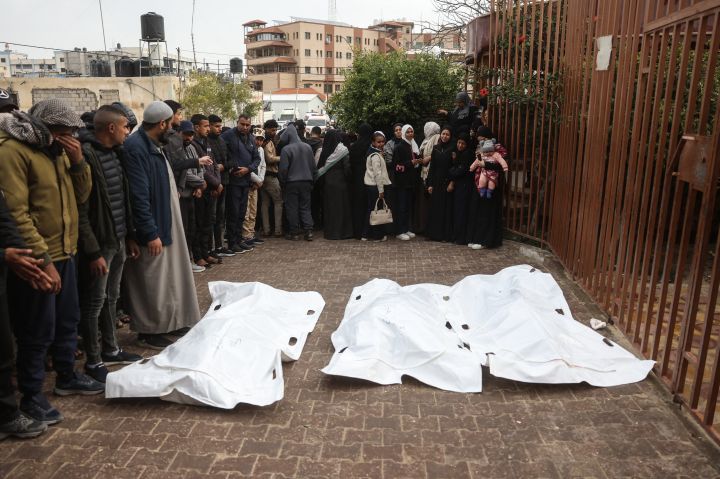
The war in Gaza has been characterized by massive destruction of civilian infrastructure, complete disorganization of the local economy, and a major humanitarian crisis. A report by the World Bank, the United Nations, and the European Union estimates the reconstruction and recovery needs in Gaza at 53 billion dollars based on the preliminary assessment of damages and needs in Gaza and the West Bank.
This rapid estimation, considering access restrictions on the ground and evolving situations, is based on assessing damages, losses, and recovery needs in almost all sectors of the Palestinian economy. Physical structure damage amounts to about 30 billion dollars, with housing being the most affected sector, accounting for 53% of damages, followed by trade and industry at 20%.
Essential infrastructures (health, water, transportation) comprise over 15% of damages. Economic losses due to decreased productivity, income losses, and operating costs amount to 19 billion dollars, with the most affected sectors being health, education, and commerce. Some sectors require reconstruction funding exceeding the value of physical destruction, notably for managing the 41-47 million tons of gravel and debris.
Beyond physical destruction, the loss of human capital due to deaths, injuries, and displacement is a major factor in long-term growth potential degradation. The Gaza war has resulted in over 75,000 deaths, mostly civilians, in a few weeks. This has led to more than 100,000 injuries and thousands of individuals left with disabilities. The entire Gaza population, about 2.3 million people, has been affected by massive displacement, often forced, with internal displacement rates exceeding 70% of the population.
This war has cost Israel over 68 billion dollars by 2025, according to the Central Bank of Israel, with daily direct expenses of around 246 million dollars and weekly economic losses of up to 600 million dollars due to labor market disruption. The budgetary strain has significantly impacted macro-financial balances, with a public deficit approaching nearly 7% of GDP and increased debt-to-GDP ratios.
What About the War in Iran? What Will the Final Cost Be?
Measuring or quantifying the cost of the ongoing war in the Middle East is still challenging as it extends beyond strikes against Iran, remains unresolved, and uncertainty looms over its escalation, intensity, and extension to territories like Gaza, Lebanon, and Gulf countries and Israel. Moreover, the conflict exhibits a more concentrated financial intensity due to the massive use of high-tech weapons systems and aerial strikes.
Consideration should be given to potential collateral incidents and the costs of a post-campaign occupation, which could lead to protracted expenses for ground force maintenance involving thousands of troops. Despite difficulties in estimating, one thing is certain: the costs will be significant, orders of magnitude incomparable to recent contemporary wars. The current conflict between Iran, Israel, and the United States is characterized by extreme technological intensity. Military costs are concentrated and dominated by high-value weapon systems utilized within a short period.
Additionally, extending the conflict to Iran and the Gulf introduces a global systemic dimension. The disruption of the Strait of Hormuz – a passage for about a third of global oil – poses an energy shock risk comparable to that of the 1970s, with potential oil price projections reaching 150-200 dollars per barrel in case of prolonged blockage. The International Energy Agency (IEA) already predicts a major energy and food crisis, which could trigger global inflation, recession, and financial instability. The conflict cost transcends regional implications to become a global destabilizing factor.
Since October 2023, the U.S. has committed between 9.6 and 12 billion dollars to their operations, in addition to over 21 billion dollars in military aid to Israel. The 2026 escalation against Iran marks a new phase: in just six days, American operations cost approximately 12.7 billion dollars, with daily spending nearing 500 million dollars. This financial intensity reflects the technological nature of the conflict (precision missiles, antimissile systems, advanced airpower) characteristic of modern high-intensity capitalist wars.
For the U.S., the cost of war exceeds military expenditures. It encompasses substantial opportunity costs in a context of high public debt. Resources allocated to the conflict reduce investment capacity in infrastructure, research, and energy transition. Moreover, disruptions in oil markets due to tensions in the Strait of Hormuz impose inflationary pressures directly affecting the U.S. economy.
The war with Iran could turn into a fiscal abyss for the U.S. The War Department demands an additional 200 billion dollars for military initiatives to ensure ammunition replenishment. This amount constitutes one-fifth of the annual Defense budget, surpassing the 188 billion dollars in military aid allocated for Ukraine by the Biden Administration over three years.
In essence, if the conflict were to last three months, it would cost the U.S. military more than the 2003 Iraq War. According to the Congressional Research Service, the Administration estimated the cost of the second Gulf War at 60 billion dollars. Economists Joseph Stiglitz and Linda Bilmes suggested an economic cost ranging between 1 trillion to 3 trillion dollars, considering veteran care, debt interests, reconstruction costs, etc. The total cost of this new war is likely to be astronomical and cannot be determined until the war ends.
Israel faces an even more complex situation, with two wars overlapping. The Gaza war has already exceeded 60 billion dollars in costs, while the confrontation with Iran results in significant military spending growth, especially for missile defense systems. The Governor of the Bank of Israel estimated the economic cost of the 12-day war with Iran at 6 billion dollars. The war’s resumption cost could be double or triple when considering the ongoing duration. This expenditure puts significant pressure on public finances and the real economy, impacting investment and growth.
Iran faces structurally tighter constraints, given its fragile economy due to international sanctions, inflation, and currency devaluation. The war acts as a crisis amplifier in this context. Attacks on energy infrastructures reduce export capacities, while military spending absorbs a significant portion of available resources.
The relative cost of producing missiles, drones, and other destructive weapons poses an even heavier burden in a country facing resource scarcity due to international sanctions. Additionally, according to a Risk Intelligence report, Iranian strikes targeting Israel and Gulf countries may have caused significant material damage and casualties, mostly intercepted by anti-missiles or interceptors – at least two per target – with prohibitive costs. The financial toll of the Iran conflict appears to be staggeringly high.
Beyond military expenditure and infrastructure destruction figures, the war has led to several thousand deaths in a matter of weeks. These losses translate into human capital destruction: reduced education, loss of skills, psychological trauma, and health system collapses. This human cost directly impacts the economy. The erosion of human capital – due to deaths, injuries, and displacement – represents a major factor in long-term productivity contraction and growth potential. In other words, the war creates a “deaccumulation” effect that hinders reconstruction even when financial investments are available.
Comparing with the conflict in Ukraine sheds light on these dynamics. While the Ukrainian conflict is characterized by widespread infrastructure destruction over an extended territory, the Middle East war is marked by higher short-term financial intensity and a more direct impact on energy markets.
This combination bestows the current conflict with a particularly high potential for global destabilization. Ultimately, the ongoing war in the Middle East illustrates a shift from a territorial war economy to a systemic war economy. Costs no longer only involve military spending or physical destruction but extend to all economic and social structures. It represents a phenomenon of systemic destruction affecting public budgets, infrastructures, human capital, and overall global macroeconomic balances simultaneously.
Finally, the Middle East war has a multiplier effect on global markets, especially energy. While the conflict in Ukraine already resulted in a lasting reconfiguration of gas and oil flows, the current conflict directly threatens strategic chokepoints (like the Strait of Hormuz and Bab el-Mandeb), bestowing it with a higher destabilizing potential in the short term. This geoeconomic dimension explains why some analysts view the 2026 conflict as the most disruptive to the global economy in half a century.
Another concerning aspect is the final impact of the burden. More so than during the first Gulf War, the initiator of the conflict may not bear the primary financial burden. Amid significant American external (current account balance) and internal (federal budget) deficits, including rejuvenated twin deficits, it seems that the financial cost will need to be borne mainly by the rest of the world.
*Senior Fellow at PCNS