On February 23rd at the Agriculture Fair, FranceAgriMer brought together a panel of maritime experts and agricultural advisors to decipher the impact of geopolitics on the maritime trade of agricultural and agri-food products. Four days later, the start of the war in the Near and Middle East brutally illustrated the topic.
Maritime transport represents 80% of global trade in value and 90% in volume. It is responsible for delivering the products of French farmers and breeders to distant markets, in bulk or containers, and providing them with some of the inputs they depend on. “And we see that today, it is completely disrupted by what is happening at the geopolitical and geo-economic levels,” said Martin Gutton, director general of FranceAgriMer, opening the proceedings.
For Cyrille Poirier-Coutansais, research director at the Center for Strategic Studies of the Navy, “we have entered a geopolitical era where, structurally, we will have conflicts of repetition because there is no longer a global arbiter.” This is due to the fact that since 2008 and their “pivot towards Asia,” the United States no longer intervene as the global arbiter of regional conflicts but selectively, according to their direct interests, as is currently the case in Iran.
Partly for this reason, maritime risks have escalated in recent years, particularly in the Suez Canal. Louise Chevalier, maritime affairs delegate of TLF Overseas – a syndicate representing 80% of freight entering and leaving French ports – highlighted the consequences of the spectacular blockage of the canal by the container ship Ever Given in 2021: 369 ships immobilized in six days, port congestion, and increased freight costs.
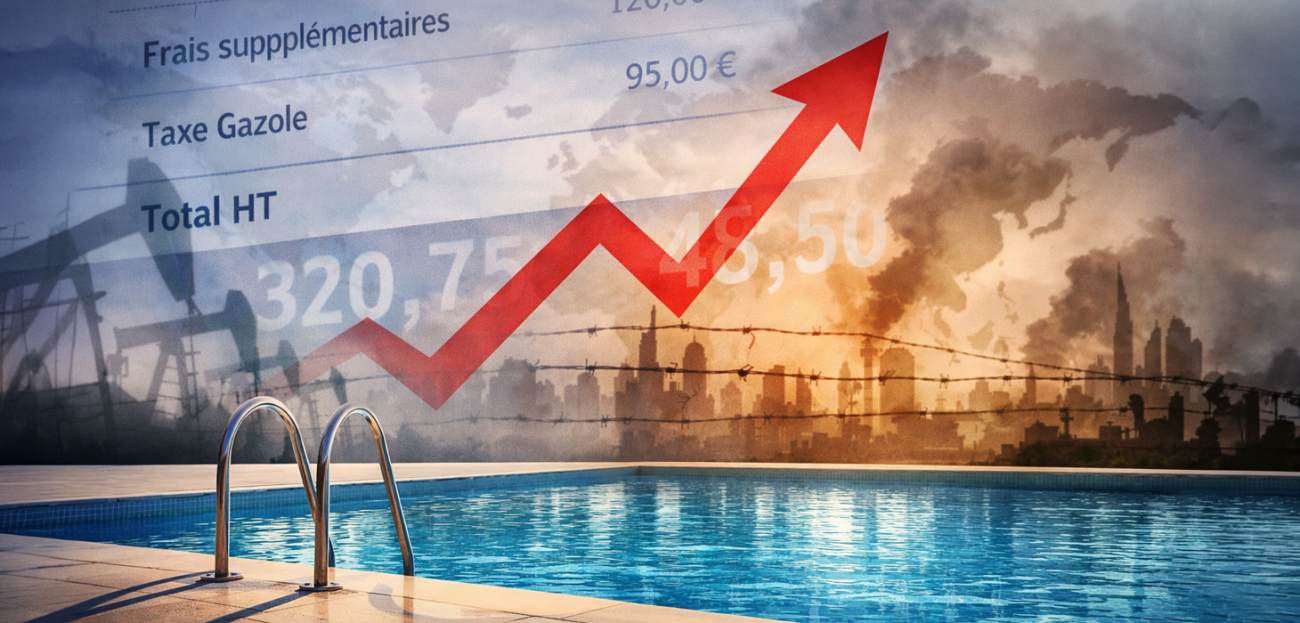
Since 2023, attacks by Houthi rebels from Yemen in the Red Sea have forced shipowners to divert their vessels around the Cape of Good Hope to reach Asia from Europe. As a result, transit times have increased by ten to twenty days, freight rates have soared by 200 to 350% on certain routes, and fuel costs have exploded.
Currently, the Strait of Hormuz, at the entrance to the Persian Gulf, poses a major risk to the agricultural sector. “In this passage of 50 kilometers, 20% of the world’s oil, 30% of urea, and 20% of ammonia pass through,” pointed out Majda En-nourhi, economic studies officer at FranceAgriMer, during a mid-March press briefing. A destabilization has an effect not only on the energy market but also on the fertilizer market.
Indeed, the price of European gas has skyrocketed since the start of the war in Iran and the blockade of the strait, leading to a subsequent increase in nitrogen fertilizer prices.
Context: The article discusses the impact of geopolitical factors on maritime trade in agricultural and agri-food products.
Fact Check: The content mentions specific events and statistics that illustrate the challenges faced in the maritime transport of agricultural goods.