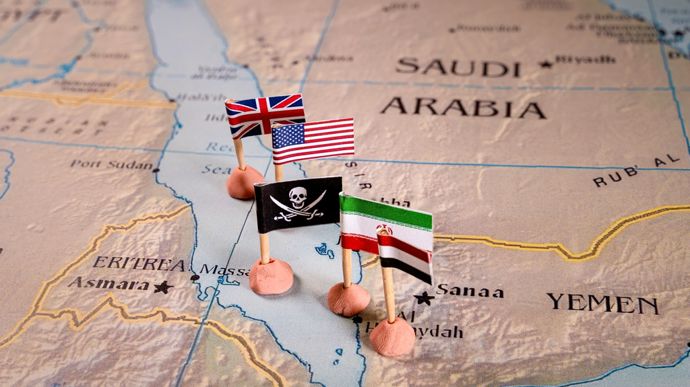
The seas and oceans around the world are primarily transit routes for commercial and military ships, and as such, they become places of conflict whose control is essential from both strategic and economic perspectives.
As Iran restricts access to the Strait of Hormuz, causing a surge in insurance premiums and a sharp slowdown in oil and gas flows, the vulnerability of the global economy is exposed. Cross-border strikes, threats of armed escorts, and the increased militarization of the Persian Gulf make this passage a laboratory for 21st-century conflicts.
This crisis is not sudden but rather a continuation of a long history of power struggles around straits, canals, and inland seas. From the Panama Canal to the Strait of Hormuz, passing through the Red Sea and the Arctic, logical forms of control over flows are at play.
Since 2025, the United States has intensified its strategic engagement to control maritime spaces and critical transit points through a series of targeted military and diplomatic operations. In Latin America, this posture led to direct intervention in Venezuela in January 2026 under Operation Absolute Resolve, capturing President Nicolás Maduro for drug trafficking and regional destabilization.
Recent American ambitions have expanded to the Arctic, with efforts to strengthen patrols and military infrastructure in the region to secure access to the Northwest Passage and counter Russian and Chinese ambitions.
In February 2026, the U.S. launched Operation Epic Fury against Iran, a large-scale military campaign to neutralize Iranian ballistic and naval capabilities and prevent their rapid reconstitution.
In response to this escalation, European countries have reacted decisively by deploying significant naval assets to protect strategic maritime routes towards Suez and Hormuz. This coordinated European mobilization aims to safeguard British bases in Cyprus, which have been targeted by Iranian drones, and secure vital energy routes as disruptions in the Strait of Hormuz impact global oil and gas supplies.
The evolution of naval combat in recent decades has seen a shift towards asymmetrical capabilities, illustrated by Iran’s deployment of numerous fast boats, coastal missiles, and drones to pose a continuous threat to maritime routes.
The legal implications of strategies like A2/AD and sovereignty bubbles pose challenges under international maritime law, highlighting the need to address issues arising from restrictions in strategically vital areas such as the Strait of Hormuz.
Amidst the changing landscape where maritime flows become both interests and tools, the ability of states to ensure their control over these flows emerges as a strategic imperative. This era of conflict and flow requires resilience in the face of disruptions, echoing the phrase “Fluxuat nec mergitur” – “Tossed by the waves, but not sunk.”