A chronicle by Ioan Voicu, former ambassador of Romania to Thailand
The total population of the 11 ASEAN member states (including Timor-Leste) is expected to reach around 704.76 million by 2026. This figure corresponds to the combined population of the ten founding members of ASEAN and Timor-Leste, admitted as the 11th member at the end of 2025.
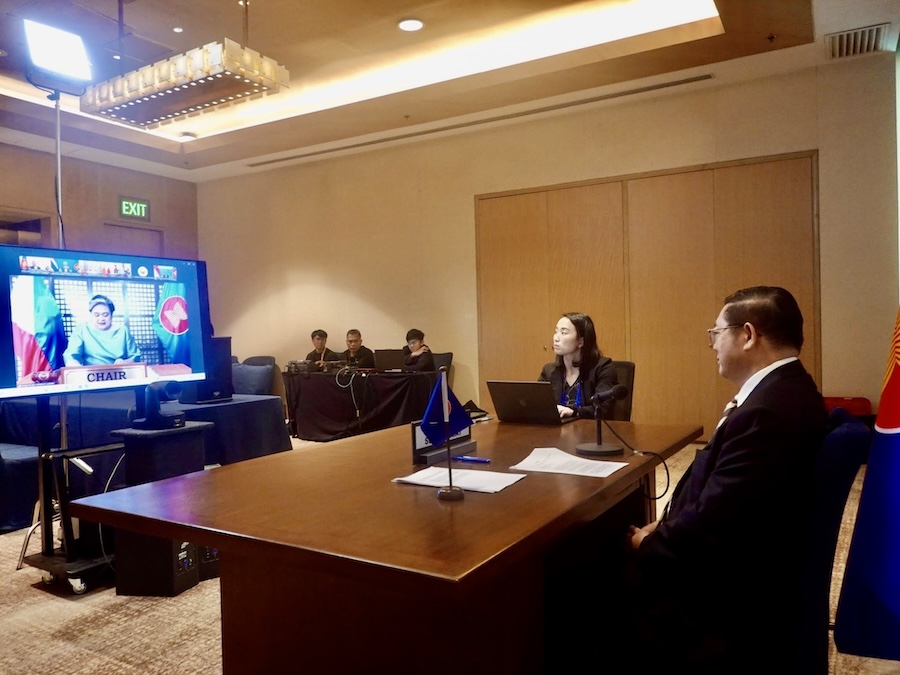
The Foreign Ministers of ASEAN held an extraordinary meeting on March 13, 2026, via video conference, to exchange views on the evolving situation in the Middle East and examine its implications for ASEAN.
This marked the first collective diplomatic response of this prestigious sub-regional organization, whose presidency will be assumed by the Philippines in 2026.
Although relatively brief (only nine paragraphs), the presidential statement was both cautious and firm, with the meeting expressing “grave concern” over the escalation of conflict in the Middle East, “following the attacks launched by Israel and the United States against the Islamic Republic of Iran on February 28, 2026”.
It also mentioned the Israeli attack on the Lebanese Republic and the retaliations carried out by the Islamic Republic of Iran against several countries in the region, including the Kingdom of Bahrain, the Hashemite Kingdom of Jordan, the Republic of Iraq, the State of Kuwait, the Sultanate of Oman, the State of Qatar, the Kingdom of Saudi Arabia, the Syrian Arab Republic, and the United Arab Emirates. These attacks continue to exacerbate tensions in the Middle East and pose a serious threat to the lives and security of civilians, as well as to regional and global peace and stability.
Following this introduction, the meeting “urged all countries to respect international law, particularly the United Nations Charter”.
With reference to the current events in the Middle East, the meeting emphasized the importance of an immediate cessation of hostilities and called on all parties involved to exercise the utmost restraint, avoid any actions that could escalate the situation, and resolve their differences through diplomatic means and dialogue, in the interest of maintaining peace and stability in the region.
Furthermore, the meeting reaffirmed the obligation for all states to settle their disputes by peaceful means and respect the sovereignty and territorial integrity of all nations, in accordance with international law, including the United Nations Charter. It also reiterated the obligation to protect civilians and civilian infrastructure in armed conflicts, in accordance with international law and relevant resolutions of the United Nations Security Council.
Without providing additional details, the meeting also addressed the issue of the security and well-being of ASEAN nationals in the affected areas and reaffirmed the common commitment to providing them with emergency assistance, particularly at this time.
This assistance should be provided in accordance with the ASEAN Declaration on Consular Assistance Guidelines for Missions of ASEAN Member States in Third Countries to Nationals of Other ASEAN Member States, as well as the guidelines for the provision of emergency assistance by ASEAN missions in third countries to nationals of ASEAN Member States in crisis.
Simultaneously, the Foreign Ministers commended the assistance and efforts “by our ASEAN member states in this regard”. The meeting also emphasized the importance of exploring mutually beneficial collaboration with external partners.
In this diplomatic context, the meeting examined the implications of the conflict in the Middle East on the global economic activity, particularly on energy markets and maritime and air transport routes. It stressed the importance of maintaining global energy supply chains as well as stable, open, and reliable maritime trade routes, and minimizing disruptions to energy and essential goods, including food, flows to preserve ASEAN’s economic stability.
Addressing more substantive aspects, the meeting highlighted the importance of strengthening regional energy security and economic resilience. It also emphasized the value of solidarity, economic integration, and ASEAN’s policy coordination and joint efforts to address external economic shocks and mitigate their potential impacts on regional macroeconomic and financial stability, particularly in financial sectors and supply chains. The cost of living and quality of life of ASEAN populations are major concerns.
In this regard, the meeting underlined the importance of enhancing regional connectivity, intensifying cooperation on energy preparedness, and continuing efforts to diversify energy sources, including renewable and alternative energies. It also emphasized the importance of facilitating trade, strengthening logistic connectivity, and bolstering supply chain resilience to ensure stable access to affordable essential goods, especially food products across ASEAN.
While addressing key diplomatic tasks, the meeting called for fully leveraging existing ASEAN mechanisms and frameworks to enhance consultation, information sharing, and cooperation among member states. It emphasized that ASEAN already has practical mechanisms and initiatives that can be further mobilized and reinforced to increase regional resilience.
Concretely, the meeting committed to enhancing synergy among ASEAN’s relevant sectoral bodies, especially those responsible for economic, financial, transportation, food and agriculture, and energy cooperation, to strengthen regional preparedness and resilience. The meeting underscored the importance of closer cooperation within the ASEAN Economic Community framework to maintain ASEAN’s role as a reliable hub for trade, investment, and production networks amid evolving global challenges.
Closer coordination was called for between the Foreign and Economic Ministers of ASEAN to promote a more concerted and timely response to crises. In this regard, the meeting welcomed the publication of the Joint Statement by ASEAN Economic Ministers on strengthening ASEAN’s economic resilience in the face of recent global economic and geopolitical developments.
Regarding coordination objectives, the meeting reaffirmed the importance of intersectoral cooperation among the political and security, economic, and sociocultural communities of ASEAN to effectively address evolving geopolitical and economic challenges.
The meeting emphasized the importance of maintaining regional peace, stability, and prosperity, upholding international law, and promoting dialogue and diplomacy as primary means of resolving conflicts and tensions.
The Foreign Ministers of ASEAN agreed to continue monitoring the situation in the Middle East and coordinate their actions to manage its implications for ASEAN.
It is important to note that, according to reports, Southeast Asia as a whole has adopted a neutral stance towards the joint attack by the United States and Israel against the Islamic Republic of Iran. Specifically, even the Philippines and Thailand, two official US allies, have distanced themselves, calling for restraint and de-escalation.
The facts are indisputable. Hundreds of thousands of Southeast Asian workers in the Middle East are experiencing the detrimental consequences of this conflict. Thailand has 110,000 workers in the region, while the corresponding figure for the Philippines is much higher.
Additionally, the press has reported that Iran is likely to gain sympathy from Muslims and non-Muslims, especially in Southern countries. One of the main risks associated with Iranian retaliatory action is the activation of terrorist acts inspired and perpetrated by Iran in Southeast Asia.
Conclusion
The ongoing conflict in the Middle East has a multidimensional impact on ASEAN countries, primarily through energy, trade, and financial transmission channels. Rising oil prices and supply disruptions fuel inflation and budgetary pressures in energy-importing economies, while logistic instability and changes in maritime transport routes increase costs and slow down supply chains in export-oriented sectors. Additionally, tourism, remittances, and labor mobility are affected by air disruptions and security risks.
Overall, the conflict amplifies economic uncertainty and highlights the structural vulnerabilities of ASEAN, which could lead to a slowdown in growth and stagflationary trends if prolonged, even though the region’s long-term economic fundamentals remain strong.
Ioan Voicu
Every week, receive our Gavroche Hebdo newsletter. Sign up by clicking here